Krishanveer Forge FY26: A Land Sale, A Solar Plant, and ₹89 Cr of Forgings Doing the Quiet Work
Spotted a factual error — a wrong number, date, or fact? Tell us and we will check the source.
General information and entertainment, not investment advice. The author is not a SEBI-registered adviser or research analyst. No recommendation, no promised returns. Markets carry risk including loss of capital. Figures may not be current. Consult a registered adviser before acting.
1. At a Glance
Krishanveer Forge closed FY26 with revenue of ₹89.3 crore and net profit of ₹11.38 crore — the highest profit in the company’s visible history, and roughly double FY25’s ₹5.64 crore. The headline looks like a breakout. The footnotes tell a more layered story: ₹4.04 crore of other income sits inside the year, and a one-time gain of ₹3.49 crore from selling a piece of land was booked as an exceptional item.
Strip the noise and the operating engine still improved — operating profit rose from about ₹8.7 crore to ₹12.1 crore, and operating margin climbed to roughly 13.6% from 10% a year earlier. The company carries no meaningful debt, holds ₹19.28 crore in investments against a ₹187 crore market cap, and pays a dividend. ROCE stands at 26.2%.
So there are two companies inside this one result: a forging business quietly widening its margin, and a P&L that got a decorative one-off nudge at year-end. The market currently pays about 16.5x earnings for the combination.
The rest of this entry separates the forging from the land.
2. Introduction
Incorporated in 1990 in Pune and known as Rajkumar Forge until it was renamed Krishanveer Forge in June 2022, the company makes open die forgings. Western India Forgings Private Limited (WIFPL) holds 65.82% and acquired the business in FY17 as a way to add open-die capacity; the promoter, Arun Jindal, sits on both boards, and the two share a common treasury.
The recent chapters are mostly infrastructure and housekeeping. In August 2025 the company awarded a ₹3.85 crore EPC contract for a 1 MW solar plant in Solapur; on 2 July 2026, MSEDCL granted Permission to Commission that plant, clearing the way for commercial power evacuation. The board recommended a final dividend of ₹3 per share for FY26. India Ratings affirmed the bank facilities at IND A(CE)/Stable in February 2025, leaning on a corporate guarantee from WIFPL.
For a ₹89 crore-revenue forging shop, that is a fairly full year of activity — most of it pointed at cost, not scale.
3. Business Model: WTF Do They Even Do?
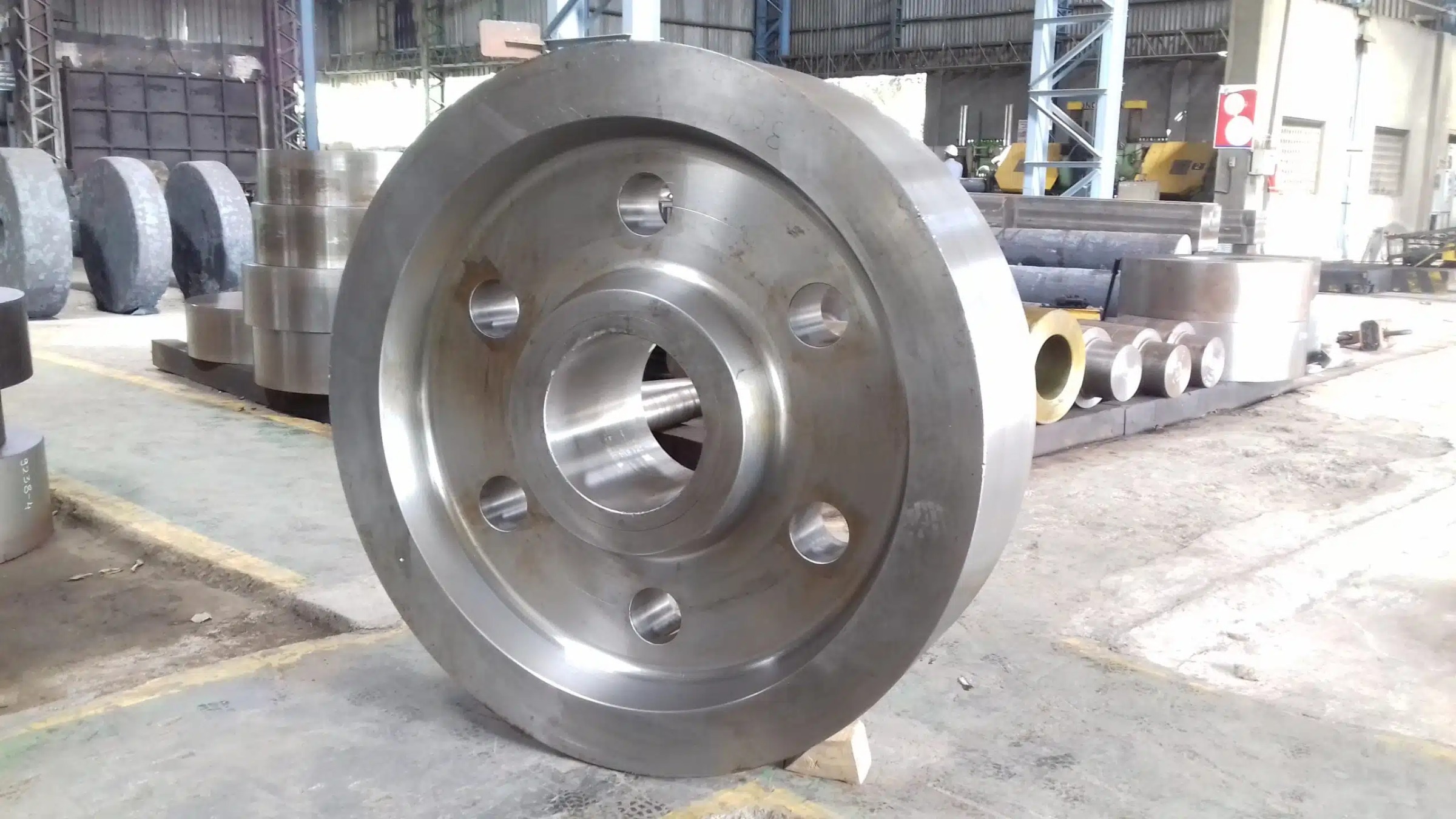
They heat metal until it cooperates, then hit it. Specifically, open die forging — pressing and hammering plain carbon steels, alloy steels, stainless, duplex, 17-4PH and HNS into shafts, blanks, rings, hollows and complex critical shapes with names that sound like naval hardware: Khuff blocks, ‘Y’ blocks, Studded Tees, GV Bodies.
The plant in Pune can handle single pieces up to 11 MT, with pressed and hammer forging capacity across open and closed die lines. The end markets read like a cross-section of heavy industry: oil and gas, gearbox manufacturing, steel plants, cement, sugar mills, power transmission, infrastructure, wind and mining. Historically some of this went abroad — Singapore, Malaysia, the Middle East, Europe, the US, Latin America.
Here the detective work gets interesting. Standalone export share of revenue has collapsed from 68% back in FY16 to essentially nothing — 0.09% — by FY25. This is not a company chasing global markets anymore; it has quietly become a domestic supplier. The parent group’s own mix leans on oil and gas (28% of WIFPL standalone revenue in FY24), gears and transmission (18%), and automotive (11%).
The margin story lives at the group level too: WIFPL’s revenue per metric tonne rose to ₹182,104 in FY24, and the group has been pushing into machining, which earns more than raw forging. A forge that keeps more of the value after the hammer falls is a different business from one that just sells tonnage.
Does a forging shop that abandoned exports and leaned into machining margins own a better business, or just a smaller map?
4. Financials Overview
Figures are consolidated, in ₹ crore.
Metric
Latest Q (Mar 2026)
YoY
QoQ
Revenue
24.35
+22.9%
+19.8%
Operating Profit
3.65
+82.5%
+35.7%
PAT
5.75
+296%
+227%
EPS (₹, FY basis)
10.40
—
—
The revenue and operating-profit lines are the honest ones — Q4 sales of