Bambino Agro FY26: A ₹394 Crore Vermicelli Empire Where the Fourth Quarter Ate 60% of the Profit
Spotted a factual error — a wrong number, date, or fact? Tell us and we will check the source.
General information and entertainment, not investment advice. The author is not a SEBI-registered adviser or research analyst. No recommendation, no promised returns. Markets carry risk including loss of capital. Figures may not be current. Consult a registered adviser before acting.
1. At a Glance
Bambino Agro closed FY26 with revenue of ₹394 crore, up from ₹364 crore the year before, and full-year net profit of ₹10 crore. On the surface, a decade-old packaged-food maker growing steadily. Then the fourth quarter arrives and complicates the picture: quarterly sales rose to ₹98.6 crore, yet Q4 net profit landed at just ₹0.41 crore, down about 61% from ₹1.04 crore in the same quarter a year earlier.
The gap between those two facts is the whole story. Revenue never stumbled; profit did. A Q4 tax rate of 71.1% — profit before tax of ₹1.42 crore against a ₹1.01 crore tax line — swallowed most of what the operating business earned. For the full year, the tax rate was an ordinary 32%. For three months, it was anything but.
The company carries ₹91 crore of borrowings against ₹110 crore of net worth, holds a market cap of ₹168 crore, and trades at 16.8x earnings while its industry sits near 51x. A pasta company priced at a third of its sector’s multiple, with a shareholder petition still winding through the NCLT and a promoter share injunction on the record.
The full year held. One quarter, and the tax line, did the damage. The rest of this entry is the record of how.
2. Introduction
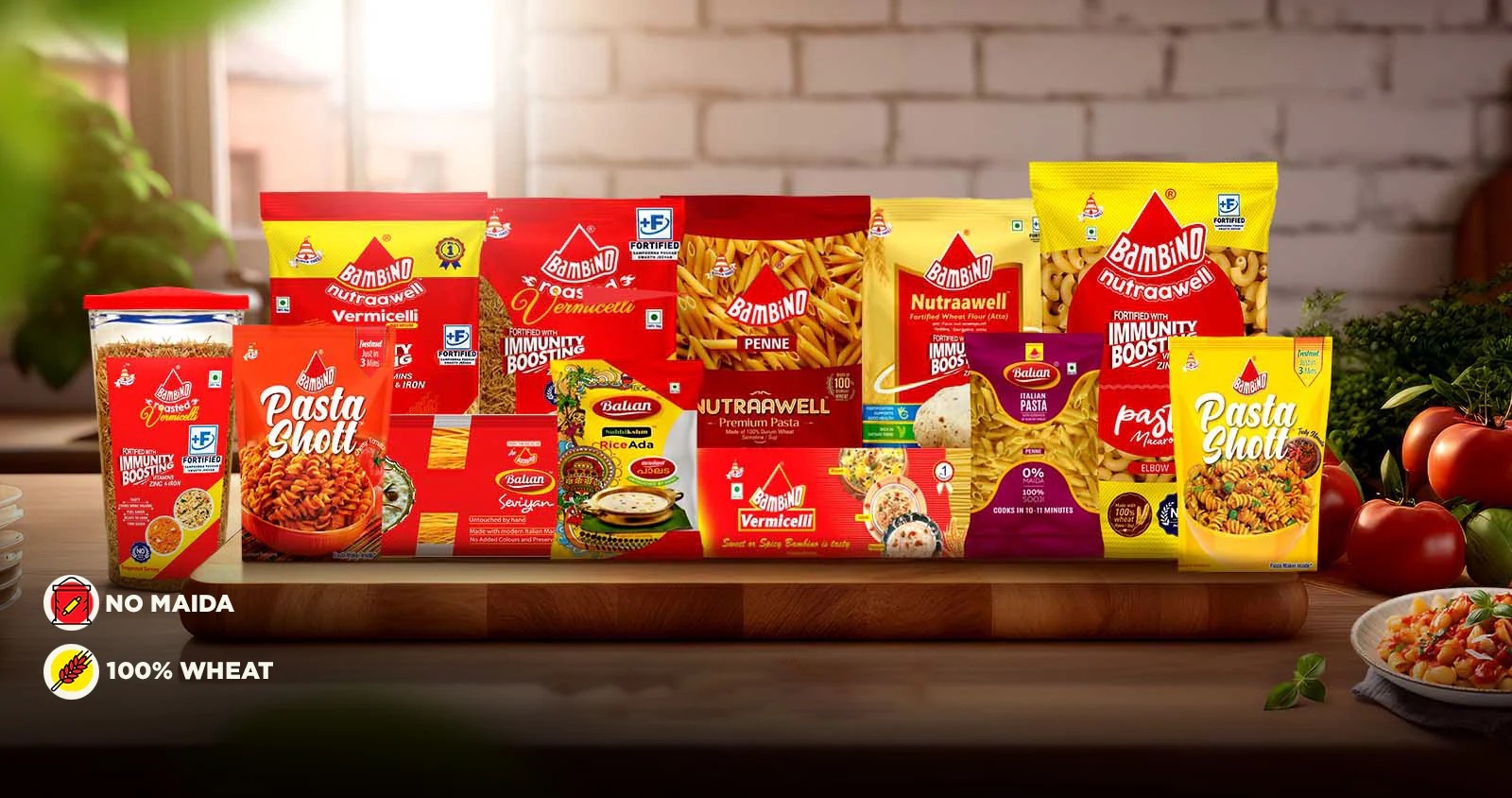
Incorporated in 1983 by the late M. Kishan Rao — formerly Jaya Food Industries — Bambino Agro Industries makes and sells packaged food under the “Bambino” brand, a name over three decades old in Indian kitchens. The catalogue runs to 74-plus products: vermicelli, macaroni, pasta, dalia, soya chunks, wheat flour, spices, instant mixes.
The manufacturing base sits in Haryana, and the brand travels: exports reach across the USA, the Gulf, Southeast Asia, and beyond. The pasta and vermicelli segment is where the company holds its strongest positioning, backed by a distribution web of super stockists and CNF agents.
Recent moves are managerial rather than dramatic. In June 2025, Namratha Vippala was appointed CEO and Executive Director for five years. The board approved the audited FY26 results on 14 May 2026, and re-appointed Kothapalli Srinivasa Rao as Executive Director — Sales & Administration, effective 11 June 2026, subject to shareholder approval. The credit rating was reaffirmed at IVR BBB-; Stable in April 2026. Steady in aggregate; the volatility, as the numbers show, lives in the quarters.
3. Business Model: WTF Do They Even Do?
They sell you the vermicelli your grandmother swears by, and a great deal else besides. Bambino trades in convenience, ready-to-eat, and blended-spice categories — spaghetti, macaroni, instant pasta, Indian ethnic food, kheer mixes, namkeens, hing. If it comes in a packet and goes into a pot, there’s a decent chance Bambino makes a version of it.
The economics are the economics of a fragmented, largely unorganised food industry, and they show. Full-year operating margin sits around 7.7% — the kind of margin that says the business competes hard on price against countless local players and a handful of organised giants. Raw-material cost consumed ₹254 crore of FY26’s ₹394 crore in sales; when wheat and agri-commodity prices move, this margin moves with them, and the company can only partly pass the increase along.
The inventory story is the tell. Inventory days ran at 136 in FY26 — down from 158 the year before, but still a business that holds a great deal of stock for a long time. Vermicelli does not spoil quickly, which is fortunate, because it sits around. Working-capital days of 44 and a cash-conversion cycle of 150 days describe a company whose money is tied up in warehouses far more than in its bank account, which held ₹1.1 crore at year-end.
Does a three-decade brand and a 74-product catalogue earn pricing power, or just a busy factory? The margin has an opinion, and it’s a modest one.