Everest Organics FY26: Profit Rebounds to ₹5.55 Cr, But the Auditor Still Won’t Sign Clean
Spotted a factual error — a wrong number, date, or fact? Tell us and we will check the source.
General information and entertainment, not investment advice. The author is not a SEBI-registered adviser or research analyst. No recommendation, no promised returns. Markets carry risk including loss of capital. Figures may not be current. Consult a registered adviser before acting.
1 — At a Glance
Everest Organics closed FY26 with sales of ₹196 crore and a net profit of ₹5.55 crore — a figure that looks almost heroic set against the ₹1.29 crore loss it posted the year before. Operating profit rebounded to ₹19.8 crore, and the March quarter carried its highest operating margin in the dataset at 13.7%. On the surface, a recovery year.
Underneath sits a sentence no company enjoys printing: the statutory auditor issued a qualified opinion. The Telangana State Pollution Control Board’s revocation order means the plant is running above its sanctioned production capacity without a valid Consent for Establishment or Consent for Operation — a matter the auditor explicitly ties to the company’s going-concern status.
Meanwhile debtor days reached 216, promoter holding slid from 74% to 59.6% across the year, and the Company Secretary resigned in June 2026. A profit that returned, a compliance file that didn’t close, and receivables that keep stretching.
A recovery arriving with a footnote is still a recovery — but the footnote is the part worth reading twice.
2 — Introduction
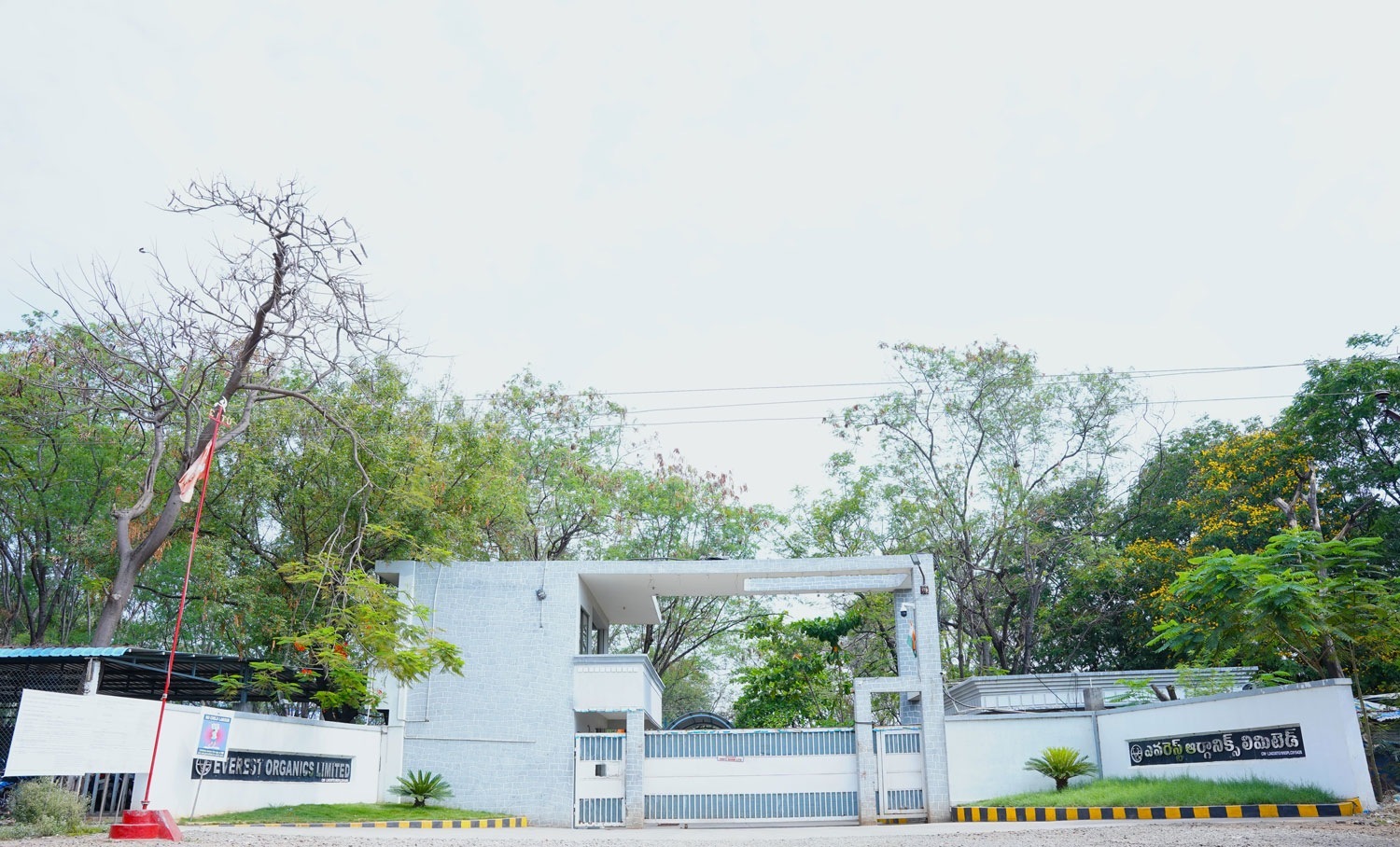
Incorporated in 1993, Everest Organics manufactures Active Pharmaceutical Ingredients and their intermediates from a single facility at Aroor village, Telangana. One reportable segment, one plant, one product family — a focused operation by design.
The recent corporate history has been busy in the way small pharma companies often are. Founder and Managing Director Dr. Srikakarlapudi Srihari Raju passed away in August 2022 and was succeeded by Dr. Srikakarlapudi Sirisha, who signs the current results as MD. In December 2024 the company raised capital through a preferential allotment, lifting the equity base. In February 2025 it obtained a Korean Drug Master File approval for its Rabeprazole Sodium API, and in May 2024 it cleared a USFDA establishment inspection with no observations.
The FY26 results, approved on 29 May 2026, arrived with two headline governance items: the appointment of Narra Venkata Ramana as an independent director and Chairman, and the auditor’s qualified opinion on the TSPCB capacity matter — the same qualification that has been recurring rather than one-off.
The business kept producing. The paperwork around it kept generating events.
3 — Business Model: WTF Do They Even Do?
Everest makes the molecules that end up inside other people’s pills. The API list reads like a pharmacy index: products for gastroenterology, hypertension, anti-viral, anti-diabetic, anti-fungal, insomnia, overactive bladder, and a dozen other categories. The intermediates catalogue is longer still — Omeprazole, Esomeprazole, Pantoprazole, Rabeprazole, Febuxostat, Apixaban, Rivaroxaban, and a small alphabet of others.
There is even a by-products line — Ammonium Sulphate, Sodium Nitrite, Di Ammonium Phosphate — the industrial equivalent of selling the sawdust after cutting the plank. When your chemistry throws off saleable residue, you sell the residue.
The plant runs at roughly 820 MTPA installed capacity, serving around 60 clients across more than 45 countries, with the stated ambition to reach 100 clients in 60 countries. Utilisation on the top products has historically sat above 90%, though the disclosed capacity-utilisation figures for Benzimidazole and Esomeprazole show a slide in the most recent readings.
Here is where the model meets its awkward truth: a company whose entire pitch is “we run our plant hard and efficiently” is precisely the company an auditor has flagged for running that plant above its sanctioned limit. The operational strength and the compliance qualification are the same fact, viewed from two doors.
The economics are the familiar API squeeze — buy raw materials priced in commodity chemistry, sell into a regulated market where customers audit you and governments meter you. Raw-material cost alone ran ₹125 crore against ₹196 crore of sales in FY26. Margin lives in the gap, and the gap is thin.
Does a plant running above its permitted capacity count as an operating advantage or an operating liability? In this file it is quietly both.
4 — Financials Overview
Figures are standalone, in ₹ crore.
Metric
Latest Q (Mar 2026)
YoY (Mar 2025)
QoQ (Dec 2025)
Revenue
48.75
40.93
42.59
Operating Profit
6.70
3.44
3.54
PAT
2.63
2.91
0.36
EPS (₹)
2.71
3.00
0.37
The March quarter did the heavy lifting: operating profit nearly doubled year-on-year to ₹6.70 crore, and operating margin hit 13.7% — the strongest quarterly figure on