Coral Laboratories FY26: Sales Fell 25%, Profit Fell 32%, and Other Income Now Funds Nearly Half the Pre-Tax Line
Spotted a factual error — a wrong number, date, or fact? Tell us and we will check the source.
General information and entertainment, not investment advice. The author is not a SEBI-registered adviser or research analyst. No recommendation, no promised returns. Markets carry risk including loss of capital. Figures may not be current. Consult a registered adviser before acting.
1. At a Glance
Coral Laboratories closed FY26 with sales of ₹85.9 crore, down from ₹115 crore the year before — a 25% drop that erased the entire previous year’s growth spurt. Net profit fell in step, from ₹24.16 crore to ₹16.38 crore, a 32% decline. Reported EPS moved from ₹67.61 to ₹45.85, and since the share count held flat at roughly 35.7 lakh shares, that fall tracks the profit and nothing else.
Inside those headline numbers sits a detail worth marking early: Other Income for the year was ₹10.21 crore against a pre-tax profit of ₹23.11 crore. That’s 44% of the pre-tax line coming from interest, dividends, and gains rather than the business of making tablets and ointments. A ₹216 crore company that is almost debt-free, holds a large cash-and-bank pile, and earns a rising slice of its profit from that pile — the operating engine and the treasury are pulling in different directions.
The market currently pays about 13x earnings here, against an industry P/E near 35. Working capital days climbed from 140 to 328 over the year. A company that shrank its top line while its balance sheet swelled invites one question up front: what is the cash doing, if not growing the business?
2. Introduction
Coral Laboratories Ltd was incorporated in 1994 and operates in a single reported segment: pharmaceutical formulations. It is an ISO 9001:2008 certified manufacturer and exporter, making tablets, capsules, liquid orals, injectables, eye and ear drops, ointments, creams, and related dosage forms. Manufacturing runs out of two units, at Daman and Dehradun.
The company’s stated focus is generics, reworking existing products, and patent non-infringing products aimed at emerging markets. Its export footprint spans Ethiopia, Sudan, Mozambique, Nigeria, Kazakhstan, Mongolia, and parts of Europe and South America. On the FY24 geographical split, exports to the rest of the world made up about 56% of revenue, Ethiopia about 19%, and the domestic market about 25% — so this is more an export house than a domestic pharma play.
The most concrete recent move on record: in October 2025 the board approved a capacity expansion at Dehradun, doubling ointment manufacturing from 180,000 kg to 360,000 kg, at an investment of roughly ₹30 crore, to be added within six months and financed through bank overdraft and internal accruals. The stated rationale is captive demand and both domestic and international sales growth. For the March 2026 year, the board also declared a 20% final dividend — ₹2 per ₹10 share — the first payout after several dry years.
3. Business Model: WTF Do They Even Do?
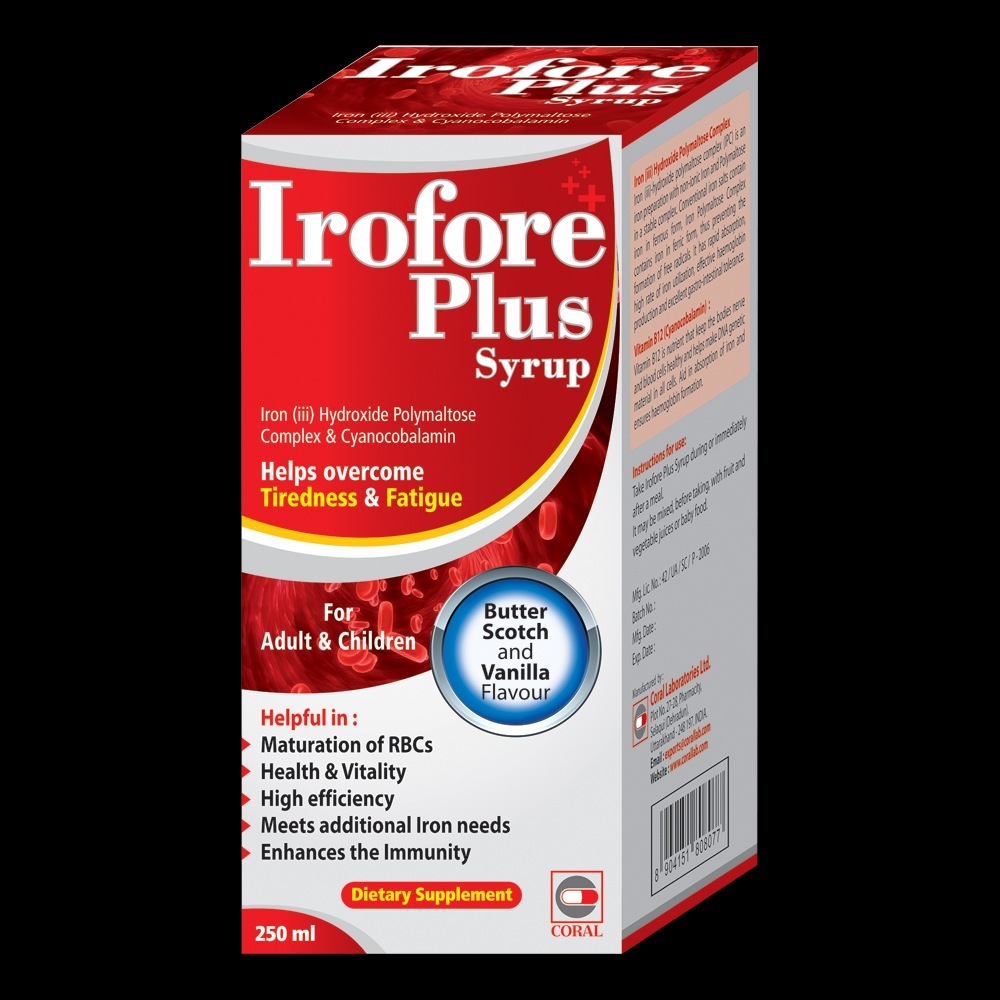
Coral makes medicine in almost every physical form a pharmacist can stock. Tablets, capsules, dry syrups, injectables (liquid and powder), eye and ear drops, ointments, creams, gels, lotions, nasal sprays, suppositories, granules, dry syrup — the product sheet reads like the entire back wall of a chemist’s shop. On top of that sit four product families: non-sterile antibiotics and anti-fungals, sterile injectables and drops, nutraceuticals and dietary supplements, and an OTC-and-lifestyle range covering female hygiene, contraceptives, skincare, and infant care.
The strategy underneath is narrower than the catalogue suggests. Coral positions itself in generics, troubleshooting existing formulations, and patent non-infringing products for emerging markets — in plain terms, making established drugs for places where the branded original is either absent or unaffordable. That is a volume-and-access game, not a discovery game. Nobody here is chasing a blockbuster molecule; they’re making the reliable stuff and shipping it to Africa, Central Asia, and Latin America.
And the geography confirms it. More than half of revenue comes from the rest-of-world export bucket, with Ethiopia alone a fifth. The domestic market is the junior partner at roughly a quarter. For a Mumbai-headquartered formulations maker, Coral earns its keep abroad — which makes it as much a foreign-currency and distribution story as a chemistry one.
The expansion tells you where management sees the pull: ointments. Doubling that single line’s capacity, while the rest of the catalogue stays put, is a focused bet inside a sprawling range. A company that does fourteen dosage forms chose to double exactly one.
Does a fourteen-form catalogue signal range, or a lack of a single thing big enough to specialise in?
4. Financials Overview
Figures are consolidated, in ₹ crore. The March 2026 quarter is the latest period.
Metric
Q4 FY26
YoY (vs Q4 FY25)
QoQ (vs Q3 FY26)
Revenue
26.48
-5.9%
+22.8%
Operating Profit
6.20
+130%
+228%
PAT
5.22
+84.5%
+87.8%
EPS (₹)
14.62
+84.7%
+87.9%
The March quarter is the tidy one in a messy year: revenue slipped a touch year-on-year but operating profit more than doubled off a weak Q4 FY25 base, when operating profit was just ₹2.69 crore. Read across the full year, though, and the quarters were volatile — operating profit bounced between ₹1.89 crore (Q3) and ₹6.20 crore (Q4), with OPM swinging from under