Vijay Solvex FY26: A ₹2,366 Cr Oil Trader That Earns Like a ₹19 Cr One
Spotted a factual error — a wrong number, date, or fact? Tell us and we will check the source.
General information and entertainment, not investment advice. The author is not a SEBI-registered adviser or research analyst. No recommendation, no promised returns. Markets carry risk including loss of capital. Figures may not be current. Consult a registered adviser before acting.
1. At a Glance
Vijay Solvex closed FY26 with ₹2,366 crore of revenue and ₹19.3 crore of net profit. That is a net margin of 0.82% — the company keeps under a rupee of every hundred it moves. Operating margin sits at 1.39%. This is the defining tension of the entire entry: enormous top-line, whisper-thin retention.
The March quarter carried the year. Quarterly sales of ₹685 crore rose 44% year-on-year, and quarterly net profit of ₹6.78 crore jumped 142% over the ₹2.80 crore of March 2025. Operating profit for the quarter more than doubled to ₹13.59 crore.
Underneath, the balance sheet shifted. Borrowings climbed from ₹33 crore to ₹65 crore across the year, inventory swelled from ₹115 crore to ₹186 crore, and operating cash flow ran to negative ₹61 crore. A company reporting rising profit also drained cash — the two moved in opposite directions, and the reason sits on the balance sheet, not the income statement.
The book value stands at ₹1,101 per share against a market capitalisation of ₹242 crore, putting the market’s price at 0.69 times stated book. That single ratio is the teaser: what does the market see in a profitable, decades-old manufacturer that it prices below its own accounting net worth?
2. Introduction
Vijay Solvex was incorporated in 1987 in Alwar, Rajasthan, by Niranjan Lal Data and family. It is the flagship of the edible-oil division of the Data Group. The core business is processing crude and refined edible oil, vanaspati ghee, and mustard oil cake from mustard seeds, plus selling de-oiled cake (DOC), a by-product of further processing that oil cake.
The Alwar location is deliberate — it sits in one of India’s largest mustard-growing belts, which keeps the primary raw material close. Alongside oil, the company runs a ceramics division out of Jaipur (fine bone china, decorative items, high-tension porcelain insulators) and owns a 2.3 MW wind installation in Jaisalmer.
Recent corporate activity has been steady rather than dramatic. On 22 September 2025, managing director Vijay Data was reappointed for a further three-year term through September 2028, and whole-time director Daya Kishan Data was reappointed likewise. The board approved audited FY26 results on 30 May 2026, with an unmodified audit opinion from Aggarwal Datta & Co. In late June 2026, a promoter-group entity stepped into the open market to buy shares — more on that shortly.
3. Business Model: WTF Do They Even Do?
Strip away the ceramics and the idle windmill, and Vijay Solvex is an edible-oil business. In FY26, the edible-oils segment produced ₹2,344 crore of the ₹2,367 crore total revenue; ceramics contributed ₹22.55 crore; wind power contributed nothing at all, because the plant is switched off.
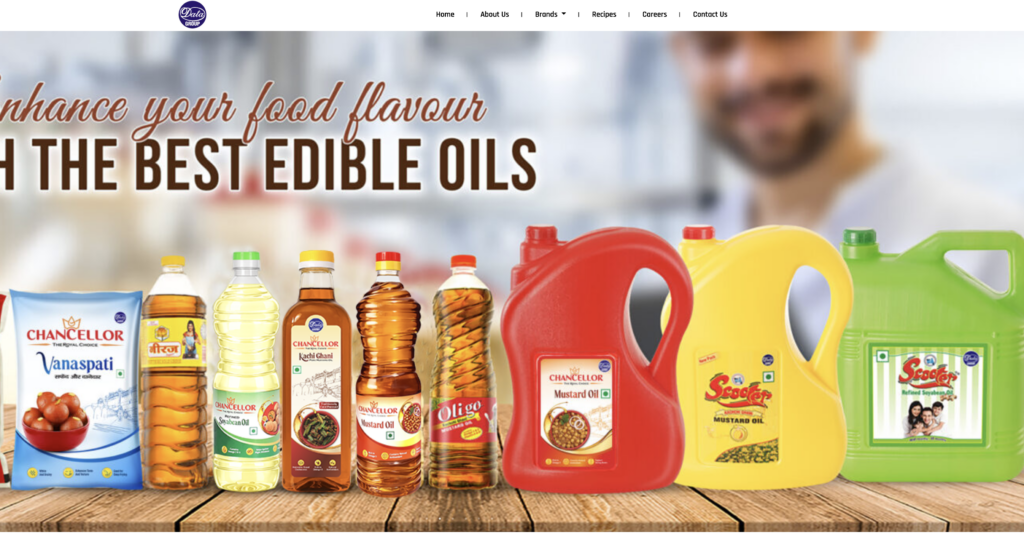
The oil operation is a volume machine with a value-addition problem. The company processes mustard seed, refines imported crude soya oil, and sells under brand names including Scooter, Chancellor, Neeraj, and Oligo. Solvent-extraction capacity runs to roughly 1.47 lakh tonnes per annum and refining plus vanaspati capacity to about 1.05 lakh TPA. It moves a great deal of oil. It keeps very little of the proceeds — the raw material eats nearly everything, which is the structural signature of a commodity oil trader rather than a branded consumer play.
The wind segment deserves a moment of respectful silence. The company itself records that the Jaisalmer plant is not in operation because running it is not financially viable. It remains on the books as installed capacity — 2.3 MW of potential energy doing an excellent impression of a paperweight.
Does a portfolio of four oil brands mean pricing power, when 99% of revenue still clears at a 1.4% operating margin?
4. Financials Overview
Figures are consolidated, in ₹ crore. This is a quarterly result; the latest period is the quarter ended March 2026.
Metric
Mar 2026 (Q)
YoY
QoQ
Revenue
685.44
+43.9%
+13.3%
Operating Profit
13.59
+90.3%
+70.1%
PAT
6.78
+142%
+26.3%
EPS (₹)
21.17
+142%
+26.2%
The quarter was the strongest of the year on every operating line. Revenue of ₹685 crore was the highest quarterly figure in the visible record, and the 90% jump in operating profit outpaced the revenue growth — the margin widened