The Indian Wood Products FY26: A 107-Year-Old Katha Maker Where Profit Ran ₹4.56 Cr and the Enforcement Directorate Came Knocking
Spotted a factual error — a wrong number, date, or fact? Tell us and we will check the source.
General information and entertainment, not investment advice. The author is not a SEBI-registered adviser or research analyst. No recommendation, no promised returns. Markets carry risk including loss of capital. Figures may not be current. Consult a registered adviser before acting.
1 — At a Glance
Here is a company that has been making katha — the astringent extract that colours your paan — since 1920, and in FY26 it turned ₹228.53 crore of revenue into ₹4.56 crore of consolidated profit. That is a 2% net margin on a business older than the Republic it operates in. Return on equity sits at 1.26%; return on capital employed at 3%. On a ₹363 crore net worth, the company earned less than a fixed deposit would have.
Two facts sit uneasily beside each other. The operating engine is steady — sales have crept up, borrowings came down ₹12 crore in the year, operating cash flow hit ₹23.72 crore. And then, in December 2025, the Enforcement Directorate searched the registered office and the Managing Director’s residence, in connection with an investigation the company says concerns third-party entities.
The market currently pays about 46x earnings for all this, against a book value it prices at 0.58x. A profitable, dividend-paying, century-old katha monopoly-adjacent name — trading below book, earning below a savings account, with a federal agency in its lobby. The record here is genuinely strange.
Does a business this old and this slow deserve a second look, or is the slowness the whole story?
2 — Introduction
The Indian Wood Products Company Limited was incorporated in 1919 and began producing katha from a unit in Izatnagar, Bareilly, in 1920 — promoted, per the record, by H.N. Gladstone, H. Bateson and E.H. Bbray of London. The Mohta family took control in the early 1980s and has run it since. Bharat Mohta chairs it today.
The recent corporate calendar has been unusually busy for a company that mostly grinds timber. In November 2025, Krishna Kumar Mohta resigned as Chairman & Managing Director; Bharat Mohta was redesignated Chairman & MD from 15 November 2025, and K.K. Mohta was moved to a consultant role at ₹10,00,000 per annum. In August 2025, a fire hit the Izzatnagar, Bareilly godown — no casualties, operations reported unaffected. In December 2025, the ED search happened. And in June 2026, Savita Mohta agreed to gift 91,60,200 shares — 14.32% of capital — to Bharat Mohta, an inter-se promoter transfer that leaves total promoter holding unchanged.
The FY26 audited results, approved 30 May 2026, carry an unmodified audit opinion and a recommended final dividend of ₹0.20 per ₹2 share. All of it happened around the same set of books.
3 — Business Model: WTF Do They Even Do?
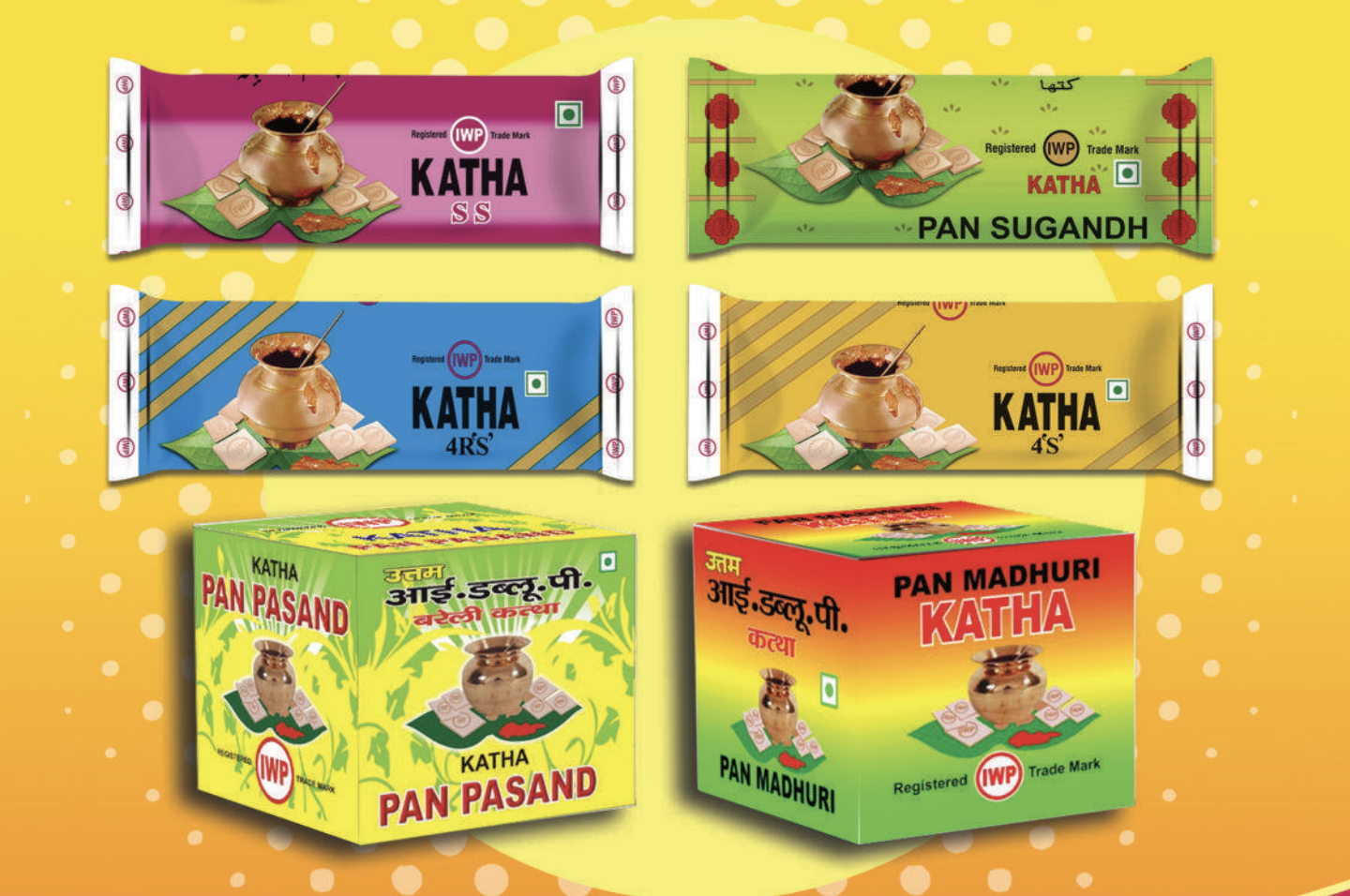
They boil wood. More precisely: khair timber and imported gambier go in, and katha (catechu) comes out — the reddish-brown extract that ~93% of revenue rode on as of the last disclosed segment split. Cutch, a tanning agent and a by-product, and packed spices under the IWP brand make up most of the rest.
The end market is paan masala. The company’s katha feeds recognised names in that industry — Rajnigandha, Vimal, Dilbag — which means this century-old manufacturer’s fortunes are welded to an industry under strict and shifting government regulation. Capacity runs to roughly 4,000 MTPA of katha and 1,350 MTPA of cutch, with a Jammu unit adding 300 MTPA, spread across Bareilly, Jammu and Vadodara.
There is a working-capital catch baked into the raw material. Khair is a seasonal natural produce — it must be procured post/pre-monsoon and stockpiled, because wet timber cannot be used, and the katha process itself runs about 45 days. Inventory, therefore, is not a choice but a hostage situation. The credit rating report puts the operating cycle at 171 days in FY25. A business where you buy your main ingredient once a year and wait a month and a half to sell what it becomes is not built for speed, and the return ratios show it.
There is also a Singapore joint venture, Agro & Spice Trading Pte Ltd, whose share of profit flows into the consolidated numbers and, in the March 2026 quarter, flowed the other way.