Narmada Agrobase FY26: Revenue Climbs to ₹78 Crore, But the Operating Margin Quietly Left the Building
Spotted a factual error — a wrong number, date, or fact? Tell us and we will check the source.
General information and entertainment, not investment advice. The author is not a SEBI-registered adviser or research analyst. No recommendation, no promised returns. Markets carry risk including loss of capital. Figures may not be current. Consult a registered adviser before acting.
1. At a Glance
Narmada Agrobase closed FY26 with revenue of ₹78.39 crore, up 21% from ₹64.68 crore a year earlier. That is the headline the company would like framed. The number sitting just beneath it is quieter: profit after tax slipped to ₹3.86 crore from ₹4.09 crore, a 5.6% dip. Revenue rose a fifth; profit fell.
The gap between those two lines is the whole story of the year. Operating profit actually fell — ₹4.98 crore against ₹5.58 crore — even as sales grew. Operating margin compressed from 8.63% to 6.35%. What kept profit before tax marginally higher was other income of ₹1.27 crore, nearly double the prior year’s ₹0.66 crore.
Meanwhile the balance sheet doubled in size to ₹72.25 crore, fed by a rights issue that landed a large cash pile and diluted the promoter family. Debtor days stretched to 165. Operating cash flow stayed negative for a second straight year.
A company selling cattle feed and cottonseed by-products from a single Gujarat plant, running at roughly half capacity, now carries a bigger balance sheet than its business has yet learned to use.
Does a 21% revenue year mean much when the operating line shrinks under it?
2. Introduction
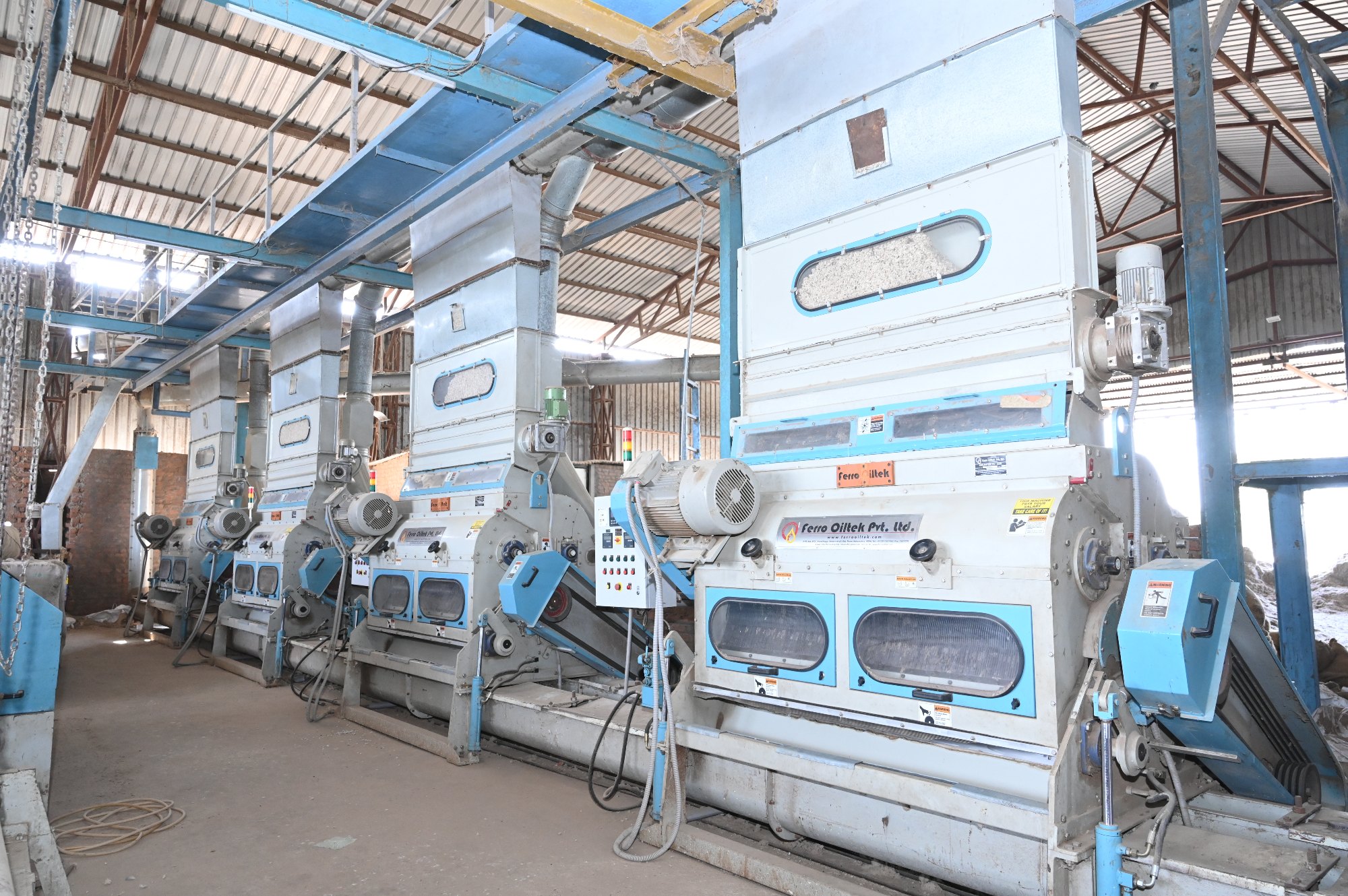
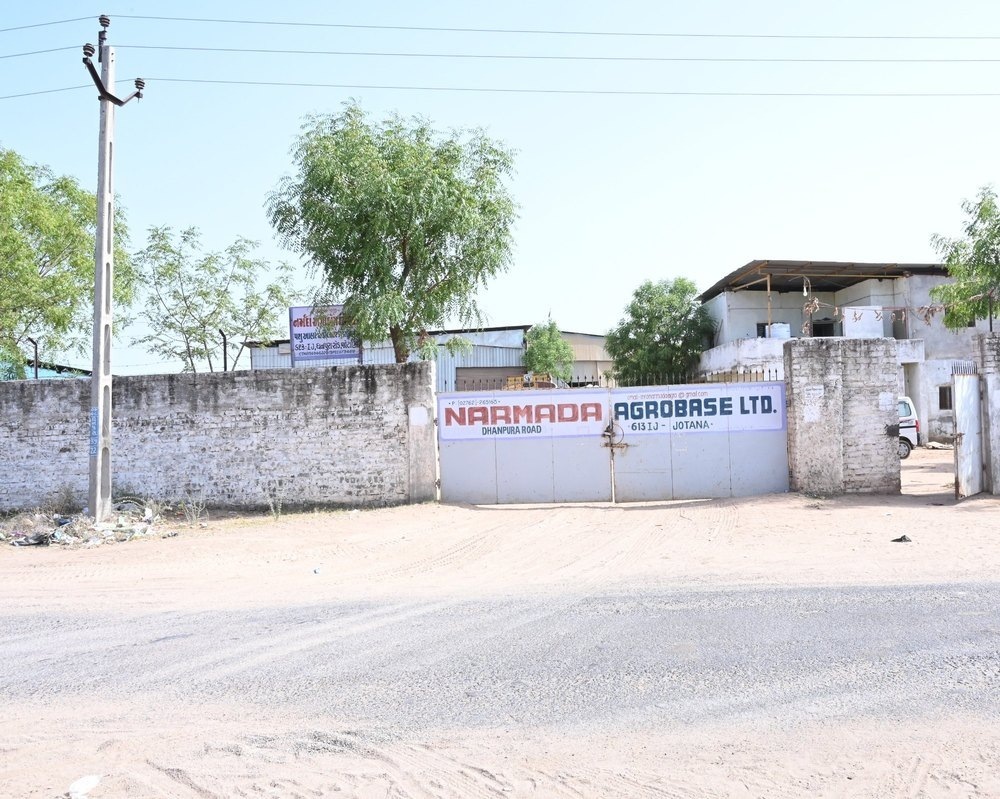
Narmada Agrobase was incorporated in 2013, converted to a public limited company in 2017, listed on the NSE Emerge SME platform in 2018, and migrated to the mainboard in 2022. It manufactures and sells cotton seed by-products and cattle feed from a facility near Ahmedabad, in Mehsana, Gujarat, with an installed capacity of 40,000 tonnes per annum.
The defining corporate event of recent years was a rights issue. The company raised roughly ₹36.58 crore (₹3,658 lakh) through an issue of about 2.43 crore equity shares, with the letter of offer dated September 2024. That capital sits all over these financials — in the cash balance, in the expanded equity base, and in the diluted promoter percentage.
FY26 itself brought two more corporate actions. In May 2026 the board approved a sub-division of shares, splitting each ₹10 face-value share into two ₹5 shares. In late June 2026 the board approved a postal ballot to change one of the rights-issue objects and appointed a scrutinizer for the process. Both remain subject to shareholder approval.
The statutory auditor, Jain Kedia & Sharma, issued an unmodified opinion on the FY26 results. The company also confirmed no default on loans or debt securities.
3. Business Model: WTF Do They Even Do?
Two things, roughly split down the middle. In FY25 cattle feed was 52% of revenue and cottonseed products were 48% — a near-even divide the company describes as protection against single-category concentration.
The cattle-feed side sells Compound Cattle Feed (Pellet) and Cattle Feed (Mesh) under the Pashu Aahar banner, with brands including Gaay Chhaap, Narmada Super, Kala Sona and Churma. The cottonseed side is a study in squeezing value from a single seed: cottonseed meal, bleached cotton linters, cotton linters, delinted cotton seed, and cottonseed oil. What starts as one crop by-product fans out into livestock feed, industrial cellulose, and cooking oil.
The model is explicitly high-volume, low-margin B2B — distributors, cooperatives, exporters. There is no consumer brand doing heavy lifting here; there is a plant, a procurement desk, and 1,000-plus retail points with 150-plus wholesale points doing the reach.
That structure explains the margin profile better than any slide. When your entire pitch is “bulk agro inputs at competitive prices,” 6% operating margins are the genre, not the exception. The value-added push — pelletized feed, molasses-enriched blocks, cottonseed oil — is management’s attempt to add a floor of margin under a business whose base rate is thin by design.
Capacity utilisation sits around 50%. Half the plant is a promise; the other half is the business.
A well-balanced portfolio is a fine thing — but balance between two low-margin categories is still low margin.
4. Financials Overview
Figures are standalone, in ₹ crore.
Metric
FY26
FY25
YoY
Revenue
78.39
64.68
+21.2%
Operating Profit
4.98
5.58
-10.8%
PAT
3.86
4.09
-5.6%
EPS (₹)
1.02
1.08
-5.6%
Revenue grew; operating profit and profit fell. The operating margin moved from 8.63% to 6.35%