Emmbi Industries FY26: Record Revenue, a Negative Other-Income Line, and a Multiple Trading Below Book
Spotted a factual error — a wrong number, date, or fact? Tell us and we will check the source.
General information and entertainment, not investment advice. The author is not a SEBI-registered adviser or research analyst. No recommendation, no promised returns. Markets carry risk including loss of capital. Figures may not be current. Consult a registered adviser before acting.
1 — At a Glance
Emmbi Industries closed FY26 with standalone revenue of ₹453.66 crore, the highest in its history, up from ₹404.18 crore the year before. Net profit came in at ₹8.11 crore, recovering from FY25’s ₹6.61 crore but still below the ₹9.95 crore of FY24. The Q4 figure carried the year: quarterly net profit of ₹2.31 crore against ₹1.63 crore a year earlier.
So the topline grows, the bottom line wobbles, and the gap between them is where the attention goes. Operating profit for the year was ₹43 crore on ₹453.66 crore of sales — an operating margin near 9.5%, the same neighbourhood it has occupied for four straight years. Borrowings rose to ₹176.48 crore against a net worth of ₹199.70 crore. The market caps the whole company at ₹183 crore — below its stated book value of ₹104 per share.
A company that has grown sales every year while its margin sits frozen at a tenth of revenue is telling you something about the industry it lives in. The teaser worth holding onto: the Other Income line for FY26 reads negative ₹0.84 crore — a detail that quietly flips how this year’s profit should be read.
2 — Introduction
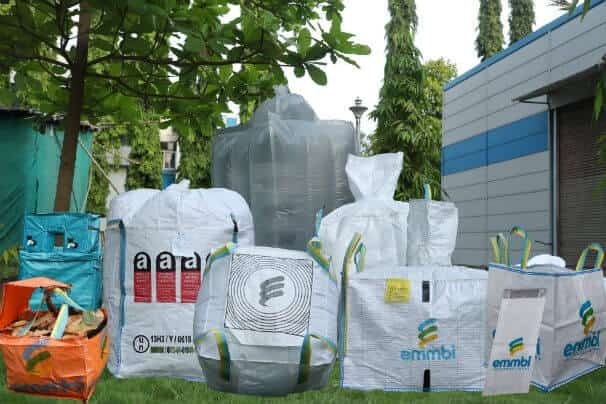
Emmbi Industries was incorporated in 1994, formerly Emmbi Polyarns Limited, and manufactures HDPE and PP woven polymer-based products — jumbo bags (FIBCs), woven sacks, liners, and a growing range of water-conservation and agri products. It is headquartered in Maharashtra and exports to over 70 countries, with exports forming roughly 57% of FY25 operating income, per the CARE rating report.
The year had texture beyond the numbers. The US imposed a 50% tariff on Indian imports in August 2025, then reduced it in February 2026; CARE notes the impact on Emmbi stayed limited because end-user industries kept buying and the company could pass costs through. In April 2026, CARE reaffirmed its BBB+; Stable long-term rating and upgraded the short-term rating to A2 from A3+, citing better inventory holding and more working-capital headroom.
The promoters — Makrand Appalwar as Chairman & Managing Director and Rinku Makrand Appalwar as Executive Director and CFO — run a single-segment polymer business. The board recommended a final dividend of ₹0.30 per share for FY26, a 3% payout on the ₹10 face value. Modest, but consistent with a company that has historically returned a single-digit slice of profits.
3 — Business Model: WTF Do They Even Do?
Emmbi makes bags. Very sophisticated bags, to be fair — the kind that hold a tonne of chemicals, line an irrigation canal, or cover your car — but the core act is taking polymer resin and weaving it into containers the world needs and barely notices. The portfolio splits across export packaging (industrial packaging, composites, container liners shipped to 70+ countries), domestic packaging, and the Avana line of water-conservation and agri products like the Jalsanchay pond liner.
The flagship sustainability pitch is Reclaim30, products made with recycled polymer; the company says around 18% of raw material consumed comes from post-consumer and post-industrial waste, per its press release. It is a genuinely differentiated angle in a commodity business, and the company markets itself as one of the world’s largest exporters of bulk packaging made from recycled resin.
Here is the structural truth the model can’t escape: polymer prices are the input, and polymer prices do as they please. CARE flags raw-material volatility and forex swings as standing risks to margins. Emmbi exports more than half its output, so a moving rupee is part of the business, not an event. The result is a company that can grow revenue from ₹228 crore (FY17) to ₹454 crore (FY26) and keep its operating margin pinned in the 10–14% band the whole way. The bags sell. The pricing power is the part that doesn’t scale.
Does a sustainability story command a premium when the margin stays flat — or is “eco-friendly” just a nicer label on the same commodity economics?