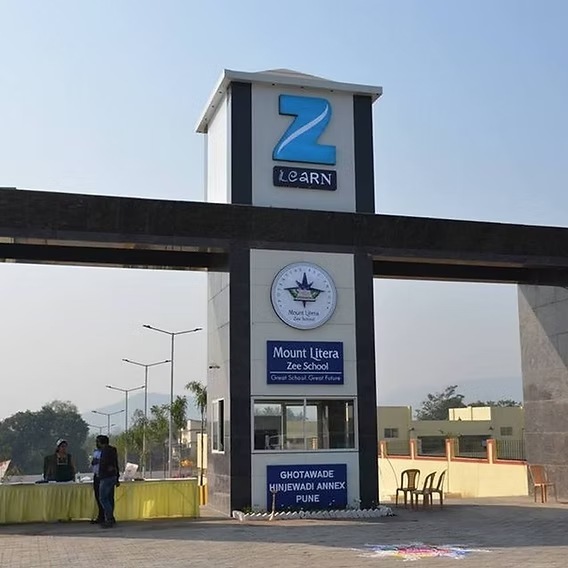
Zee Learn FY26: ₹776 Crore Sits in a Cell Marked “Good and Recoverable”
Spotted a factual error — a wrong number, date, or fact? Tell us and we will check the source.
General information and entertainment, not investment advice. The author is not a SEBI-registered adviser or research analyst. No recommendation, no promised returns. Markets carry risk including loss of capital. Figures may not be current. Consult a registered adviser before acting.
1 — At a Glance
Zee Learn closed FY26 with consolidated revenue of ₹439 crore, up 18% from ₹372 crore, and a net profit of ₹38.5 crore against ₹12.7 crore the year before — a threefold jump on paper. The market sizes the whole thing at ₹293 crore, smaller than a single year’s sales.
Two numbers explain why the profit line moves like a kite. Other income contributed ₹45.9 crore in FY26 — more than the entire net profit of ₹38.5 crore. And the consolidated accounts carry an exceptional gain of roughly ₹27 crore from writing back old credit-facility dues. Strip both, and the operating business looks far quieter than the headline.
Hanging over the whole record is a single figure: ₹776 crore (₹77,607.18 lakhs) shown as recoverable from four trusts and entities, parked under “other current financial assets.” The auditors issued a qualified opinion and noted no impairment assessment was carried out on it. The same auditors flagged a material uncertainty relating to going concern.
The balance sheet carries borrowings of ₹379 crore against net worth of ₹235 crore. The credit rating sits at BWR D, in the “issuer not cooperating” bucket. A company reporting rising profit while a rating agency calls it a default grade is a contradiction worth sitting with.
How much of a ₹38.5 crore profit is the schools, and how much is the accounting?
2 — Introduction
Zee Learn Limited was incorporated in 2010 and belongs to the Essel Group. It runs K-12 schools, preschools and vocational academies, partly through Company-Owned-Company-Operated (COCO) centres and partly through franchising, while also advising local entrepreneurs who want to set up schools.
The last few years have been less about pedagogy and more about courtrooms. The company and its subsidiary Digital Ventures Private Limited (DVPL) had given corporate guarantees for loans borrowed by group trusts. When those loans went unpaid during the pandemic, lenders invoked the guarantees — first Yes Bank, then Axis Bank and Tamilnad Mercantile Bank — and insolvency petitions followed under the IBC.
FY26 is the year several of those fires were reported as cooling. The NCLT approved withdrawal of the CIRP against DVPL effective 19 December 2025. In March 2026, the tribunal dismissed Axis Bank’s Section 7 petition against Zee Learn as withdrawn. On 17 June 2026, the tribunal recorded that ACRE (successor to J.C. Flowers) along with Yes Bank had decided to withdraw the petition against the company itself.
Against that backdrop, the company reported its strongest revenue year in the recent run. The board approved the audited FY26 results on 22 May 2026, appointed a new internal auditor, and the audit opinion stayed qualified.
3 — Business Model: WTF Do They Even Do?
Strip away the litigation and Zee Learn is, at heart, a brand-licensing machine wearing a schoolteacher’s cardigan. The crown jewel is Kidzee, described as Asia’s largest preschool chain with 1,900-plus centres across 750-plus cities. Most of these are franchised — entrepreneurs pay to hang the board, and the company collects fees and royalties without owning the building.
Then comes Mount Litera Zee School, pitched as the second-largest network in the private-unaided K-12 category, with 120-plus schools across 110-plus cities. There’s a premium tier, Mount Litera School International, and vocational arms ZICA and ZIMA training animation, film-making and media. Liberium handles workforce and manpower solutions, and MT Educare (Mahesh Tutorials) was once in the fold before ceasing to be a subsidiary from January 2024.
The revenue split tells the real story. In FY23, the largest single slice — about 41% — came from selling educational goods and equipment, with manpower supply at ~19% and coaching/teaching at ~17%. Course fees and royalty, the part most people assume an “education company” lives on, were about 11%. So the business sells textbooks and desks, supplies staff, and franchises a brand, more than it teaches.
By FY26 consolidated segments, Educational Services brought ₹313 crore, Training and Manpower ₹105 crore, and Construction and Leasing for education ₹22 crore. That last segment ran a segment-level loss of ₹19 crore for the year — the landlord arm of an education company quietly bleeding while the brand arm carries the show.
It is an asset-heavy education brand whose property and lease book matters as much as its enrolment book.