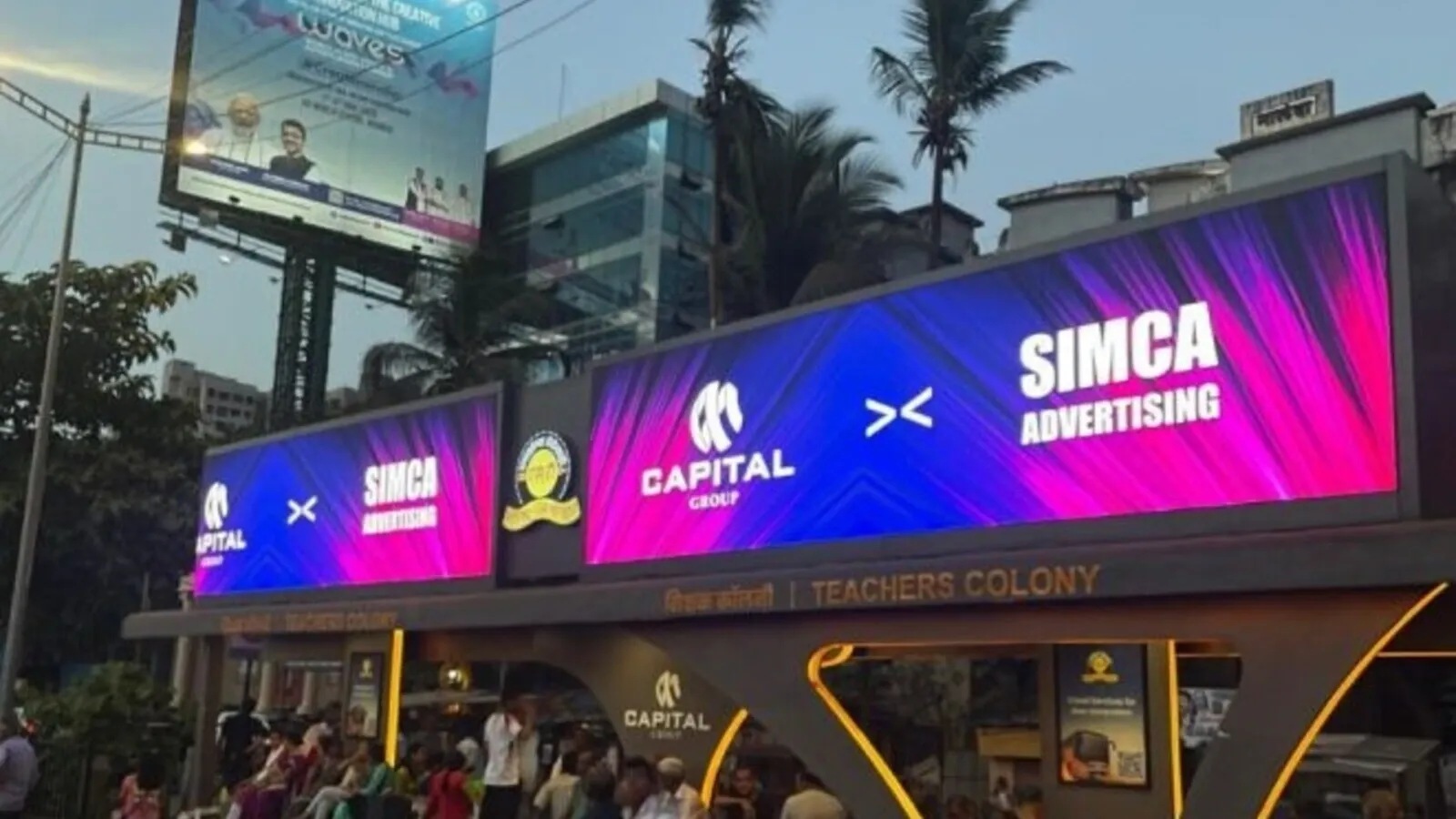
Simca Advertising FY26 Concall Decoded: Digital Billboards That Finally Found a Use Case
General information and entertainment, not investment advice. The author is not a SEBI-registered adviser or research analyst. No recommendation, no promised returns. Markets carry risk including loss of capital. Figures may not be current. Consult a registered adviser before acting.
1. Opening Hook
A Mumbai-based billboard company, fresh off its May 2026 listing on NSE Emerge, held its inaugural earnings call and reported something genuinely unusual: PAT grew 125% while the company pivoted hard into digital screens. Revenue doubled to ₹127.8 crores. The kicker? Management claims the path to 70% digital revenue in five years lies in selling the same billboard space to five clients simultaneously—a trick that works because nobody else is doing it yet.
2. At a Glance
Metric
Punchline
FY26 Total Income
₹127.8 Cr, up 75% YoY (from ₹73 Cr)
EBITDA
₹23.5 Cr, up 130%, margin 18.42% vs 14% prior year
PAT
₹16.16 Cr, up 125%, margin 13.1% vs 10.1%
H2 Revenue Growth
108% YoY; 70% from existing assets, 30% from new inventory
Digital Assets
14 LED billboards, contributing 25–30% of revenue; target: 8–10 more in next 2 years
SBI Contract
₹40 Cr ongoing business; ₹10 Cr in FY25, ₹30 Cr expected in FY27 (₹15 Cr already billed in first 2 months)
Client Retention
75–80% (vs. competitor Bright at 60%)
Debtor Days
114 days; management targets 90 days as payment terms tighten
Asset Utilization
70% for static, 55% for digital
3. Management’s Key Commentary
On the digital pivot and revenue multiplication:
Management said: “Where I used to get paid for one display, I now potentially get paid for 6 displays.”
(The math is brute: one LED billboard rents to multiple advertisers on rotation, slashing the unit price per slot but multiplying gross revenue per asset. A ₹5 lakh static billboard becomes a ₹20 lakh LED when split five ways—except the electricity bill jumps from ₹15,000 to ₹1.5 lakh, which management insists is trivial because it’s divided across five payers.)
On the SBI windfall:
Management said: “We closed INR40 crores of business with them for — that’s a continuous business coming from ’26 and continuing to financial year ’27 also. So, that has added to a lot of revenue to us.”
(SBI alone accounts for ₹40 Cr of the pipeline. The kicker: only ₹2 Cr came from Simca’s own assets; the remaining ₹38 Cr is sourced from third-party sites via Simca’s agency division—a middleman margin play that scales without owning inventory.)
On the path to doubling revenue:
Management said: “In FY25, our revenue was INR77 crores. In ’26, it reached INR127 crores, which is almost 70% jump.”
(Actually 65%, not 70%, but nobody corrected it on the call. The plan: convert static to digital (4x–5x revenue per asset), add new sites, and grow the agency division. No target number given, only “phenomenal growth” and a 25–30% minimum CAGR.)
On the app that costs ₹20–25 lakh:
Management said: “We are already developing an app… It’s going to start within a year’s time, and the investment is not much, around INR20 lakh to INR25 lakh the costing is going to be for that app.”
(An automated media-buying platform inspired by Meta Ads and Google Ads, still in development. No launch timeline, no revenue forecast. Management called it a “first-mover advantage” in Indian OOH—a claim that will test itself in a year or two.)
On Bangalore expansion:
Management said: “…we would surely start up with 5 to 6 billboards on asset management, and let’s see how it goes. So, putting up 5 to 6 billboards even of smaller size approx would cost me around INR8 crores to INR10 crores.”
(Permissions not yet in hand. Expected within 6 months. Capex ₹8–10 Cr for a pilot. No revenue guidance for the new city.)
On margins under digital:
Management said: “…my selling price ofthe LED holding is also around INR4 lakhs to IN�INR5 lakhs. So, potentially I am making INR20 lakhs on a month, wherein earlier formally I was making only INR5 lakhs.”
(A ₹5 lakh monthly site becomes ₹20 lakh when sold to five clients. Electricity jumps from ₹15k to ₹1.5L per month. Management frames this as a rounding error because gross profit per asset swells from ₹1 lakh to ₹15 lakh—true, but the electricity-as-percentage-of-sales metric does deteriorate, a detail management sidesteps.)