General information and entertainment, not investment advice. The author is not a SEBI-registered adviser or research analyst. No recommendation, no promised returns. Markets carry risk including loss of capital. Figures may not be current. Consult a registered adviser before acting.
1. At a Glance
Trent landed a ₹20,074 crore revenue in FY26, up 18% from ₹17,135 crore the year before. Net profit climbed to ₹1,720 crore, a 11% jump. The stock trades at ₹2,902 with a P/E of 89.6x — sitting above its five-year median.
The multiple reflects conviction in a retailer opening stores at a run rate of 250+ annually. Yet like-for-like growth (the sales growth of comparable stores) stayed in low single digits. The tension is old: scale and ambition versus the near-term consumer mood.
Store count rose from 1,043 to 1,286. Zudio alone added 200 stores in twelve months. Operating margin held at 19%, unchanged from FY25, despite 321 cities served and 17.7 million sq ft of retail space.
A bonus issue (1:2) was approved in June 2026. The board flagged a ₹2,500 crore fundraise plan, timeline undecided. The company holds ₹930 crore in cash.
2. Introduction
Trent is India’s largest fashion and lifestyle retailer. It sits inside the Tata Group’s orbit (37% held by Tata entities, primarily Tata Sons at 32.5%). The company owns Westside, Zudio, Utsa, and Samoh; it runs Star hypermarkets via a 50:50 joint venture with Tesco UK; and it has stakes in Zara (via Inditex) and Massimo Dutti.
FY26 was a year of reconciliation. Revenue growth (18%) outpaced profit growth (11%). Stores multiplied; like-for-like sales stayed flat. The company reinforced the balance sheet (gearing fell to 0.36x from 0.41x), burned cash on capex (₹1,577 crore in investing activities), and turned operating leverage into higher absolute profit despite margin compression nowhere to be found.
A geopolitical event in early 2026 (West-Asia tensions) is cited in the investor deck as a demand dampener. Consumer discretionary spending softened; essentials held. But the company’s framing remained measured: structural demand for branded retail remains intact, newer markets take 2–3 years to mature, and the portfolio is building density where it matters.
The rating agencies (CARE, ICRA) maintained AA+ and AA (Stable), recognizing the balance sheet, the Tata parentage, and the profit trajectory.
3. Business Model: WTF Do They Even Do?
At the top line: fashion and lifestyle retail in four formats.
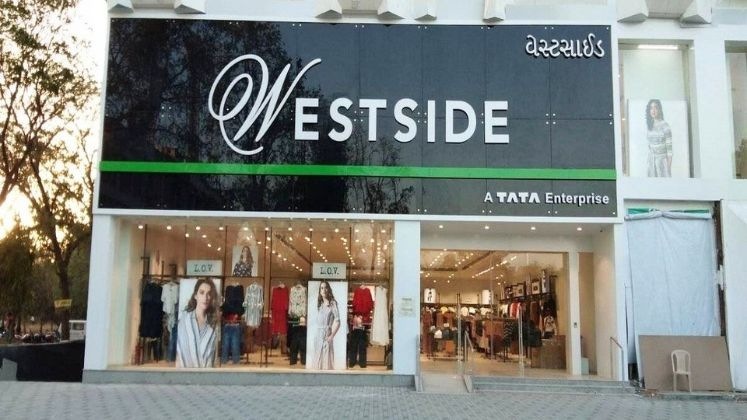
Westside (300 stores, 7.26 million sq ft) is the lifestyle anchor — apparel for men, women, kids; beauty; footwear; home furnishings. It competes on brand curation, proprietary lines (Nuon, Studiofit, ETA), and a price architecture kept deliberately stable. Outlet: the department store positioned above Zudio but below luxury.
Zudio (963 stores, 10.38 million sq ft) is the value fashion play — apparel, footwear, beauty at lower ticket. It’s a growth machine: 212 new stores opened in FY26, over 80% in Tier II/III cities and new micro-markets. The scale is staggering — by raw count, Zudio alone dwarfs most listed fashion companies in India.
Food and Grocery (Star: 84 stores, 1.44 million sq ft) is the jV with Tesco. It’s a convenience format — fresh, staples, FMCG, general merchandise. Own-brand contributes 72–73% of Star’s revenue. Margins are modest; the unit is called “stable” in recent commentary, a polite way of saying it’s not a growth driver.
Others (Utsa, Samoh, Burnt Toast, Zudio Beauty): niche brands at smaller scale. Utsa is ethnic wear. Samoh is occasions. Burnt Toast is a new experiment in Bangalore. None move the needle yet.
The model itself is vertical: Trent owns the merchandise, owns the real estate (or leases it, then subleases), operates company-owned stores, and controls pricing. It avoids franchising (except where property constraints force it). It builds supply chains in-house. This is capital-intensive; it yields control; and it means the company absorbs inventory risk and labor cost swings.
The emerging categories — beauty, innerwear, footwear — now represent over 21% of revenues (per the company). Online is growing (Westside.com, Tata CliQ, Tata Neu). Westside’s online revenue grew 25% in Q4 FY26 and hit 6% of Westside’s total.
The real roast: the model works only if you can hunt traffic at scale and turn it to margin. Zudio does this via sheer density. Westside does it via brand weight and experience. Star does neither especially well, which is why it moves sideways. And the newer markets — Tier II/III — are untested on whether they can sustain the same unit economics as the metros.
4. Financials Overview
Figures are consolidated, in ₹ crore. Result type: Annual (Fiscal Year ended 31 March).
Metric
FY26
FY25
YoY Change
Revenue
20,074
17,135
+17.2%
EBITDA (Operating)
3,745
2,820
+32.8%
Net Profit (PAT)
1,720
1,547
+11.2%
EPS (Full Year)
32.25
29.01
+11.2%
Q4 FY26 Concall Snapshot:
The company opened 23 Westside and 109 Zudio stores in the final quarter. Operating profit margin in Q4 (excluding lease impacts) reached 18%, against a reported 15% for the full year (the delta reflects lease accounting under IND AS 116). The company attributed the Q4 strength to improved cluster economics and store density effects.
Management flagged headwinds: West-Asia geopolitics damped discretionary spend. Input costs (raw materials) began to inch up. Labor availability tightened in supplier geographies. The company’s response: calibrated sourcing (retain India bias, diversify hubs) and stable pricing (no discounting as a demand lever).
Like-for-like growth for the fashion portfolio in Q4 and full FY26 was low single digits. The company noted it is pursuing revenue density across “comparative micro-markets” rather than just same-store growth, a framing that signals slower comps expected as new stores in newer markets come online.
The board approved in-principle a ₹2,500 crore capital raise, to fund store upgrades, new brand incubation, supply chain automation, digital scaling, and Real Estate capex for Star. Timing and modality (rights, open offer, etc.) remain TBD.
5. Market Expectations & Historical Multiples
This section describes how the market is currently pricing the company and how that compares with its own history and peer group. It is descriptive, not predictive.
Metric
Current
Historical Avg (5Y)
Peer Median
P/E
89.6
42.1
56.2
EV/EBITDA
40.9
28.4
19.0
P/B
22.3
11.2
—
ROE
27.7%
24.2%
—
ROCE
28.3%
16.1%
13.8%
The market pays 89.6 times earnings here, against a peer median of 56.2x. Over the past five years, the company’s trailing P/E averaged 42x.
The multiple reflects expectations of margin stability (the company has held operating margin near 16–19% across cycles), return on equity above 27%, and consistent capital returns to equity. The EV/EBITDA of 40.9x is also elevated against both the peer set (19x median) and the company’s own history (28.4x average).
What is the market pricing in? Growth persistence. The opening of 250+ stores annually, with higher unit economics in clusters. Margin hold despite wage inflation and raw material creep. The Tata parentage