Satani Bearings FY2026: ₹35 Cr Revenue From ₹0.01 Cr, a 3,544x Awakening (Prices Referenced at ₹273, Not Live)
General information and entertainment, not investment advice. The author is not a SEBI-registered adviser or research analyst. No recommendation, no promised returns. Markets carry risk including loss of capital. Figures may not be current. Consult a registered adviser before acting.
1. At a Glance
Satani Bearings delivered a jaw-drop of a fiscal year: revenue catapulted to ₹35.44 crore in FY2026, a leap from ₹0.01 crore the prior year. The company went from near-total dormancy to full throttle. Net profit swung to positive ₹0.05 crore (₹5.12 lakh) after a decade-plus of losses.
The stock price has been equally volcanic—up 164% in a year, 80% over three years. At ₹273 per share, the market assigns a P/E of 10,920x, a ratio so extreme it signals not valuation but an earnings base so small that the division produces arithmetic theatre, not analysis.
The balance sheet swelled from ₹0.15 crore in assets (FY2025) to ₹42.56 crore (FY2026)—a direct result of an equity issuance under preferential allotment that raised ₹217.82 crore gross, of which ₹17.50 crore went out as a guarantee to a related party. Receivables stand at ₹24.74 crore, or 255 debtor days of sales—the company is waiting a year to get paid.
Cash flow from operations: minus ₹17.76 crore. The business burns cash at the operating line, even as the balance sheet glows with fresh capital.
The tension: revenue explosion paired with a cash collapse and receivables that dwarf everything else. Is this a turnaround, a one-time event, or a warning?
2. Introduction
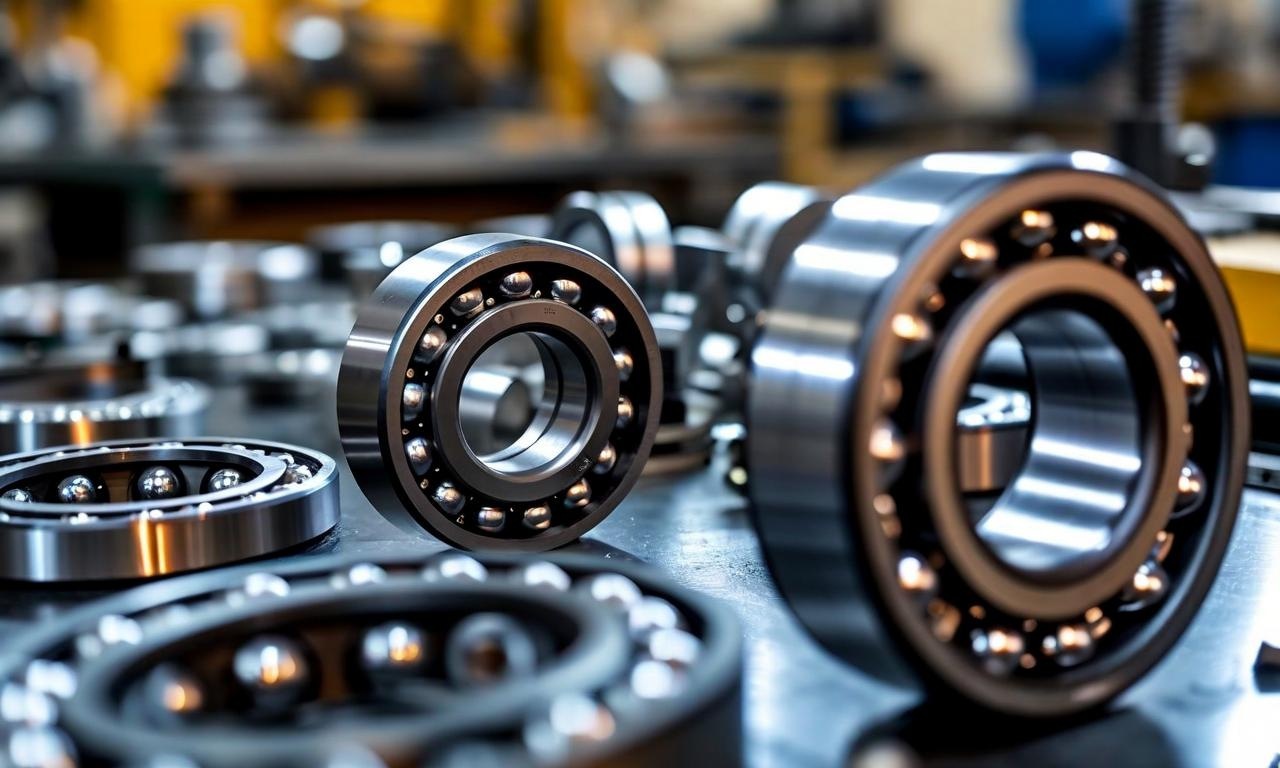
Satani Bearings (formerly Deccan Bearings) was incorporated in 1985 as a trader of ball and roller bearings—taper, cylindrical, steering, needle, water pump, clutch, king pin, ball thrust, and spherical roller variants. For nearly four decades, it was a niche automotive parts business.
The financial records from FY2017 to FY2025 painted a grim picture: losses in every single year, sales that ranged from near-zero (FY2022–23) to modest (FY2018 at ₹3.33 crore). The company barely existed on the income statement.
Then, in FY2026, the board approved an extraordinary general meeting in April 2026 to authorize a 10:1 share split, increase equity capital to ₹35 crore, boost borrowing powers to ₹500 crore, and launch a preferential allotment that raised ₹217.82 crore. The promoter group shifted: Paresh Gushabhai Satani and his family took control; key appointments (Tanuj Pareshkumar Satani as Whole-Time Director and CFO) became effective November 2025.
Simultaneously, the company changed its name from Deccan Bearings to Satani Bearings on December 19, 2025.
In the same fiscal year, sales erupted to ₹35.44 crore. Receivables hit ₹24.74 crore. The balance sheet expanded 280x. And the market capitalization sits at ₹546 crore on a stock price of ₹273 (as of June 8, 2026).
3. Business Model: WTF Do They Even Do?
Satani Bearings is a distributor and trader—not a manufacturer. It buys bearings (primarily from suppliers) and sells them into the automotive aftermarket and to OEMs, with some export. The product mix is broad: taper roller (high-load applications), cylindrical roller (precision machinery), steering bearings (critical for vehicle assembly), and specialty types like king pin and clutch bearings.
Distribution is the moat, if any. About 65% of demand flows to OEMs (car, truck, tractor makers); the rest goes to the aftermarket and exports.
The business model itself is thin-margin trading: buy, stock, sell. No manufacturing complexity, no IP, no brand moat to speak of. Working capital sits in receivables and inventory. The margin is the spread between cost and selling price, often a low single digit in bearing distribution.
In FY2026, the cost of goods sold (purchase of stock-in-trade) was ₹34.09 crore against sales of ₹35.44 crore—a raw margin of just 0.06%. Employee costs (₹0.07 crore), admin, and other expenses ate what little remained. A business hanging on a razor’s edge, waiting for scale and operating leverage to arrive.
The risk: demand softness, customer defaults (hence the 255-day debtor cycle), and supplier stress. The opportunity: if the order book begins to flow into cash, and receivables turn into collections, the model works. Currently, it doesn’t.
4. Financials Overview
Figures are consolidated, in ₹ crore.
Metric
FY2024
FY2025
FY2026
YoY Growth
3-Yr Growth (CAGR)
Revenue
—
—
35.44
—
—
EBITDA
-0.23
-0.16
0.09
—
—
Net Profit
-0.18
-0.16
0.05
—
—
EPS (Annualised)
—
—
0.03 (post-split)
—
—
The FY2026 annual result was audited and published May 30, 2026. Revenue jumped to ₹35.44 crore; EBITDA swung to ₹0.09 crore; net profit reached ₹0.05 crore after tax of ₹0.04 crore.
For context: FY2025 saw revenue near zero (₹0.00 explicitly) and a net loss of ₹0.16 crore. FY2024 had no reported revenue and a ₹0.18 crore loss. The business was dormant.
Quarterly trajectory (FY2026):
The fiscal year breaks into two halves with material swing:
H1 FY2026 (Apr–Sep 2025): Sales nil; operating losses continued (₹-0.31 cr cumulative Q1–Q2, then ₹-0.09 cr in Q3).
H2 FY2026 (Oct–Mar 2026): Revenues appear only in Q4 (Dec 2025 onwards). Q3 FY2026 (Sep 2025) still recorded a ₹-0.04 cr operating loss; Q4 (Dec 2025) swung to ₹0.09 cr operating profit and ₹0.15 cr pre-tax profit. The final quarter (Mar 2026) added ₹16.43 cr sales and ₹0.21 cr net profit.
This is not smooth growth; it is a binary flip. The business was off, then switched on in the last six months of the fiscal year.
5. Market Expectations & Historical Multiples
This section describes how the market is currently pricing the company and how that compares with its own history and peer group. It is descriptive, not predictive.