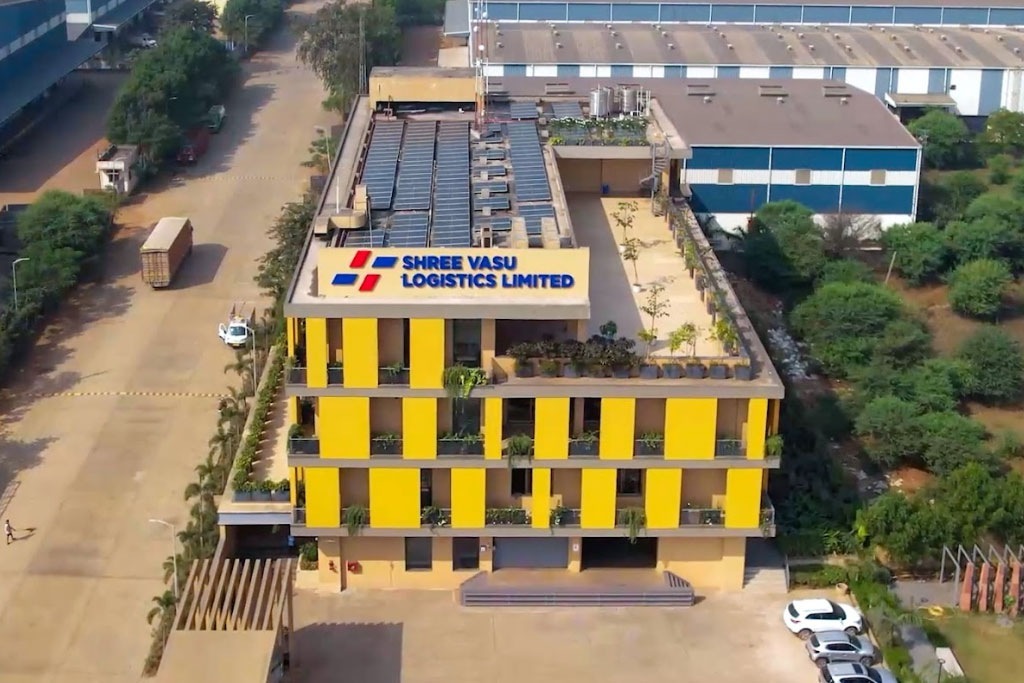
Shree Vasu Logistics FY26: Revenue Hits ₹224 Cr, PAT Swings to ₹5.78 Cr on Traffic Surge
General information and entertainment, not investment advice. The author is not a SEBI-registered adviser or research analyst. No recommendation, no promised returns. Markets carry risk including loss of capital. Figures may not be current. Consult a registered adviser before acting.
1. At a Glance
Shree Vasu Logistics reported FY26 revenue of ₹224 Cr, up 53% year-on-year—a sharp jump from the prior year’s ₹146 Cr. Net profit landed at ₹5.78 Cr after swinging through choppy waters: FY25 clocked ₹2.19 Cr, implying a 165% profit surge in annualized terms.
The headline number masks a messier P&L: quarterly earnings lurched between loss and surplus across the year. Q4 FY26 itself pulled in ₹3.37 Cr, buoying full-year results despite negative quarters earlier in the fiscal.
The warehouse footprint sits at 4.5 million sq ft across 34 cities. The company manages 727,200 tons of freight annually and counts 65+ clients including Dabur, JK Tyre, Godrej, and Meesho. Operating margins have compressed—from 26.6% in FY25 to 25.4% in FY26—a signal that revenue growth is being chased through discount or operational complexity.
The central tension: Is the company growing faster than its profitability can keep pace, or is FY26 simply a setup year for better margins ahead?
2. Introduction
Shree Vasu Logistics was incorporated in 2007 as a private limited entity in Raipur, Chhattisgarh, pivoting through decades from FMCG distribution into third-party logistics (3PL), warehousing, and retail trade. The founder, Bhushan Garg, built the business across Chhattisgarh and Eastern India; the company listed on NSE in SME board in 2018 and moved to the main board in 2022.
The logistics sector itself is a study in contradiction: fragmented, hypercompetitive, and capital-intensive, yet essential infrastructure for any supply chain. Shree Vasu operates in this bruising space as a mid-sized, regionally-anchored player, expanding eastward and southward.
Recent moves include forays into e-commerce logistics for Meesho and quick-commerce for Zepto, addition of an electric vehicle fleet, and deployment of proprietary IT systems—a “Zero Phone Call Operations” platform. CFO Anil Katre resigned in January 2026 citing health reasons; Newaj Patel took the role in April.
India Ratings affirmed the company’s credit rating at IND BBB/Stable with IND A3+ for short-term facilities in June 2026, reflecting stable margins and moderate leverage. CARE Ratings downgraded the company to BB+ in March 2025 citing working capital stress and the issuer’s non-cooperation with rating updates.
3. Business Model: WTF Do They Even Do?
Shree Vasu’s playbook rests on three legs: Contract Farming Arrangement (CFA) warehousing and back-end logistics, e-commerce fulfillment, and transportation (PTL, FTL, milk-run models). The company also operates Jockey exclusive brand outlets in a franchisee retail model.
The 3PL segment (logistics, warehousing, and allied services) contributed ₹206.4 Cr to FY26 revenue—92% of the total. This is the profit engine: the segment reported operating profit of ₹125 Cr (unadjusted) in FY26 before unallocated overhead. Retail trading limped in at ₹1.8 Cr revenue and ₹0.43 Cr operating profit—a break-even play pretending at scale.
The clientele spans pharma, FMCG, agrochemical, auto-parts, and electronics. Dabur, Godrej, JK Tyre, Parle, and Marico are marquee names; Meesho and Zepto are the new religion. The company holds warehouses in Raipur, Bilaspur, Kolkata, and rented space in Bhubaneswar, with a stated ambition to reach 50 million sq ft by 2030 and operate in 50+ cities.
The model itself is straightforward: rent or own warehouse space, hire labor, move goods, bill clients, repeat. Competitive edge comes from proximity to clients, fleet availability, IT systems, and the willingness to accept thin margins to retain contracts. The fragmented Indian logistics market is both the company’s TAM (total addressable market) and its guillotine—there is always a cheaper competitor two blocks away.
FY26 Revenue broke ₹224 Cr, a 53% uptick from the prior year. Cost of goods sold and operating expenses climbed in lock step, consuming ₹166.54 Cr of revenue. Operating profit (before other income, depreciation, and finance costs) landed at ₹57 Cr, equivalent to a 25.4% OPM. This margin is tight for a capital-light model and has inched downward from the FY25 figure of 26.6%.
Depreciation of ₹35.78 Cr and interest of ₹17.73 Cr chewed into profits. Depreciation’s sharp rise—a 48% year-on-year jump—reflects capex; interest grew 45% as borrowings climbed. The company reported other income of ₹3.58 Cr, a gain from fair-value revaluation of investments and interest income.
PBT stood at ₹6.99 Cr; tax at an effective rate of 17.4% yielded ₹1.22 Cr, leaving net profit of ₹5.78 Cr.
Quarterly volatility was pronounced. Q3 FY26 (9MFY26 cumulative) reported a loss; Q4 reversed it with a profit of ₹3.37 Cr, suggesting lumpy client billings or seasonal strength in Q4.
5. Market Expectations & Historical Multiples
This section describes how the market is currently pricing the company and how that compares with its own history and peer group. It is descriptive, not predictive.