General information and entertainment, not investment advice. The author is not a SEBI-registered adviser or research analyst. No recommendation, no promised returns. Markets carry risk including loss of capital. Figures may not be current. Consult a registered adviser before acting.
1. At a Glance
Deccan Cements shipped ₹636 Cr revenue in FY26, up 21% YoY, with net profit of ₹29 Cr (280% jump but off a ₹7.5 Cr base). The company commissioned its Line-3 plant in December 2025, doubling capacity to 4.0 MTPA. But margins stayed thin: OPM at 12.1% versus the peer median of 12.33%. Debt climbed ₹39 Cr to ₹753 Cr—now 1.0x net worth. ROE limped to 2.4%, ROCE to 3.3%. The market pays 45.8x earnings.
Headline tension: a doubling of cement capacity into a cement market. The exceptional gain from a land sale (₹128 Cr) rescued the bottom line; strip it, and PAT was ₹1.3 Cr.
2. Introduction
Deccan Cements (DCL) is a Hyderabad-based cement maker incorporated in 1979 with 2.1 MTPA capacity—until December 2025. That month, Line-3 came online, adding 1.8 MTPA of cement capacity and 8 MW of waste-heat recovery. The expansion was funded by term debt: ₹671 Cr borrowed, repayment to start FY27.
The company also holds non-conventional power (2 MW wind, 3.75 MW hydel, 7 MW waste-heat recovery). Cement makes up 99% of revenue; power is a rounding error. Sales volumes in FY25 were 13.9 lakh MT; by September 2025 the company had shipped ~8.5 lakh MT in the first half. Distribution spans 8 states via 1,000+ dealers, skewing rural and semi-urban.
On 9 June 2026, Infomerics downgraded the company’s proposed NCD rating to BBB-/Negative and moved it to “issuer not cooperating” status—the company did not supply data for a review. On 5 May 2025, CRISIL downgraded the long-term rating to BB+.
3. Business Model: WTF Do They Even Do?
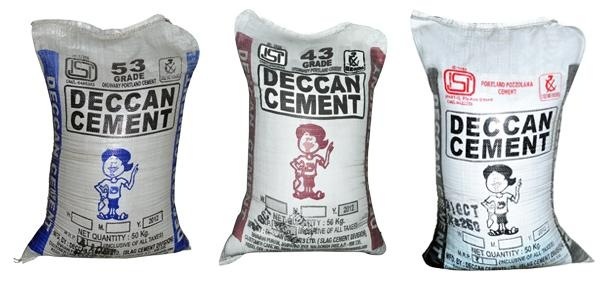
Deccan Cements makes four types of cement: OPC (33, 43, 53 grades), PPC (blended, for hydraulic structures and marine works), PSC (blended, coastal and general construction), and specialty cements (53-S, rapid-hardening, sulphate-resistant, high-alumina, oil-well). The product mix is banal; the real business is the trade-off between cost and reach.
The company owns two integrated lines at Bhavanipuram, Telangana. Clinker and cement are made in-house. Power is generated on-site (wind, hydel, WHRS), which reduces grid dependency but ties capex and running costs together. If you own the kiln, you own the power bill.
Margins compress when either cement prices or volumes fall. FY25 and FY26 saw the company caught in a 12-month trough: average selling price dropped, and volumes were slow. The land sale in Q4 FY26 was not a sign of operational recovery—it was a financial band-aid. The company had to park cash in FDs to earn interest: interest income fell to ₹7.3 Cr in FY26 from ₹10.6 Cr in FY25 (yet interest costs jumped from ₹12.8 Cr to ₹27.3 Cr because of Line-3 debt).
4. Financials Overview
Figures are consolidated, in ₹ crore. Result type: Yearly. Latest period: March 2026.
Metric
FY26
FY25
YoY Change
Revenue
635.6
527.0
+20.6%
EBITDA
77.4
35.9
+116%
PAT (Adj)
28.6
7.5
+280%
EPS
20.41
5.38
+279%
Revenue grew 21% on volume and price recovery into H2 FY26. EBITDA (PBT + Interest + Depreciation) was 77.4 Cr, or 12.2% of sales. The exceptional item—the land sale—contributed ₹128 Cr gain. Strip it, PBT was ₹21.5 Cr; net profit before the gain would be ~₹13 Cr.
Depreciation jumped ₹75 Cr (from ₹28 Cr to ₹36 Cr) because Line-3 assets came on the books. Interest costs more than doubled (₹12.8 Cr to ₹27.3 Cr) on the ₹671 Cr capex debt. The tax rate swung negative because of prior-year adjustments and deferred tax credits.
From the concall (implicit): The company is in debt-service mode. Capex debt repayment begins FY27. Management guided to 3.6 MTPA+ capacity utilization, but external demand and internal cash generation remain uncertain.