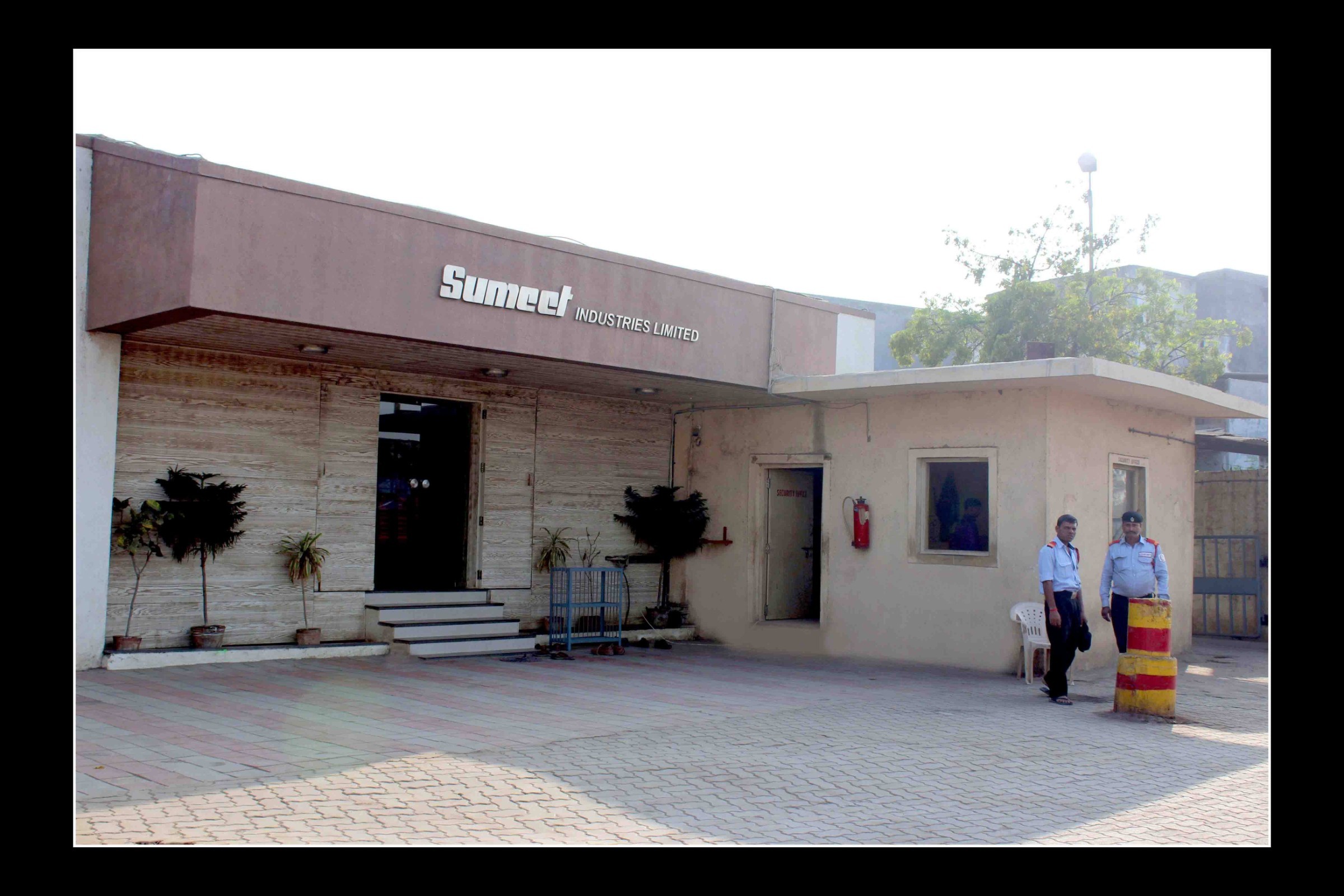
Sumeet Industries FY26: Margin Battle Without the War Paint
General information and entertainment, not investment advice. The author is not a SEBI-registered adviser or research analyst. No recommendation, no promised returns. Markets carry risk including loss of capital. Figures may not be current. Consult a registered adviser before acting.
Prices referenced are not live and relate to June 12, 2026.
1. At a Glance
Sumeet Industries swung back into reported profit territory in FY26, posting ₹27.3 Cr net income against FY25’s exceptional ₹170.2 Cr (which was a one-time restructuring windfall, not operating reality). The operating story is murkier: sales climbed just 4.7% to ₹1,050 Cr while margins remain under 3% net, and EBITDA sits at ₹61.2 Cr, a hair shy of 6% of revenue. The company is nursing ₹122.6 Cr of net debt while expanding: a ₹199.75 Cr rights issue is live, Nakoda assets worth ₹23.5 Cr are being acquired, and management talks boldly about margin recovery paths. Here sits a business in full restructuring mode—operational discipline tightened under new promoter ownership (Eagle Group, since Dec 2024), capex moving at pace, energy costs being engineered down, yet trading at 61.7x trailing earnings where the trailing number itself carries baggage.
Does a 5% net margin target, plus capex-led capacity growth, justify a P/E that sits well above peers? That’s the tension to watch.
2. Introduction
Sumeet Industries manufactures polyester chips and yarns in Surat—a factory business in a commodity industry.
For three years before December 2024, the company was in resolution. In December 2022, insolvency was declared under the National Company Law Tribunal (NCLT) after a series of loss-making years and balance sheet erosion. The Eagle Group, a Surat-based textile conglomerate led by Radheshyam Jaju and associates, acquired the business through an NCLT resolution process, completed in December 2024 after NCLT approval in July 2024. In that restructuring, ₹170 Cr of exceptional profit was recognised—not operating income, but the write-off of old liabilities under the resolution plan. The financial story of FY25 is therefore split: the exceptional relief versus the operating mess that still existed.
Post-takeover, the narrative has shifted. Management has rebooted cost discipline, supplier negotiations, energy initiatives, and product mix work. The concall from February 2026 disclosed a 14 MW solar plant commissioned, ₹75 Cr capex approved for 30,000 TPA capacity expansion, and stated intent to push margins toward 5% net. The Nakoda acquisition (announced March 2026, closing within 180 days) adds ~146,000 TPA of polyester chip capacity at ₹23.47 Cr. And the rights issue—approved June 8, 2026 at ₹11.86 per share—is now live for ₹199.75 Cr, aimed (per management’s vague disclosure) at “strengthening finances and expansions.” The company is, in short, in mid-restructuring: building out the operating machine while rebuilding the balance sheet.
3. Business Model: WTF Do They Even Do?
Sumeet makes polyester chips and yarns in Surat, serving Indian apparel, home textiles, and industrial customers, with an export ambition that is nascent.
The product stack: polyester chips (raw material for yarn spinning), partially oriented yarn (POY), fully drawn yarn (FDY), texturised yarn, and carpet yarn. The installed capacity (as of FY26) includes 100,800 TPA of continuous polycondensation (making the chips), 52,500 TPA of POY, 45,500 TPA of FDY, and smaller lines for texturising and recycled chips. A 14 MW solar plant (commissioned in Q1 FY26) feeds captive power, with a goal to supply 50% of the company’s power needs once expansion is complete.
The Eagle Group brought vertical integration focus: chips flow into yarn lines, reducing procurement risk and tightening the cost structure. Backward integration via captive polymerisation is a structural advantage in a commodities business—it caps raw material cost volatility and improves margin capture.
The customer base is largely B2B: spinners, weavers, and traders across India. Export attempts have been indirect so far (deemed exports via agents), with stated ambition to scale Asian and African markets. The concall emphasised that true direct exports are difficult for a B2B supplier; instead, growth lies in supplying higher-quality yarns to domestic spinners who then export finished fabrics.
The business is a classic polyester value chain play: squeeze margins via cost control and scale, diversify the product mix toward value-added items (texturised and specialty yarns), and unlock export optionality. It is not differentiated. It competes on cost, consistency, and delivery. The new promoters understand this.
4. Financials Overview
Figures are consolidated, in ₹ crore.
Metric
FY26
YoY Change
FY25
Revenue
1,050.4
+4.7%
1,003.4
EBITDA
61.2
N/A
(12.4)
Net Profit
27.3
-84%
170.3
EPS (₹)
0.39
-68%
2.45
Q4 FY26 (Jan–Mar 2026, 3-month quarter):
Metric
Q4 FY26
Q4 FY25
Revenue
265.7
243.0
Operating Profit
13.4
6.1
Net Profit
7.5
67.7
The headline collapse in net profit is deceptive. FY25’s ₹170 Cr was the NCLT restructuring relief, not