General information and entertainment, not investment advice. The author is not a SEBI-registered adviser or research analyst. No recommendation, no promised returns. Markets carry risk including loss of capital. Figures may not be current. Consult a registered adviser before acting.
1. At a Glance
Revenue climbed 15% to ₹1,894 Cr in FY26, but net profit sank 19% to ₹35 Cr—a tale of top-line gains collapsing into bottom-line pain.
The company faces a structural squeeze: domestic volume growth (up 20% YoY), yet margins compressed by mix shift, export weakness (down 11%), and elevated input/labour costs bleeding 200–250 bps off EBITDA.
On the other side sits a mechanical tailwind: ₹27 Cr of annual goodwill amortization stops from FY27, an accounting uplift that will flatter reported earnings by ~75% of FY26’s actual net profit—assuming operations don’t worsen further.
Management’s leadership shuffled in Q4, with Mihir P. Bajoria taking the MD chair after a prior stint in the UK operations; the refractory industry cycle is turning, they argue, yet global uncertainty (China, Europe, geopolitical disruption) remains a material headwind.
Reader question: Can the goodwill reprieve and U.S. margin recovery offset India’s deliberate margin sacrifice to gain share?
2. Introduction
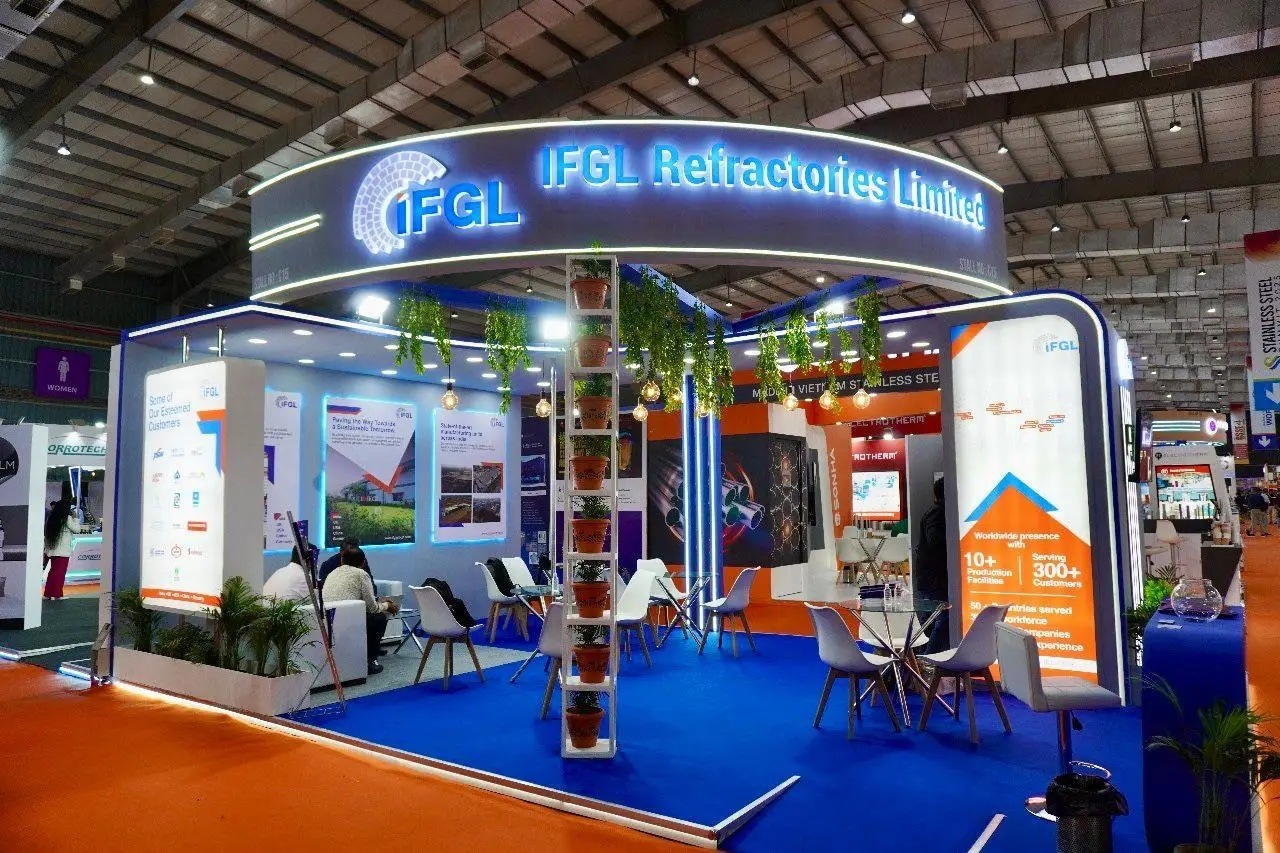
IFGL Refractories makes specialized refractories—the high-temperature ceramics that line steel furnaces, ladles, and tundishes. Promoted by the S.K. Bajoria Group (India) and historically backed by Krosaki Harima (Japan), it operates 10 plants across Asia, Europe, and North America, serving 50+ countries.
The story splits into two: a domestic India business that is gaining share and pushing volumes into new categories (cement, glass, aluminium), and overseas operations (UK, Germany, US) that are recovering from severe 2024–25 losses but remain structurally challenged by local plant closures and weak pricing.
FY26 marked a management transition. James McIntosh stepped down as MD in February 2026; Mihir P. Bajoria, who led Monocon (UK), was appointed MD from March 1 for a three-year term. In parallel, the company shifted operational leadership: Mukesh Rawal, who led Americas growth, is moving back to India as Director & CEO–India Operations.
The business is in capex mode—greenfield plants at Khurda (Odisha) and Bhachau (Gujarat) are under evaluation or awaiting Government of India approvals, funded in part by debt, as management bets on steel-driven India capex cycles through the next 3–5 years.
3. Business Model: WTF Do They Even Do?
IFGL sells refractory ceramics and monolithic refractory systems to steelmakers. The portfolio breaks down as:
Products: Slide gate systems (ladle flow control), purging systems (inert gas injection for steel cleanliness), ladle lining & refractories, tundish furniture, plastic ramming masses, ceramic bricks, and increasingly, specialty products for foundry, cement, and glass end-users.
Revenue Mix (FY26 consolidated): ~85% finished goods, ~12% traded goods, 3% other. Geographically, the consolidated group sees ~30% from exports (primarily from India operations).
Business Model Tension: IFGL has been shifting from a “product supplier” to a “Total Refractory Management” (TRM) provider. Instead of selling individual bricks, it now bids for full-system integration—design, installation, application support, performance monitoring. The logic is sound: customers (steel plants) reduce manpower, IFGL avoids customer mishandling (e.g., improper heating cracking bricks) and secures longer-term wallet share. But the transition demands pricing patience in the near term—IFGL is entering categories like casting flux and refractory bricks at “competitive pricing” to open accounts.
Marquee Customers: ArcelorMittal, Tata Steel, Thyssenkrupp, US Steel, SAIL, JSW, Nucor, Severstal. Top five customers account for 30–40% of sales. Customer concentration is moderate; no single customer exceeds ~10%.
Exports Softness: Standalone export revenue fell 11% in FY26. Management blamed “geopolitical uncertainties and external market headwinds”—a polite way of saying Europe/UK plant closures, Chinese dumping, and limited bargaining power in weak markets. However, management signalled this is partly strategic: the company has repositioned toward India’s steel capex upcycle and will “retarget exports” once global conditions stabilize.
4. Financials Overview
Figures are consolidated, in ₹ crore.
Metric
FY26
FY25
YoY Change
Revenue
1,894
1,653
+14.6%
EBITDA
146
105
+39%
EBITDA Margin
7.7%
6.4%
+130 bps
PAT (Reported)
35
43
-19%
PAT (Adjusted, ex-exceptional)
40
43
-7%
EPS (Reported)
4.81
5.96
-19%
What Moved: Revenue grew 14.6%, driven by 20% domestic growth (India) offsetting 11% export decline. EBITDA swung up 39% despite margin compression, because the base (FY25: 105 Cr) was artificially depressed by a one-time labour law provision charge (₹5.2 Cr in FY25). Stripping that out, operating leverage was marginal.
PAT fell 19% because:
Exceptional charges: ₹0.4 Cr in Q4 FY26 for new labour law provisions (India).
Margin pressure: Input costs (raw materials, energy, freight, LPG) remained elevated; management is in ongoing price revision talks with customers but acknowledges lag.
Mix shift: The company intentionally priced down entry-tier products (bricks, casting flux) to win new accounts; export mix declined, pulling the overall margin footprint.
Standalone (India Entity) Highlight: India operations grew 10% to ₹1,117 Cr; EBITDA margin held at 11.3% (flat YoY), but management disclosed margin pressure from “sales/product mix shift, lower export contribution, and elevated input/employee costs.”
Concall Insight: Management emphasized that FY27 earnings will include a ~₹27 Cr annual goodwill amortization reversal (from Sheffield Refractories acquisition amortization completing). This is a non-cash add-back to PAT, mechanically lifting reported earnings by ~75% of FY26’s actual profit—critical for near-term earnings visibility but masking underlying operational recovery.
5. Market Expectations & Historical Multiples
This section describes how the market is currently pricing the company and how that compares with its own history and peer group. It is descriptive, not predictive.