Triton Valves FY26: Threadbare Margins Hide Three Gears Spinning
General information and entertainment, not investment advice. The author is not a SEBI-registered adviser or research analyst. No recommendation, no promised returns. Markets carry risk including loss of capital. Figures may not be current. Consult a registered adviser before acting.
1. At a Glance
Revenue grew 18% to ₹578 crore. Net profit landed at ₹9.71 crore, up from ₹5.12 crore the prior year—a 90% jump, though that math is bent by a weak FY25 base and ₹79.77 crore in exceptional costs that year. Margins stayed thin: operating margin 7% despite decent topline momentum. The company is stitched together from three moving parts—automotive valves, specialty metals, and climate control gear—and the stitching is working. Q4 alone pulled ₹159 crore in sales, and the order book overfloweth.
Net debt held steady near ₹128 crore, cushioned by the fact that growth didn’t strangle working capital. Working capital ballooned: receivables up 14% year-on-year, inventory up 20%. Yet cash held. Management calls this a year where the macro tried to brake hard, and they kept the needle above zero. The central tension: Can this three-segment construct sustain double-digit volume growth while commodity prices stay feral?
2. Introduction
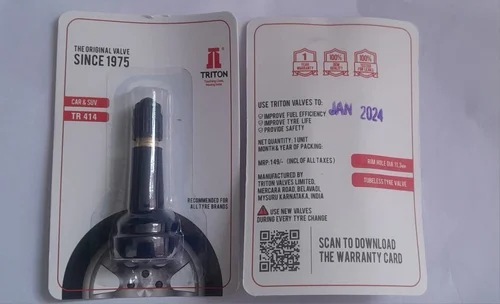
Triton Valves has been making tyre valves and allied hardware since 1975—first for India’s tube tyre era, now astride the automotive components industry as a supplier to OEMs in climate control, defence, aerospace, and industrial HVAC. The company claims dominance: 60–65% of India’s automotive tyre valve market overall, and 90%-plus in tubeless tyre valves alone. It operates three warehouses and feeds a customer roster anchored by MRF, Apollo Tyres, JK Tyre, and CEAT.
FY26 saw structural change. Tritonvalves Climatech (the air-conditioner valve arm) merged into the parent on April 1, 2025. This was no accounting mop-up—the NCLT blessing arrived June 3, 2026. The merger unlocked an estimated ₹6–7 crore in annual tax relief and vaporized intercompany rent and frictions. Triton Valves Future Tech (specialty metals) continues as a subsidiary, acting as a hedging valve when copper swings.
The industry backdrop: commodity volatility smashed the year. Copper and zinc prices rose in sync with the dollar—a rare, savage one-way move that created quarterly lag costs. Management estimates FY26 EBITDA lost ₹1.75 crore to this lag alone. China dumping hit climate control hard; dumping via FTA routes (Vietnam, Thailand) hollowed demand. Automotive weathered it. Metals thrived.
3. Business Model: WTF Do They Even Do?
Automotive Valves (the bread). Tyre valves for tubeless truck and car tyres. Valve cores for air conditioning, HVAC, and refrigeration. EV battery management components, patented in India, now powering Ather, TVS, Ola, Bajaj, and Rivire two-wheelers. A TPMS (tire pressure monitoring system) valve business barely visible yet: revenue immaterial, but a signed contract with AUMOVIO (Continental Automotive’s renamed entity) plans serial production by end-FY27, with two more large deals pending. The domestic market is near-saturated, but export touch-points are multiplying.
Metals—Tritonvalves Future Tech (the hedge). Brass bars, coils, and ingots. The company is pivoting up the pyramid into special alloys and hollow rods, tubes, and valve bodies. A second casting line was commissioned in FY26 and is running full blast. Tube orders already crossed 50 tons a month (versus initial hope of 5–20 tons). Management targets 7,000+ tons volume in FY27 and is cautiously managing growth to avoid leveraging into a commodity downturn. Exports to Germany (special alloys) and China (brass ingots) are now real, not ambition.
Climate Control (the wildcard). Air-conditioner valves and connectors for domestic and US markets. Q3 and Q4 FY26 were soft: weak Indian AC demand, cost inflation, and relentless China dumping. Management is lobbying hard for policy—QCO (Quantitative Restrictions) and MIP (Minimum Import Price). Customer wins exist: Mitsubishi Electric parts are now mass-supplying the Chennai plant; US export program launched in Q1 FY27 with patented connectors and early realizations expected.
The model works because volatility isn’t uniform. When copper hammers Triton Valves’ cogs, Future Tech’s margins widen. Intercompany friction is now gone. The leverage: Triton can scale export revenue (TPMS, metals, climate control to the US) while the core valve business absorbs domestic commodity shocks. This is not a one-product shop with one macro risk; it’s a three-legged stool. The stool is wobbly, but it stands.
4. Financials Overview
Figures are consolidated, in ₹ crore.
Metric
Latest Q (Mar’26)
YoY
QoQ
Revenue
159.33
+11.9%
+4.3%
EBITDA
11.54
+42.9%
+2.0%
PAT
3.60
+290.9%
+36.4%
EPS (₹)
7.03
+288.8%
+35.1%
Annualized Q4 EPS using full-year basis (no multiplication, as Q4 = March closes the fiscal year): EPS ₹18.96 on reported net profit ₹9.71 crore.
The quarterly detail: Q4 shows sharp PAT acceleration (₹3.60 crore vs ₹0.92 crore Q4 FY25), despite EBITDA margin compressing to 7.2% from 7.9%. The miss between EBITDA and PAT contraction points to finance cost relief and tax tailwinds. Interest expense fell ₹0.78 crore quarter-on-quarter; tax rate fell to 24% from 38% in Q3.
From the June 2026 concall:
Management framed FY26 as “decent growth considering the challenges” and noted “we could have surely done a lot better.” The consolidated revenue mix (pre-intercompany elimination): Automotive ₹434 crore, Metals ₹383 crore, Climate Control ₹17 crore. Post-elimination, ₹578 crore consolidated. Adjusted PBT (stripping out the FY25 labor code impact anomaly) nearly doubled to ₹15.5 crore, suggesting operating leverage is live despite margin squeeze. Operating cash flow for FY26 came in at ₹18.14 crore; working capital dragged by ₹13 crore (receivables and inventory balloons tend to do that). Tax paid ₹3–4.5 crore.
5. Market Expectations & Historical Multiples
This section describes how the market is currently pricing the company and how that compares with its own history and peer group. It is descriptive, not predictive.
Metric
Current
5-Yr Average
Peer Median
P/E
51.5
66.9
27.6
EV/EBITDA
16.6
n/a
13.4
ROE %
8.99
1.46
13.5
ROCE %
11.4
9.0
15.88
P/B
4.28
n/a
3.28
The market currently pays 51.5x reported earnings here. Against its own five-year average of 66.9x, that reads as pullback. But the peer set (Samvardhana Motherson at 36.6x, Bosch at 49.1x, Bharat Forge at 78.9x, Schaeffler at 50.6x, Uno Minda at 50.2x) clusters around 27.6x median—leaving Triton at a 87% premium to the typical auto-parts peer.
What is the market pricing in? A recovery story, conditional. Triton’s ROCE sits at 11.4%, below its peer