Shraddha Prime FY26: Revenue Tripled, Debt Stayed Put
General information and entertainment, not investment advice. The author is not a SEBI-registered adviser or research analyst. No recommendation, no promised returns. Markets carry risk including loss of capital. Figures may not be current. Consult a registered adviser before acting.
1. At a Glance
₹508 Cr revenue in FY26 — a 227% jump from ₹156 Cr a year ago. Net profit landed at ₹54 Cr, up 119% YoY.
But here’s the tension: while sales and profit screamed higher, the balance sheet stayed heavy. Borrowings climbed to ₹262 Cr from ₹189 Cr. Debt-to-equity hit 1.98x, a leverage metric that’s now a conversation, not a whisper.
The inventory pile — ₹389 Cr, or 76% of annual sales — sits as unfinished business on the balance sheet. That’s the company’s raw material: work-in-progress projects waiting for completion certificates and cash conversion.
Cash position improved: ₹34 Cr at year-end, up from ₹10 Cr. But it came from external borrowings, not from operations — operating cash flow was negative ₹38 Cr.
The market pays 12.2x earnings for this. Peers in residential realty? Typically 25–35x. The code is simple: Shraddha is smaller, newer, and the market isn’t pricing in scale yet.
Reader question: Does a 227% sales jump offset a debt-to-equity of 1.98x, or do both need watching at the same time?
2. Introduction
Shraddha Prime switched to real estate in 2007 and has spent the last three years scaling aggressively — launching projects, signing partnership agreements, acquiring development rights. FY26 was the inflection year.
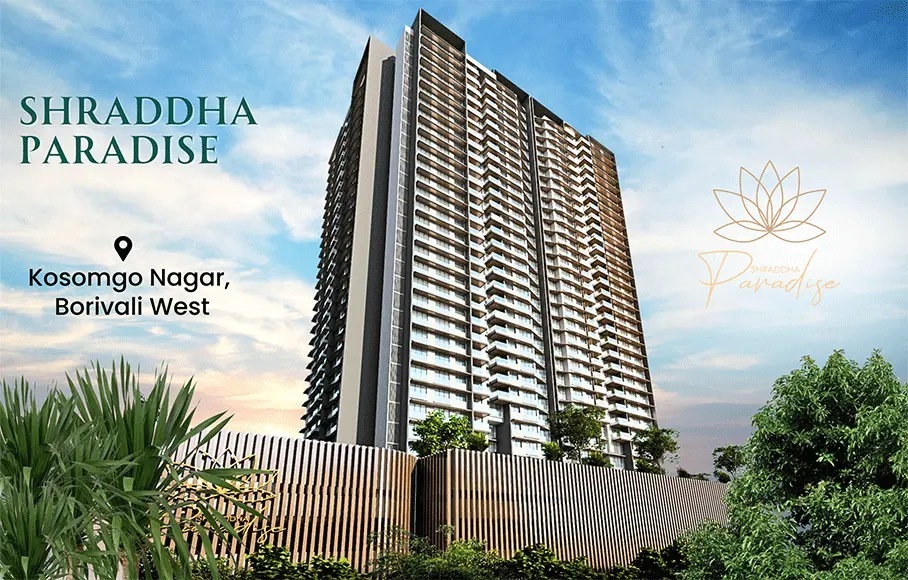
Two new projects received commencement certificates in April 2026: Shraddha Phoenix (₹150 Cr pipeline) and Shraddha Paradise Enclave (₹420–450 Cr pipeline). A third, Shraddha Pratham at Borivali, was generating revenue. In February 2026, the company executed a redevelopment agreement with Adarsh Villa Co-op for ₹118 Cr revenue potential.
The listed price on 10 Jun 2026 was ₹162.85; market cap ₹658 Cr. Promoter Sudhir Mehta owns 74.8%. In February 2026, he pledged 7 Mn shares (17.33% of equity) to HDFC Bank — a marker of personal leverage to fund expansion.
3. Business Model: WTF Do They Even Do?
Shraddha builds residential projects — compact housing, low-cost housing, premium apartments, townships, and slum rehabilitation units (SRA). All work happens in Mumbai.
The model: acquire land or redevelopment rights, obtain a commencement certificate (CC), market and deliver units while construction proceeds, and recognize revenue on percentage of completion.
Revenue mix is straightforward — premiums go to private sales in areas like South Bombay (Matunga); volumes come from SRA projects where margins are thinner but the public subsidy is reliable.
The company also enters into partnership agreements with existing co-ops and societies, taking over their redevelopment and earning a cut. In FY26, partnerships were formalized with Shree Krishna Rahul Developers (51% stake), Shraddha Vastu Developers (95% stake), and Shraddha Sai Infra (51% stake). These are fresh vehicles aimed at pipeline diversity — the company hasn’t consolidated their results yet, but the earnings will show up as “other income” initially.
That partnership structure is a scaling play: instead of funding land outright, the company becomes the builder and takes a developer fee. It looks cleaner on the cash flow than outright land acquisition, but it subordinates the company’s margin to negotiations with each co-op.
Competitive moat? Thin. There’s no brand; Shraddha competes on execution speed and relationship with the Bombay Development Authority (BDA) and local societies. The SRA corridor is politically connected and regulated. A misstep in delivery or governance can freeze a pipeline.
4. Financials Overview
Figures are consolidated, in ₹ crore.
Metric
FY26
FY25
YoY Change
Revenue
508.35
155.58
↑ 227%
EBITDA (approx)
66
31
↑ 113%
Net Profit
53.86
24.64
↑ 119%
EPS (₹)
13.33
6.10
↑ 119%
Q4 FY26 (three months ended Mar 31, 2026):
Revenue of ₹186 Cr landed in the final quarter alone — 43% of the full-year run rate. This is typical for project-based business: one large complex can flip the entire quarter. Net profit in Q4 was ₹23 Cr.
The jump accelerates the annualized profit. Full-year EPS of ₹13.33 reflects the revenue base and the tax impact (32% effective tax rate in FY26, vs. 28% in FY25).
Other income: ₹12.46 Cr in FY26, up from ₹4.58 Cr. This includes profit from partnership firms and interest on inter-firm loans. As partnership vehicles mature, this will likely grow — it’s the company’s only non-project income stream.
Concall color (from management guidance): The company flagged three new commencement certificates in FY26 and expects ₹570+ Cr in sales visibility over the next two to three years. The pipeline justifies the debt run-up. Without it, the 1.98x leverage looks reckless.