Hindusthan Insulators FY26: The Insulator That Got Shocked
General information and entertainment, not investment advice. The author is not a SEBI-registered adviser or research analyst. No recommendation, no promised returns. Markets carry risk including loss of capital. Figures may not be current. Consult a registered adviser before acting.
1. At a Glance
Q4 FY26 was a rescue operation. After nine months of losses that stacked up like unsorted ceramic discs, the company moved ₹20.91 Cr into profit in the final quarter—enough to tilt the full-year balance from a ₹1.80 Cr loss (FY25) to a ₹7.87 Cr loss (FY26). Wait, that’s worse.
Revenue climbed 24% to ₹338.55 Cr, driven by the insulator division shipping ₹335 Cr of the total. The conductor business—once a segment—is gone; the overhead line died with it in Q4 FY23. The specialty chemicals subsidiary exited in August 2025 at a ₹46 Cr loss, a fire sale that tanked the balance sheet and forced the company to book exceptional writedowns.
But there’s friction in the narrative. The company added debt of ₹109 Cr (down from ₹144 Cr last year), improved debtor days to 54 from 73, and pushed its operating profit margin back to 17% in Q4—the sharpest quarterly OPM in three years. A balance sheet that had no hiding places is now holding ₹66.36 Cr in cash, nearly 8x the minimum from two years ago.
The tension: revenue and operational metrics are mending, but the annual P&L still bled. Margins improved. Order flow is thick. Yet losses persisted.
2. Introduction
Hindusthan Insulators & Industries (incorporated 1959, now 66 years old) is not what it was.
The company sits inside the Hindusthan Group—a diversified beast spanning power, chemicals, renewable energy, agriculture, and education. HIIL itself has shrunk from a ₹789 Cr revenue business a decade ago to ₹339 Cr today. Ten years of compounded decline: -0.81%. But the last three years flipped that: +15.2% CAGR.
The insulator side manufactures high-tension insulators (disc, bushing, solid core types) at Mandideep, Madhya Pradesh, with a rated capacity of 15,400 MT. In December 2025, the board approved an additional ₹210 Cr capex to push capacity to 35,000 MT by December 2026—an audacious bet that flagpoles the confidence in the business. The company also exited the conductor business (overhead lines) in Q4 FY23 after a decade of margin erosion.
Ownership is tight: promoters hold 75%, institutional investors 0.23%, the public 24.77%. The Mody family runs it.
In February 2026, the company split its face value from ₹10 to ₹2 per share (5:1 split) and issued a 2:1 bonus, meaning original investors saw their shareholdings double in number, halved in face value—a cosmetic but signal-rich move that liquidity traders appreciate.
3. Business Model: WTF Do They Even Do?
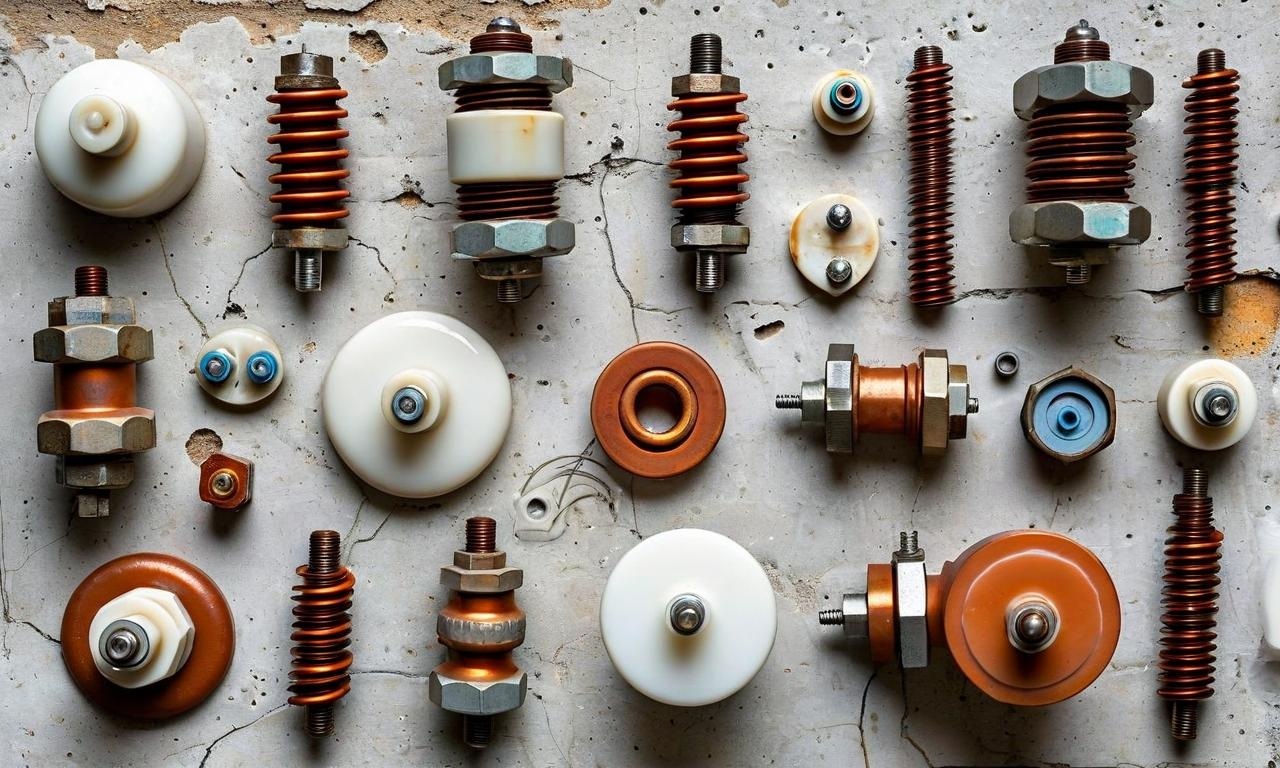
HIIL makes ceramic insulators for transmission and distribution (T&D) networks. Think of them as the ceramic rings that sit on transmission towers, holding high-voltage conductors in place without letting juice leak to the pylon.
The company derives nearly all revenue from the insulator segment (98% in Q4 FY26, vs. 6% in Q3 FY23). The major customers are private-sector T&D operators and grid expansion projects. There’s a smattering of export revenue (41-country footprint including Canada, USA, UK, Germany, Poland, Kenya, Nepal), though domestic is the engine.
The secondary revenue is rental income from real estate—old conductor facilities converted to assets held for lease. Material subsidiary Hindusthan Speciality Chemicals Limited (HSCL) manufactured epoxy resins at Jhagadia, Gujarat until August 2025, when HIIL sold its entire stake to DCM Shriram Limited. The sale price was ₹40 Cr, but after adjusting for tax liabilities (₹30 Cr) and other settlement costs, the company recorded a ₹46 Cr loss. That exceptional charge slammed FY26 P&L and explains why annual net profit tanked even as operational momentum improved.
The product is undifferentiated commodity ceramics sold into a fragmented, price-sensitive market where T&D margins are thin and budgets are public-sector dependent. Margins live and die by input prices (coal, petro, metals) and the company’s ability to pass them through. FY26 saw ₹39.93 Cr of negative “Other Income,” largely the HSCL writedown.
4. Financials Overview
Figures are consolidated, in ₹ crore.
Metric
FY26
FY25
YoY Variance
Revenue
338.55
272.79
+24.1%
EBITDA
59.03
-5.64
—
PAT
-7.87
-1.80
—
EPS (Annualised)
-10.9
-2.5
—
FY26 revenue bounced 24% to ₹338.55 Cr, lifted by insulator shipments and a late-year operational recovery. EBITDA (operating profit + depreciation) swung from negative ₹5.64 Cr (FY25) to positive ₹59.03 Cr—a ₹64.67 Cr move driven by better cost absorption and higher sales. But net profit fell further into negative territory because:
Depreciation of ₹9.03 Cr (steady vs. FY25).
Interest of ₹9.45 Cr (debt burden, down from ₹12.54 Cr as borrowings dropped).
Other Income of ₹-39.93 Cr (the HSCL stake sale writedown of ₹46 Cr, partially offset by forex gains and minor reversals).
Tax of ₹8.03 Cr (offset against losses; the company carried forward deferred tax assets).
The P&L narrative is split in two: operational turnaround + exceptional one-off charge = annual loss.
Q4 FY26 narrowed that story. The quarter alone reported:
Sales ₹108.88 Cr (+28.9% YoY from Q4 FY25’s ₹84.47 Cr).
Operating profit ₹23.1 Cr (OPM 21.2%).
Net profit ₹20.91 Cr after tax (EPS ₹29.04 on an annualised basis—Q4 ×1, not ×4, per the protocol).
Q4’s profitability was uncluttered by exceptional items. The subsidiary sale happened in August (Q2); the loss hit H1 FY26. Q4 showed what the core business can do when capacity is fuller and volumes are higher.
5. Valuation Discussion: Fair Value Range (Educational Only)
What follows is a walkthrough of how three valuation methods work, using this company’s numbers as the example — not a target, not a forecast, not advice.