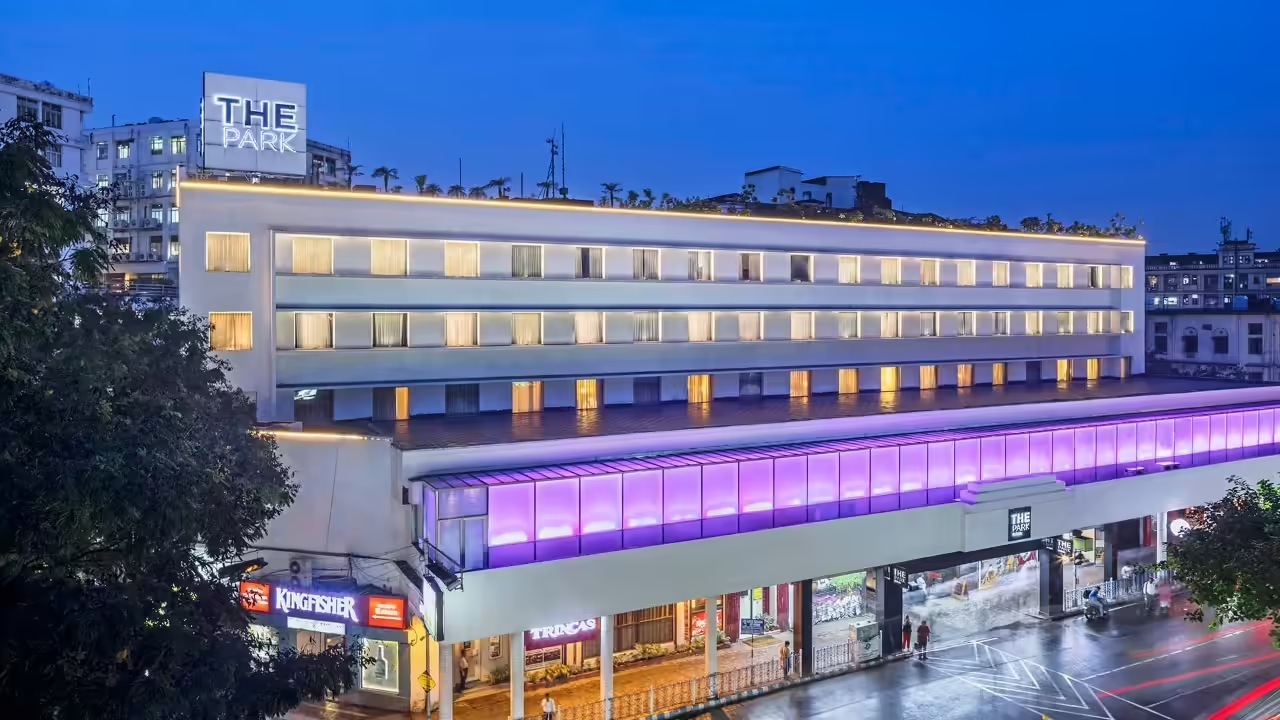
Apeejay Surrendra Park Hotels Ltd Mar 2026: The 91% Occupancy Paradox and the ₹1,500 Crore Appetite
Date of Publishing -
Spotted a factual error — a wrong number, date, or fact? Tell us and we will check the source.
Section 1 — At a Glance
Apeejay Surrendra Park Hotels Limited has reached a critical operational milestone, reporting full-year FY26 consolidated revenue of ₹707.28 crore, crossing the ₹700 crore mark for the first time in its corporate history. However, this topline expansion has arrived alongside significant bottom-line compression. Net profit for FY26 closed at ₹66.82 crore, down from ₹84.18 crore in the previous fiscal year, reflecting structural headwinds from aggressive capital deployment and external operational disruptions.
Investor attention remains intensely focused on the company’s structural pivot. While the portfolio sustained an industry-leading full-year occupancy rate of 91% and pushed Average Room Rates (ARR) up 9% to ₹8,304, the fourth quarter exposed vulnerabilities. Geopolitical tensions in the Middle East triggered widespread international travel cancellations, directly impacting premium properties in Delhi and Hyderabad, compressing Q4 FY26 net margins to 6.44%. Concurrently, the company has embarked on an ambitious asset-heavy and asset-light expansion pipeline targeting over 6,635 keys by FY30, which escalated financing costs and depreciation.
Capital expansion without immediate asset utilization creates a transient earnings lag that tests public market patience.
The near-term trajectory depends on the execution of its premium residential monetisation at the EM Bypass project in Kolkata and the rapid operational integration of recent luxury acquisitions in Mumbai and Kerala.
Section 2 — Introduction
Incorporated in 1987, Apeejay Surrendra Park Hotels Limited occupies a distinct niche within India’s luxury and boutique hospitality landscape. Operating across a spectrum of owned, leased, and managed contracts, the company has anchored its identity around high-density urban boutique hospitality and experiential luxury.
Beyond traditional room inventory, the corporate strategy relies heavily on total revenue per available room (T-RevPAR) maximization, driven by an extensive ecosystem of internal food, beverage, and nightlife brands. This operational footprint is augmented by ‘Flurys,’ a historic retail confectionery brand that is currently transitioning from a regional heritage tearoom into a scalable, asset-light national retail network.
Section 3 — Business Model: WTF Do They Even Do?
If you think this company simply rents out pillows and collects room keys, you are missing half the party. They operate a high-intensity hospitality model where rooms contribute 49.5% of revenue, while Food & Beverage (F&B) and entertainment drag in a massive 43.5%. They are essentially a nightlife and luxury dining engine that happens to have beds upstairs.
They run five brands ranging from the flagship ‘The Park’ down to ‘Stop By Zone’ for the budget-conscious traveler. Management boasts a “world-leading” 100% occupancy at their Kolkata property. When analysts pointed out that rooms were still bookable online, management dryly explained that “100% occupancy means the hotel is full all the time,” but they leave booking channels open until midnight just in case a revenue-management algorithm can squeeze out extra drama. To add a bit of maritime flair to a hotel balance sheet, they also lease out a luxury yacht. Because nothing says steady cash flow quite like high-end boat maintenance.
Section 4 — Financials Overview
Figures are consolidated, in ₹ crore.
Quarterly Performance Trend
Metric
Latest Quarter (Mar 2026)
YoY (Mar 2025)
QoQ (Dec 2025)
Revenue
₹183.70
₹176.71
₹200.41
EBITDA / Operating Profit
₹53.11
₹62.45
₹70.97
PAT
₹12.06
₹27.18
₹24.23
EPS (₹)
₹0.56
₹1.25
₹1.13
Operating revenue for Q4 FY26 crawled up a modest 4% YoY, heavily constrained by geopolitical friction that drove corporate event cancellations. EBITDA margins contracted to 28.85%, down from 35.34% in the matching quarter last year, pinched by rising input costs and payroll pressures.
What is Management Promising in the Coming Quarters?
During the recent earnings call, management conceded that external variables like the Middle East crisis and domestic disruptions clipped their mid-teens growth aspirations. However, they remain highly optimistic about an ARR-led growth strategy, given that domestic demand continues to outpace branded room supply by 200 to 300 basis points.
Significantly, the company announced a major operational pivot for its Flurys bakery division. The previous plan to build an expensive ₹20–30 crore central kitchen in Delhi has been abruptly discarded. Instead, they are outsourcing manufacturing to third-party vendors under strict quality control. The CEO noted that this avoids capital traps: “You don’t have to spend about 20 to 30 crores and then wait for a return.” > Topline milestones are vanity metrics if operational frictions erode the bottom-line conversion.
Does a 75% dividend payout ratio make sense when you are simultaneously borrowing money to fund