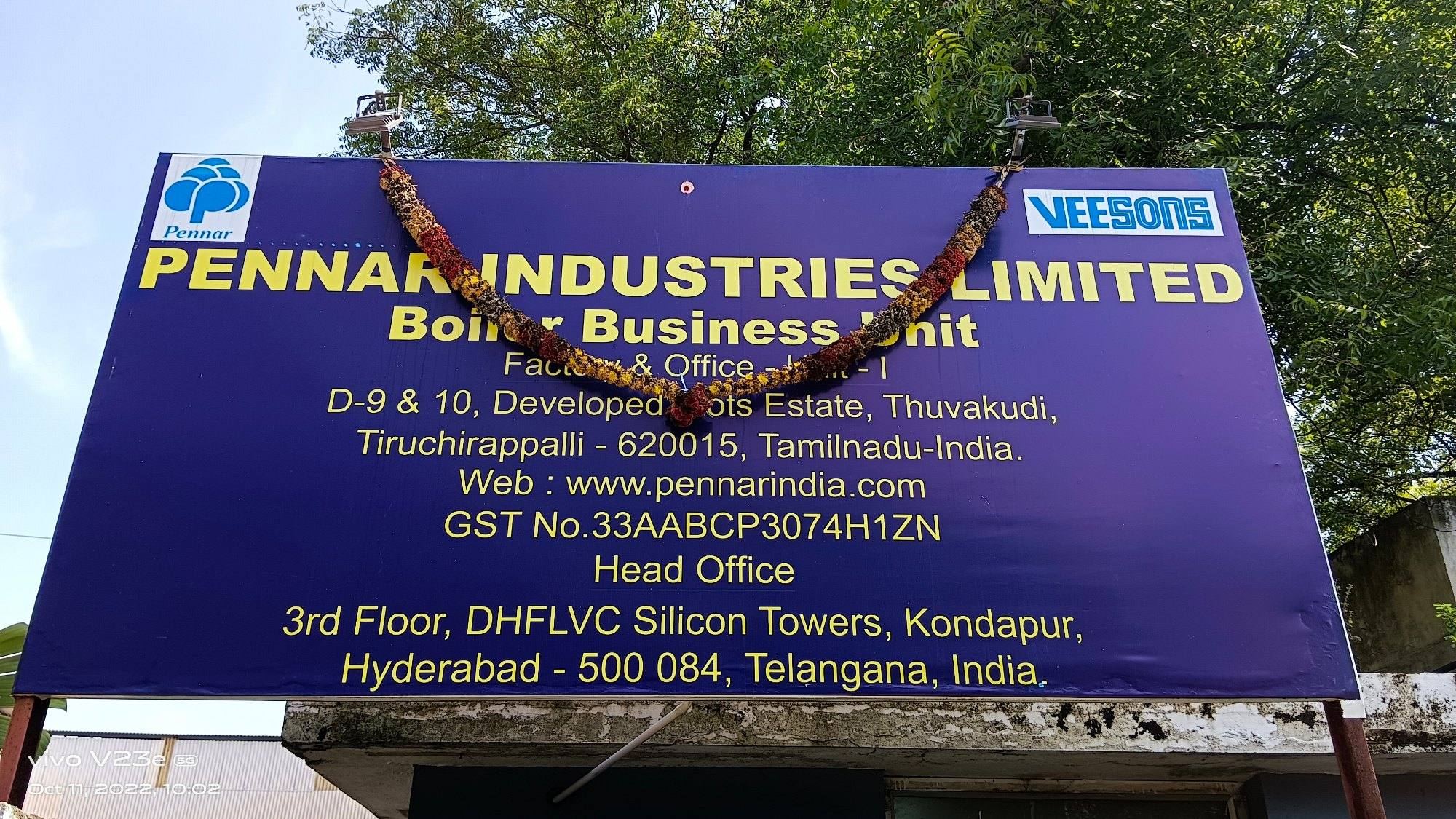
Pennar Industries FY26: The ₹1,162 Crore Debt Puzzle Behind a Record Profit Year
Date of Publishing -
Spotted a factual error — a wrong number, date, or fact? Tell us and we will check the source.
Section 1 — At a Glance
Pennar Industries closed FY26 on an operationally triumphant note, with revenue from operations scaling to ₹3,620.09 Cr and net profit expanding to ₹138.81 Cr. This performance reflects sustained execution across its pre-engineered buildings and value-added engineering verticals. However, market enthusiasm remains checked by the aggressive expansion of the company’s structural liabilities. Gross borrowings finished the year at ₹1,161.83 Cr, keeping pace with its top-line growth.
Concurrently, working capital requirements have amplified. Trade receivables stretched to ₹731.46 Cr, alongside an inventory pile-up reaching ₹1,010.41 Cr by the end of March 2026. While the company’s operating leverage is functioning efficiently, the underlying cash generation is heavily consumed by capital investments and raw material buffers. Scale without matching capital efficiency is simply an expensive way to run faster on a financial treadmill. Investors are left analyzing whether the current order pipeline can clear these balance-sheet pressures before funding costs eat into the hard-won gains.
Section 2 — Introduction
Pennar Industries has spent the last few years attempting an corporate transition, moving away from commoditized steel processing toward precision-engineered products and design-led structural systems. This structural shift has altered the company’s operational profile, allowing it to move past historical margin limitations. By establishing local execution capabilities in domestic infrastructure alongside an export footprint via its North American subsidiaries, the business model has gained considerable diversity.
Section 3 — Business Model: WTF Do They Even Do?
At its core, Pennar operates like an engineering department store with a highly complex floor plan. They divide their world into Customized Engineering Products—comprising Pre-Engineered Buildings (PEB) and steel structures—and Diversified Engineering Products, which spans everything from hydraulic cylinders and precision tubes to railway coach components.
If it involves bending, welding, or designing high-strength metal, they have probably built a division around it. They cater to a diverse roster of clients including JSW, Godrej, Tata, and Reliance. To add more variety to the operational mix, they have recently formed the ZAP91 Solar India joint venture to build solar modules. It is an industrial collage designed to capture infrastructure spending, though managing the raw material supply chain across these mismatched lines remains a constant juggling act.
Section 4 — Financials Overview
Figures are consolidated, in ₹ crore.
Metric
Latest Quarter (Mar 2026)
YoY
QoQ
Revenue
924.80
2.10%
-1.94%
EBITDA / Operating Profit
105.16
14.68%
27.34%
PAT
41.04
14.93%
22.32%
EPS
3.04
15.15%
22.09%
Quarterly fluctuations often reflect supply-chain bottlenecks or procurement timing rather than a fundamental pivot in business trajectory.
What is Management Promising in the Coming Quarters?
During the May 2026 earnings discussion, management confidently committed to a 20% growth target for PAT entering FY27, banking on a mix-shift away from legacy, lower-margin business components. The executive team highlighted their newfound pricing discipline, pointing out that they rejected a substantial ₹150 Cr order simply because the product mix failed to clear their internal margin hurdles.
“There was a ₹150 crores order that we said no to… not exactly the right product mix,” management noted.
Would you expect this selective order approach to protect margins if volatile steel input prices stage their usual dramatic comeback?
Section 5 — Valuation Discussion: Fair Value Range Only
Recalculating the valuation framework requires anchoring against a full-year reported EPS of ₹10.29. Looking at the wider capital goods and industrial manufacturing peer band, multiples vary from reasonable value plays to highly speculative valuations, establishing a historical peer P/E band between 15x and 25x for engineered component providers.
Applying the P/E methodology to the stable full-year earnings capacity yields an estimated baseline range between ₹154 and ₹257.