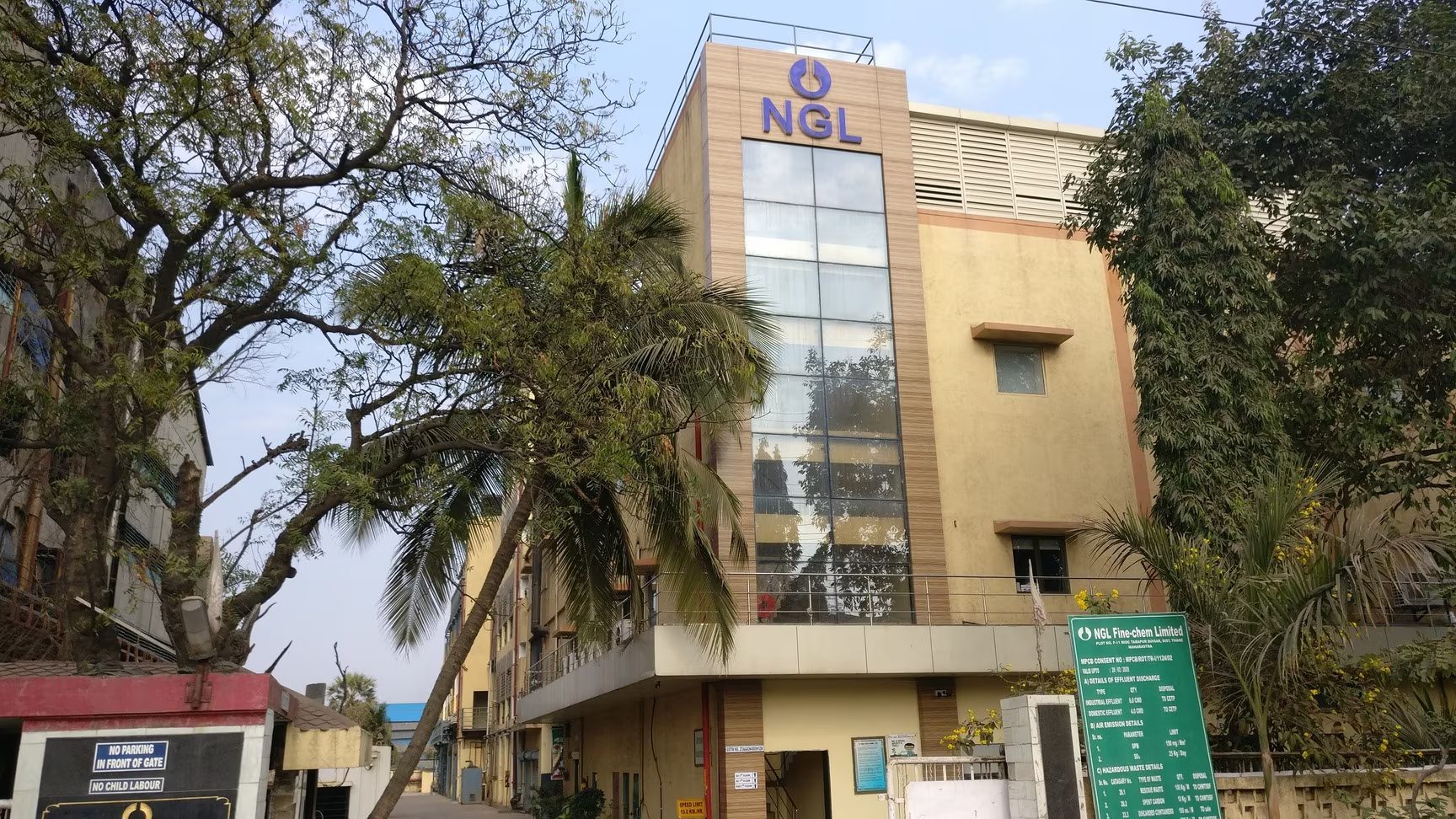
NGL Fine Chem Q4 & FY26: A ₹48 Crore PAT Recovery on a Debt-Fueled Animal Farm
At a Glance
NGL Fine Chem Limited delivered an exceptional volume-driven turnaround in FY26, breaking out of a multi-year structural slump. Total revenue from operations crossed a milestone to hit ₹500.95 crore, a robust 36.03% year-over-year expansion that highlights deep volume elasticity in the global veterinary active pharmaceutical ingredients (API) marketplace. Net profit for the full year staged an aggressive comeback, surging 127.83% to reach ₹48.13 crore compared to a depressed baseline of ₹21.12 crore in FY25. Operating margins also caught a strong structural tailwind, with full-year EBITDA scaling 114.62% to ₹72.69 crore as capacity utilization optimization counteracted stubborn underlying global pricing deflation.
While the headline trailing performance validates management’s structural recovery thesis, asset-heavy scaling risks are simultaneously multiplying on the balance sheet. Total borrowings scaled up sharply from ₹76.00 crore to ₹108.00 crore to fund aggressive, multi-phased capital expansions, altering the risk profile of this traditionally lean mid-cap. Working capital intensity remains uncomfortably high, driven by an extended cash conversion cycle, ballooning inventories, and trade receivables that hit ₹130.88 crore. Investors are now forced to balance an explosive volume-led volume recovery against an uncommissioned, capital-heavy footprint that will alter operating cost structures ahead of its highly regulated Western market entry.
Introduction
NGL Fine Chem Limited represents a highly specialized, niche play within the global pharmaceutical ecosystem, operating almost exclusively as a focused developer of veterinary active pharmaceutical ingredients and synchronized chemical intermediates. Established over four decades ago in 1981, the enterprise has structurally pivoted away from commoditized human healthcare chemical synthesis to anchor its capital in the expanding global animal health sector.
The company’s corporate strategy is currently navigating its most definitive pivot point in modern history. After spending nearly ten quarters locked in a flat, margin-diluting operating cycle caused by global destocking and hyper-competition, management has committed over ₹182.75 crore of cumulative capital to a major greenfield manufacturing engine at Tarapur. This is not merely a capacity enhancement play—it is a calculated regulatory gamble designed to upgrade the company’s compliance architecture from semi-regulated emerging markets to the highly audited, high-margin asset landscapes of the United States and Western Europe.
Business Model: WTF Do They Even Do?
If you think the human pharma market is crowded, welcome to the animal farm. NGL Fine Chem does not make tablets for your headache; they synthesize the heavy-duty stuff that keeps commercial livestock, poultry, and companion animals from succumbing to parasitic infestations and protozoal infections. Their product profile spans 45 commercialized APIs—dominated by 43 specialized veterinary molecules and a minor legacy footprint of 2 human APIs—alongside a boutique portfolio of formulations and customized intermediates.
The main business is split into three core categories of animal health medications:
Anthelmintics: Medications used for de-worming (killing internal parasites like roundworms or tapeworms).
Antiprotozoals: Medications that treat infections caused by protozoa, specifically blood-parasites (like malaria or babesiosis in animals).
Ectoparasiticides: Topical or oral treatments used for external parasite control (killing ticks, fleas, mites, and lice).
The model relies entirely on deep process engineering dominance in four critical therapeutic verticals: Anthelmintics, Antiprotozoals, Ectoparasiticides, and Phosphorus Supplements. They are the textbook definition of a hidden structural monopoly, commanding global market shares ranging from 15% to well over 50% in three specific defense-moat molecules: Diminazene (an anti-protozoal lifesaver for cattle), Clorsulon, and Buparvaquone. By embedding themselves as an irreplaceable, cost-competitive supplier to 5 of the top 10 global animal health conglomerates, they have built a sticky B2B enterprise. They run a highly insourced, backward-integrated chemical operation where 95% of processing is managed internally or through their wholly owned intermediate subsidiary, Macrotech Polychem, keeping global generic competitors at a safe distance.
Financials Overview
Figures are consolidated, in ₹ crore.
Headline Performance Metrics
Metric
Latest Quarter (Q4FY26)
YoY (%)
QoQ (%)
Full Year (FY26)
Revenue from Operations
₹149.23
57.13%
17.04%
₹500.95
EBITDA / Operating Profit
₹21.41
238.81%
-4.04%
₹72.69
PAT (Net Profit)
₹13.49
2,380.79%
-14.05%
₹48.13
Reported EPS (₹)
₹21.75
2,371.59%
-14.03%
₹77.60
Did Management Walk the Talk?
Reviewing past commentary reveals that management’s historical posture of “cautious optimism” was accurate regarding volumes, though slightly overconfident on cost insulation. In previous concalls, management noted that they had “resumed outsourcing key intermediates” to keep up with a structural demand surge, pointing to outsourcing rates of 15% to 20% to bypass internal processing bottlenecks.
They executed this volume processing perfectly, delivering a staggering 57.13% YoY quarterly topline leap to ₹149.23 crore. However, their prediction that operating leverage would cleanly scale sequential margins hit a geopolitical speedbump. Q4FY26 EBITDA margins actually compressed by 315 basis points sequentially to 14.35%, proving that operating under fixed-price contracts while global shipping routes face logistical disruptions makes passing on sudden freight and raw material increases an uphill battle.
Valuation Discussion
To assess where NGL Fine Chem sits on the valuation spectrum, we establish our calculation metrics using the company’s total outstanding equity base of 0.62 crore shares. Based on the consolidated FY26 net profit of ₹48.13 crore, the full-year trailing Reported EPS stands at ₹77.60. At the closing market price of ₹2,785.10 on May 29, 2026, the stock trades at a trailing price-to-earnings (P/E) multiple of 35.89x.
1. Trailing P/E Multiple Approach
The broader domestic pharmaceutical sector displays a massive valuation dispersion, with generic majors trading at a median sector P/E of 31.4x, while high-moat specialty players like Divi’s Laboratories command premiums up to 67.5x. Applying a normalized mid-cap peer multiple range of 30x to 38x to