Axis Solutions Ltd Mar 2026: 222-Day Cash Cycle Meets the Reincarnated Smallcap
Section 1 — At a Glance
The financial reconstruction of a corporate entity frequently leaves public market participants balancing significant execution premiums against lingering operational vulnerabilities. Axis Solutions Limited, following its emergence from the National Company Law Tribunal (NCLT) Corporate Insolvency Resolution Process and its subsequent backdoor listing via amalgamation on July 30, 2025, presents exactly this dichotomy. Headline metrics indicate immediate top-line expansion, with annual revenue touching ₹238 crore in FY26. Profit after tax has stabilized at ₹29 crore, positioning the company at a trailing price-to-earnings multiple of 41.0 times.
However, beneath the initial profitability of this restructured smallcap lies a structurally demanding operating framework. The company’s asset architecture is highly constrained by its working capital configurations. Chief among these is a trade receivables balance of ₹136 crore against annual sales of ₹238 crore, resulting in an extended collection window of 208 debtor days. When integrated with inventory holding periods, the total cash conversion cycle has expanded to 222 days.
This structure creates a structural divergence between accounting profits and liquidity generation. While the income statement records steady operating profit margins of 18.9%, the balance sheet relies on external leverage to bridge the collection gap. Total borrowings have ascended sharply to ₹81 crore, bringing the debt-to-equity ratio to 0.56 times. Asset turnover remains restricted by cash tied up in transit, leaving investors to weigh an expanding order book of ₹292 crore against a cumulative two-year free cash outflow of ₹56 crore. A fundamental truth of corporate restructurings is that legal survival is merely a prerequisite; true capital efficiency requires transforming paper invoices into liquid capital. The operational runway into FY27 depends entirely on this transition.
Section 2 — Introduction
Axis Solutions Limited provides a textbook study in corporate reincarnation. Originally an unlisted industrial automation player, the entity ran into severe financial distress, entering the Corporate Insolvency Resolution Process under NCLT Ahmedabad on May 17, 2023. What followed was a classic clean-room operation: an approved resolution plan sanctioned the merger of the private entity into the listed shell Asya Infosoft Limited on September 6, 2024. By July 30, 2025, the consolidated business returned to the bourses under its new identity.
The market has greeted this resurrected entity with the kind of wide-eyed enthusiasm usually reserved for tech initial public offerings, bidding the stock up by 309% over the last six months to a current market price of ₹251. Investors are clearly betting that the company’s specialized engineering capabilities can be cleanly decoupled from its institutional history.
Section 3 — Business Model: WTF Do They Even Do?
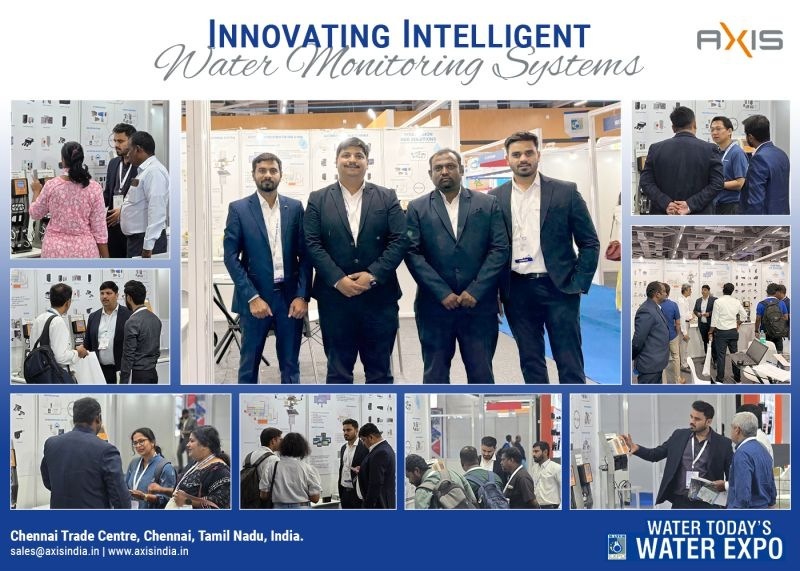
Axis Solutions manufactures highly complex, low-volume analytical systems that keep massive industrial plants from blowing up or poisoning local rivers. Its primary product catalog reads like an engineering dictionary: Continuous Emission Monitoring Systems (CEMS), Steam and Water Analysis Systems (SWAS), and heavy-duty HVAC systems tailored for toxic industrial environments.
Instead of trying to build every sensitive sensor from scratch, the company functions as a premium integrator. It maintains formal collaborations with 14 global industrial component brands, including Knick, Hoffman, and Seneca, importing high-end components and assembling them into custom turnkey systems for India’s heavy manufacturing elite. If Reliance Industries, Indian Oil, or Larsen & Toubro needs a system to measure the purity of water entering a high-pressure boiler, they call Axis. It is a highly sticky, high-barrier business model, marred only by the minor detail that these corporate giants treat small engineering vendors like interest-free lending institutions.
Section 4 — Financials Overview
Figures are consolidated, in ₹ crore.
Quarterly Performance
Metric
Latest Quarter (Mar 2026)
YoY
QoQ
Revenue
116.00
Data Not Meaningful
152.2%
EBITDA
28.00
Data Not Meaningful
250.0%
PAT
16.00
Data Not Meaningful
1,500.0%
EPS (₹)
3.33
Data Not Meaningful
1,688.7%
The final quarter of FY26 delivered an absolute volcanic eruption in accounting terms, with revenue surging from ₹46 crore in December 2025 to ₹116 crore in March 2026. This sudden clustering of execution at the end of the financial year is characteristic of the industrial contracting business, where project sign-offs are frantically chased before auditors close the annual books. Operating profits followed suit, expanding to ₹28 crore as fixed cost coverage kicked in.
What is Management Promising in the Coming Quarters?
Because this entity has been listed for less than a year, long-term historical tracking is unavailable. However, the corporate announcements log provides a clear view of management’s near-term targets. In May 2025, leadership highlighted an order book of ₹292 crore to be