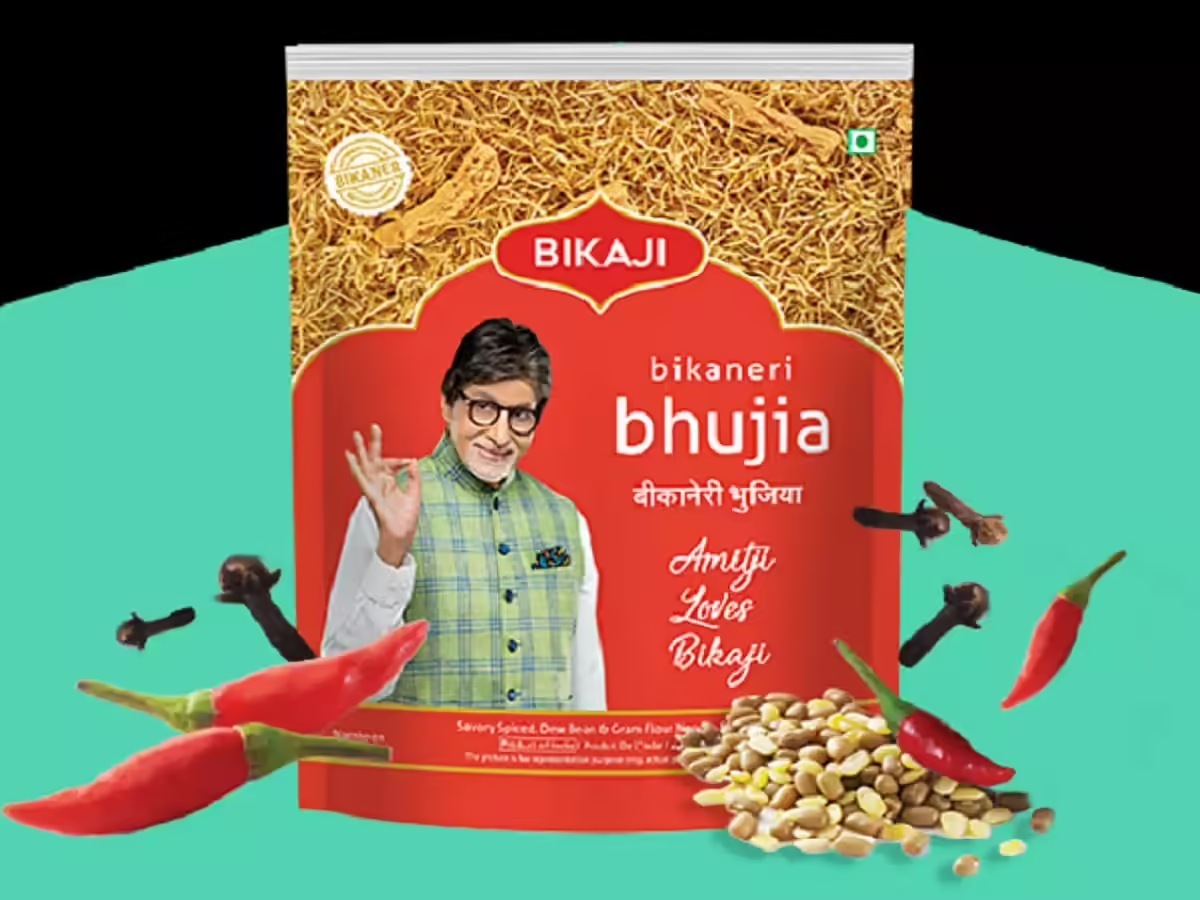
Bikaji Foods International Ltd Mar 2026: The 62x P/E Premium on the World’s Most Expensive Bhujia
Section 1 — At a Glance
Bikaji Foods International Limited closed its financial year 2026 by delivering ₹2,993.86 crore in revenue from operations, representing an 14.19% year-on-year expansion that highlights robust volume recovery in the second half of the year. Financial year 2026 net profit settled at ₹258.26 crore, down marginally from the previous year’s ₹265.70 crore, as an intense spike in raw material packaging components and geopolitical supply line disruptions restricted operational leverage. The underlying volume architecture tells a healthier story, with a 16% volume expansion in the final quarter marking the highest absolute quarterly volume acceleration since the company’s initial public offering.
Investor scrutiny remains intensely fixed on a structurally elevated valuation multiple alongside deep geographic single-market dependency. The business commands a steep trailing price-to-earnings multiple of 62.35x, a premium tier that assumes uninterrupted execution and immediate success in non-core regional market entries. Operationally, despite holding a sprawling pan-India network, approximately 70% of absolute aggregate top-line revenue continues to originate from its home state of Rajasthan. Growth outside this stronghold is critical, as any local consumer down-trading or regional competitive price war directly threatens the financial spine of the company.
A company’s capacity to accumulate cash must eventually outpace its appetite for asset creation to justify premium consumer-staple valuations. While operating cash flow reached an impressive ₹304.10 crore in fiscal 2026, the company deployed ₹289.35 crore back into capital allocations, acquisitions, and joint ventures. This aggressive asset building has kept absolute asset utilization low, with aggregate capacity utilization hovering at just 46% across its sprawling 325,320 metric tonne production infrastructure. Whether this massive manufacturing headroom becomes an operating leverage engine or a persistent drag on capital efficiency remains the central question for the coming fiscal year.
Section 2 — Introduction
Bikaji Foods International Limited operates as an ethnic snack powerhouse rooted deeply in Bikaner, Rajasthan. Over three decades, the company has successfully transitioned traditional, unorganized family recipes into a sophisticated, automated food manufacturing matrix. The brand stands anchored by its primary volume driver—Bikaneri Bhujia—while methodically broadening its horizontal shelf footprint across namkeens, packaged Indian sweets, papad, and modern western extruded snacks.
To break out of its heavy geographic cluster, Bikaji has pivoted toward aggressive horizontal expansion and consolidation. The fiscal year 2026 saw a flurry of corporate actions, including taking full ownership of Petunt Food Processors to capture South Indian micro-pockets, acquiring a 55% stake in Ariba Foods to control its export supply chain, and establishing a 70% joint venture with Bakemart to tap into the premium frozen bakery ecosystem. With mega-brand ambassadors like Amitabh Bachchan and Pankaj Tripathi leading multi-crore media campaigns, the company is attempting to rewrite its identity from a regional heritage brand into a truly pan-India FMCG titan.
Section 3 — Business Model: WTF Do They Even Do?
At its core, Bikaji monetization relies on selling salted dough and fried lentils at premium consumer packaged goods margins. The corporate architecture is structured around processing agri-commodities—primarily moth pulses, flours, and edible oils—into highly addictive, shelf-stable ethnic snacks. They are the third-largest ethnic snacks enterprise in India and the absolute largest manufacturer of Bikaneri Bhujia globally, rolling out an astonishing 35,588 tonnes of the single product annually.
The revenue mix for 9MFY26 illustrates where the cash actually comes from:
Ethnic Snacks (Bhujia & Namkeen): 67.4%
Packaged Sweets: 13.7%
Western Snacks (Chips & Puffs): 8.0%
Papad: 5.4%
Others (Frozen foods, cookies): 5.5%
The core operational friction lies in the mismatch between asset design and real-world consumer behavior. Packaged sweets generate nearly 80% of their annual sales during a chaotic four-month festive window stretching from Rakhi to Diwali. This forces Bikaji to maintain massive manufacturing lines that run dangerously hot for 120 days and sit entirely frozen for the remaining eight months of the year. Meanwhile, its western snacks portfolio commands a tiny 1.1% domestic market share—a round-off error in a category aggressively defended by global giants and deeply entrenched local wafer operators.
Section 4 — Financials Overview
Figures are consolidated, in ₹ crore.
Headline Performance Matrix
Metric
Latest Quarter (Mar 2026)
YoY (%)
QoQ (%)
Revenue
720.88
17.99%
-8.75%
EBITDA
87.74
-45.58%
-10.79%
PAT
56.41
-51.47%
-9.28%
Reported EPS (₹)
2.25
-51.51%
-9.27%
The final quarter of fiscal 2026 experienced a sharp disconnect between volume delivery and real bottom-line realization. While revenue expanded by a healthy 17.99% year-on-year to ₹720.88 crore, operating profitability and net profits contracted severely against the March 2024 base. This margin compression highlights a stark economic reality: driving top-line growth through massive volume discounts and extended advertising runs during a period of input-cost inflation will inevitably erode short-term earnings quality.
Did Management Walk the Talk?
During previous market updates, management committed to stabilizing gross margins and scaling focus states through deliberate distribution expansion. Reviewing the full-year results, gross margins did hold at 35.1%, supported by timely post-September ad campaigns like “Bhujia ho toh Bikaji,” which successfully revived high-margin traditional snacks consumption in the second half of fiscal 2026. However, the operational machinery stumbled on cost controls. Management allocated a heavy 3.2% to 3.3% of sales to advertising budgets during the second half of the year, extended campaigns deep into the final quarter, and took a sharp 50 basis point credit hit via provisions for doubtful debts. This aggressive spending broke the historical profitability cadence, proving that structural volume growth outside Rajasthan currently requires meaningful financial sweetening.
Section 5 — Valuation Discussion: Fair Value Range Only
To determine where Bikaji stands relative to its pricing reality, we employ historical, peer-band, and asset-based valuation disciplines based