AMJ Land Holdings FY26: The Real Estate Pivot That Ran Out of Wind
Section 1 — At a Glance
A multi-decade legacy built on manufacturing paper has completely shifted its foundations into the soil of Pune. AMJ Land Holdings has fully transitioned from its industrial roots into a pure-play micro-cap real estate operator, yet its FY26 numbers illustrate the profound volatility inherent in project-based revenue models. The headline numbers indicate severe near-term compression. Annual consolidated sales plummeted by 32.4% to ₹52.51 crore, down from ₹77.65 crore in FY25. Net profit followed a similar downward trajectory, contracting from ₹20.47 crore to ₹14.79 crore over the same period.
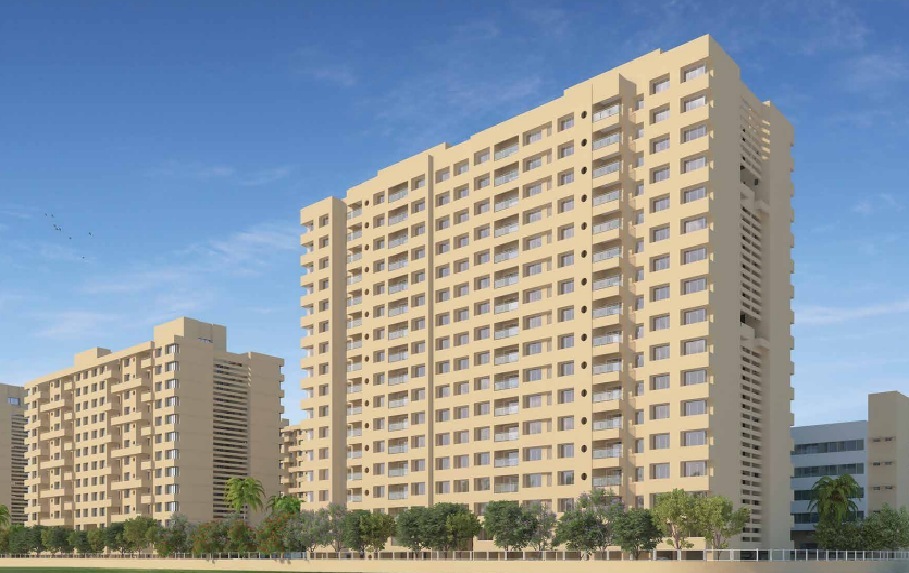
The primary cause of this deceleration is the cyclical drop in real estate recognition. The company’s primary engine, the 12-acre Joint Venture project known as “GREENS,” has reached 96% sales completion, leaving very little unbooked inventory to sustain the prior year’s momentum. Concurrently, its secondary development pipeline, the “Green Ville” project, remains entirely stalled due to regulatory complexities surrounding the repealed Urban Land Ceiling (ULC) Act.
This severe structural dependence on a single location highlights a critical corporate finance reality.
Real estate developers who fail to create overlapping project life cycles will inevitably face steep revenue cliffs once their primary anchor assets are completely monetized.
While the core operating engine slows, the stock trades at a apparent discount, valued at 0.72 times its book value with a reported debt-to-equity ratio of zero. However, a significant portion of the remaining earnings capability is anchored to volatile “Other Income” and paper gains from non-current equity investments. For investors evaluating the business, the central question is whether management can successfully unlock its disputed land parcels to establish its next 1 million square feet of growth pipeline.
Section 2 — Introduction
AMJ Land Holdings presents an intriguing case of industrial metamorphosis. Established way back in 1964, the entity spent the bulk of its corporate existence deeply entrenched in the specialty paper manufacturing sector. Following a comprehensive corporate demerger that stripped away the paper operations, the company repackaged itself as a real estate developer and lessor based out of the expanding Pune property market.
To augment its property portfolio and provide a small baseline of utility-style cash flows, the company also operates three small-scale wind power plants with a combined capacity of 4.6 MW situated across Satara and Sangli. Despite its long listed history, the company operates today in the micro-cap territory with a market capitalization of just ₹153.05 crore. This modest market footprint is paired with a current market price of ₹37.32, sitting uncomfortably close to its 52-week low of ₹30.30. The corporate focus is now single-mindedly fixed on navigating complex legal landscapes to monetize old factory land assets into high-density residential and commercial spaces.
Section 3 — Business Model: WTF Do They Even Do?
The business model of AMJ Land Holdings looks less like a modern corporate blueprint and more like an accidental collection of legacy leftovers. The primary operational objective is transforming old industrial land holdings in Thergaon, Pune, into high-rise premium real estate developments.
The current operational matrix consists of four segments, though to call it a “matrix” implies a level of balance that simply does not exist:
Real Estate Project Development: This is the absolute core of the company, generating 82% of total revenues in FY25 and swinging up to an overwhelming 95% of operational revenue in the 9-month period of FY26. It operates primarily through a 95%-owned subsidiary, AMJ Land Developers, which handles the “GREENS” project.
Sale of Land Development Rights: Accounting for 13% of FY25 revenue, which essentially means selling off pieces of the corporate perimeter when immediate cash is preferred over long-term building drama.
Sale of Wind Power: A tiny 3% to 5% revenue filler produced by three lonely wind turbines that pump electricity directly to MSEDCL. It provides just enough green branding to look forward-thinking but lacks the scale to move the needle.
Lease of Real Estate: Contributing 2% of top-line income by renting out old structures to a related group entity, Pudumjee Paper Products Ltd.
The central problem with this model is project exhaustion. The GREENS project is essentially done, with 96% of its 10 lakh square feet of saleable area already completely sold out. The future depends on their second project, Green Ville, which is currently on hold because it is trapped under an Urban Land Ceiling legal dispute with the Government of Maharashtra. Until those legal blockades clear, the real estate model remains an engine idling at the station.
Section 4 — Financials Overview
Figures are consolidated, in ₹ crore.
Metric
Latest Quarter (Mar 2026)
YoY
QoQ
Revenue
₹15.36
-39.88%
0.00%
EBITDA / Operating Profit
₹6.85
+25.69%
+1123.21%
PAT
₹5.18
+10.92%
+295.42%
EPS
₹1.26
+10.53%
+293.75%
The numbers display extreme short-term volatility. While annual revenues shrunk