Karnataka Bank Ltd. Q4 FY26: The 2.78% GNPA Illusion and the Management Churn Trap
Section 1 — At a Glance
Karnataka Bank has managed to pull off an eye-catching headline performance for the fiscal year ended March 31, 2026, driven by a sharp asset quality clean-up and a record-high full-year profit after tax of ₹1,310.50 crore. On a quarterly basis, the bank’s net profit surged by 40.37% quarter-on-quarter to ₹408.19 crore, up from ₹290.79 crore in the previous quarter. What is capturing strong investor interest is the dramatic drop in Gross Non-Performing Assets (GNPA) by 54 basis points to 2.78%, paired with a sequential reduction in the standard restructured portfolio to ₹806 crore. Operating revenues rose slightly to ₹1,241.81 crore for the quarter, while net interest margins (NIM) clawed back up by 15 basis points to 3.07%.
However, beneath this polished exterior, a parallel story is unfolding that is flashing amber signals for long-term investors. While the asset quality metrics look spotless on paper, core operating metrics tell a story of stagnation. Total annual sales dipped slightly to ₹8,917.83 crore from ₹9,013.60 crore in the prior year. More critically, a massive operational and leadership reshuffle is underway at the corporate headquarters. Over the last two quarters, the bank has witnessed an extraordinary series of resignations across its top digital, technical, treasury, and human resource management cadres.
When a financial institution undergoes a simultaneous core leadership transition and top-line flatlining, the reported bottom-line expansion often reflects temporary cyclical efficiency rather than sustainable structural growth.
The question that remains is whether this polished Q4 performance represents a structural turnaround or merely a clever accounting transition before the new management faces reality.
Section 2 — Introduction
Karnataka Bank has entered its second century of operations as an old-generation private sector bank with deep, inescapable cultural roots in southern India. Over decades, it has positioned itself as a conservative, retail-and-regional-deposit-heavy institution. The bank has found itself under intense scrutiny from public markets and credit rating agencies alike due to historic inefficiencies, low return profiles, and severe geographical concentration.
This comprehensive review comes at a crucial juncture. The bank has just closed its books for FY26 under a newly appointed MD & CEO, Raghavendra S. Bhat, who took full charge in late 2025. The market is trying to digest two contradicting data points: unprecedented single-quarter profit numbers and a wholesale migration of the corporate leadership team. As credit rating giants like ICRA downgrade the bank’s outlook from positive to stable due to margin compression and management instability, we pull back the curtains on these results to see if the bank is truly embracing a digital-first future or simply dressed up for a transaction.
Section 3 — Business Model: WTF Do They Even Do?
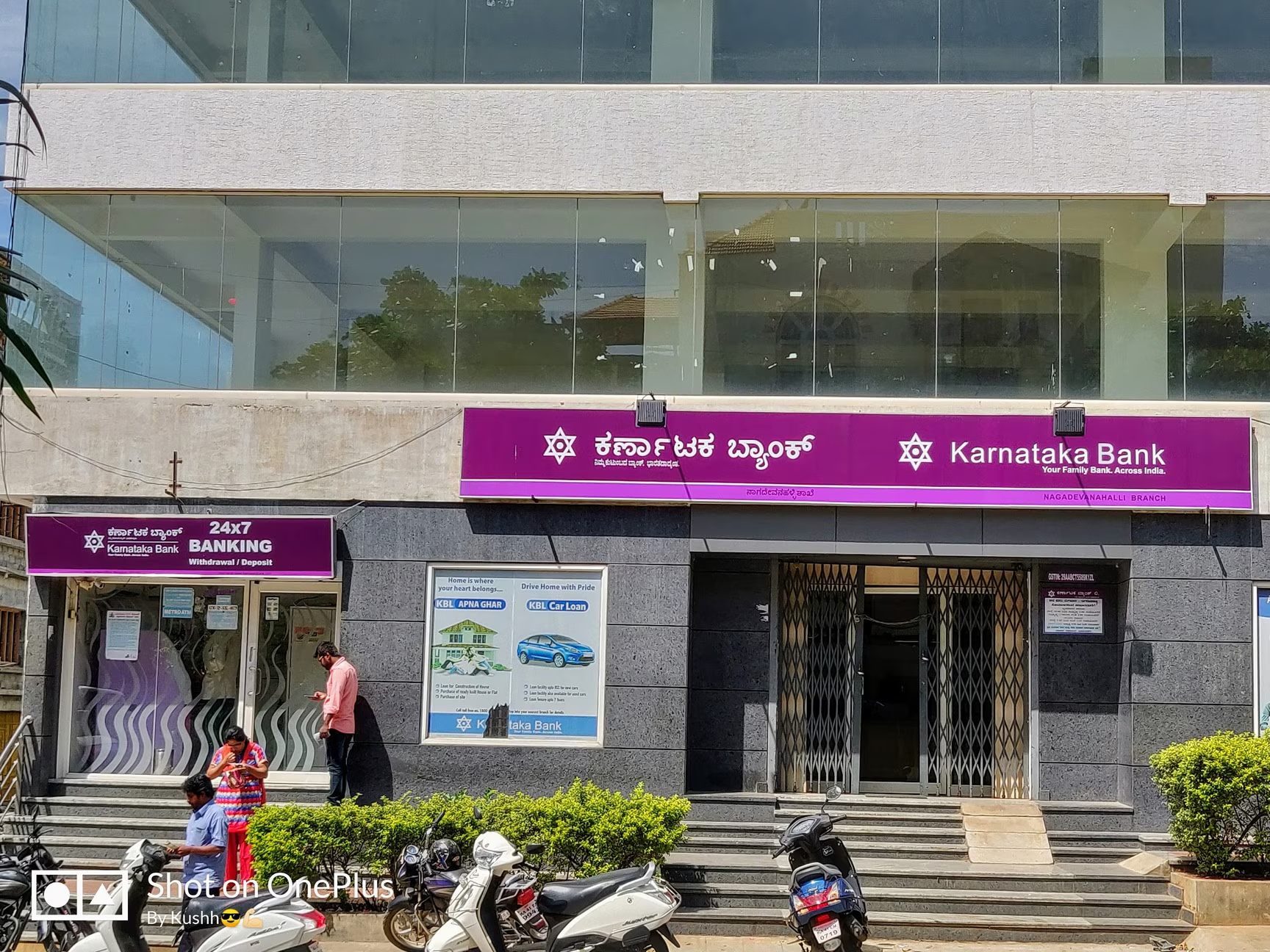
At its core, Karnataka Bank acts as a giant vacuum cleaner for retail deposits in the state of Karnataka and channels those funds into micro, small, medium enterprises (MSME), agricultural loans, and corporate lending. It operates through a vast network of 975 branches and 1,474 ATMs.
To break down their structural machinery:
The Funding Engine: They survive on an aggregate deposit base of ₹1,08,779 crore. They pride themselves on extreme deposit granularity, boast a 33.61% CASA ratio, and rely heavily on low-risk retail term deposits.
The Lending Matrix: Their gross advance book stands at ₹83,340 crore. They slice this up into Retail (housing, gold, vehicle loans), MSME financing, and Agriculture.
The Fee & Para-Banking Layer: They cross-sell life insurance and general insurance through joint ventures and partnerships with PNB Metlife, LIC, and Bajaj Allianz, supplemented by a new 3-in-1 digital trading account partnership with FISDOM.
In short, they take money from South Indian households, lend it out to local businesses and farmers, and attempt to charge a premium while slowly transitioning their brick-and-mortar operation into a mobile app.