Section 1 — At a Glance
Domestic engineering execution structures do not run on promises; they run on liquidity. When cash collections dry up, even a multi-decade heritage cannot prevent operational engine stalls. For WPIL Limited, the full fiscal year 2026 presents a sharp divergence between flourishing international business units and a heavily congested domestic project execution footprint. Total operating revenue grew at a muted 2.6% to reach ₹1,854.57 crore. However, consolidated net profit expanded by 19.76% to ₹158.11 crore, showcasing resilient operational performance across global engineering subsidiaries even as local capital remained tightly locked in public administrative machinery.
Investors are actively celebrating the massive international scalability, with the global product platform gaining significant traction in the Middle East and North Africa (MENA) region and robust project execution tailwinds across the African continent. Yet, serious structural concerns remain firmly anchored to the domestic segment. Severe delays in collections under the Jal Jeevan Mission (JJM) have severely elongated working capital cycles, pushing debtor days to an intense 196 days. Earnings quality is structurally tied to the realization velocity of outstanding dues; uncollected paper profits cannot fund physical manufacturing expansion. Total consolidated borrowings have climbed steadily to ₹502.33 crore to bridge this persistent domestic cash deficit. While the global pipeline remains structurally sound, the immediate financial trajectory continues to be a delicate balancing act between high-margin foreign engineering orders and a local liquidity trap.
Section 2 — Introduction
WPIL Limited entered the Indian engineering landscape in 1952 under the name Johnston Pumps India, establishing a robust legacy in manufacturing specialized vertical and horizontal flow control systems. Over the decades, ownership shifted from the B. M. Khaitan Group to the current promoter family in 2002. This transition fundamentally re-engineered the organization from a pure-play industrial pump supplier into a complex turnkey engineering, procurement, and construction (EPC) player handling massive water infrastructure projects across the country. Today, the company finds itself at an analytical crossroads that demands deep inspection. The organization has spent the last decade building an expansive global empire, executing strategic acquisitions across Europe, South Africa, and Australia. This global diversification is no longer a luxury—it has become the primary operational buffer shielding the company’s consolidated income statement from highly volatile domestic infrastructure budgetary constraints.
Section 3 — Business Model: WTF Do They Even Do?
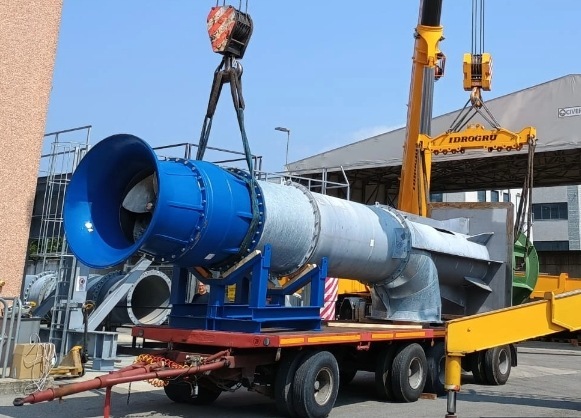
WPIL operates a dual-engine business model structured around two main pillars: the Product Division and the Project Division. The Product Division manufactures an extensive range of specialized flow control assets, including split-case, multistage, and large-scale metallic and concrete volute pumps. These systems serve core heavy industries such as power utilities, petrochemical processing plants, oil and gas networks, and municipal water supply units.
The Project Division focuses on large-scale, turnkey water infrastructure execution. This involves complex hydraulic design, civil structures, overhead reservoirs, and SCADA-integrated electrical pumping stations. While projects provide massive top-line numbers, they come with intense bureaucratic drag. Geographically, the revenue configuration has flipped dramatically: domestic infrastructure execution once dominated the mix, but international operations across Italy, South Africa, and Australia now generate roughly 60% of group revenues.
Section