Kaycee Industries Ltd Mar 2026 : Operating Margins Collapse to 8.99% Despite Double-Digit Revenue Growth
Section 1 — At a Glance
Kaycee Industries Ltd capped off its fiscal year with annual revenues scaling a fresh high of ₹60.05 crore, up from ₹52.97 crore in the previous fiscal year. Yet, the final quarter of the year has exposed clear operational challenges for the engineering microcap. While quarterly top-line revenue advanced by 9.23% year-on-year to reach ₹16.80 crore , the company’s net profit for the same period plummeted by 54.01% to just ₹0.86 crore, compared to ₹1,87 crore in the corresponding quarter of the previous fiscal.
This severe deceleration highlights a growing mismatch between volume growth and expense management. Rising input costs and a sudden escalation in operational outlays have significantly squeezed the company’s operating profit margins, which shrank down to 8.99% in the final quarter. On an annual basis, net profit for the full year contracted to ₹4.98 crore from ₹5.88 crore in the prior year , driven primarily by an unusual surge in miscellaneous expenses toward the end of the year.
What is keeping public market participants attentive is Kaycee’s strategic pivot toward the high-growth electric vehicle component ecosystem, underscored by its multi-crore equity acquisition in a technology start-up. However, the immediate drag on core profitability remains a near-term concern. Operating margins that previously hovered comfortably above 16% have weakened, signaling that top-line growth is currently being pursued at the expense of profitability. Expanding operational scale without protecting manufacturing spreads often introduces structural efficiency issues. The question remains whether this margin compression is temporary or a structural shift.
Section 2 — Introduction
Kaycee Industries Ltd, established during the pre-independence era in 1942, operates as a veteran brand within the legacy industrial manufacturing sector of India. Over the decades, it has carved out a specialized niche in producing essential electrical switching components and measuring instruments. The investment narrative around this vintage enterprise shifted significantly when Salzer Electronics Ltd took over as the holding promoter company, integrating Kaycee into its broader electrical solutions platform.
This analytical review is prompted by the release of the audited full-year financial outcomes for the fiscal year ending March 2026. Over the past twelve months, the company has operated in an economic environment marked by robust infrastructure demand but volatile base metal pricing. Exploring Kaycee’s financials reveals a complex scenario: the company is expanding its distribution footprint, yet its latest quarterly margins have compressed to single digits.
Section 3 — Business Model: WTF Do They Even Do?
Kaycee Industries primarily manufactures hardware components that prevent electrical panels from failing or short-circuiting. The company operates across two distinct operational pillars:
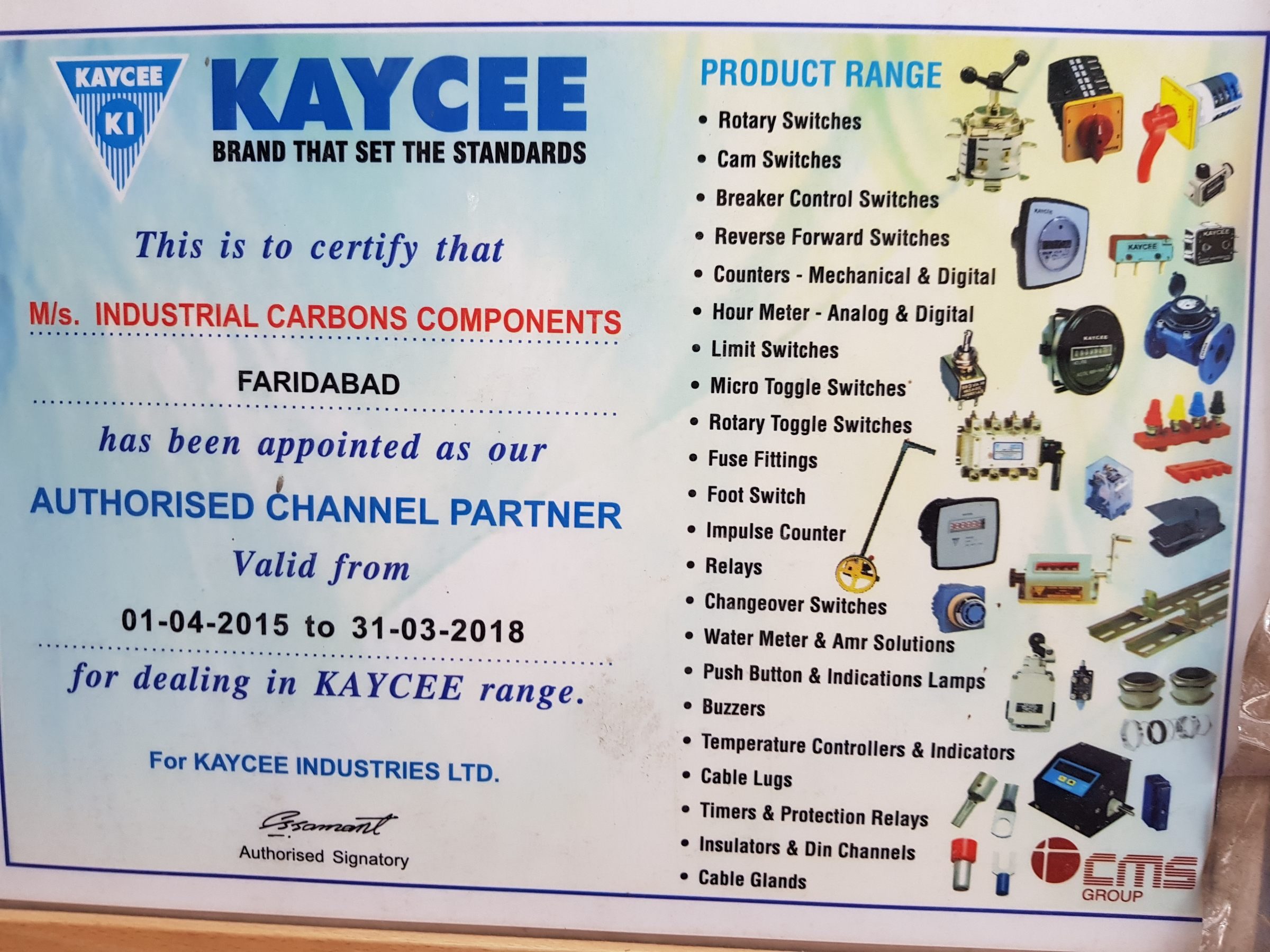
Manufacturing Segment (72% of revenues): The core business, centered around its primary production unit at Vapi, Gujarat. This facility converts raw metals into specialized equipment, including rotary switches, industrial cam switches, limits, toggles, auxiliary mechanisms, and mechanical counters.
Trading Segment (28% of revenues): A synergy-driven business line where Kaycee utilizes its corporate network to distribute electrical installation gear, wires, and cabling products sourced directly from its parent company, Salzer Electronics.
The enterprise supplies products to large industrial B2B clients, including public sector units and multinational engineering conglomerates, such as Indian Oil, Siemens, the Indian Navy, and BHEL. To reduce its operational reliance on industrial power grids, the firm recently installed a captive rooftop solar power plant at its primary manufacturing plant.
Section 4 — Financials Overview
Figures are standalone, in ₹ crore.
Quarterly Performance Trend
The operational numbers for the final quarter highlight significant margin pressure, as shown in the table below: