Chetana Education Ltd. Mar 2026: Working Capital Strain Casts a Shadow on 15% Sales Growth
Section 1 — At a Glance
Chetana Education Ltd. wrapped up the fiscal year ending March 31, 2026, with a consolidated revenue from operations of ₹109.27 crore, highlighting a 15.8% year-over-year expansion. However, the top-line acceleration failed to spark bottom-line momentum. Net profit for the fiscal year settled marginally lower at ₹13.46 crore compared to ₹13.56 crore in the previous fiscal year, revealing an clear squeeze on operational efficiency. This performance trajectory was heavily impacted by a steep rise in other expenses, which scaled to ₹20.31 crore from a negative baseline in earlier periods, eroding the advantages of controlled raw material spending.
While the company has successfully expanded its footprint across 18 states and built a sizable portfolio of 750 titles, its working capital lifecycle presents an escalating challenge for long-term equity returns. Trade receivables climbed significantly to ₹81.74 crore, leaving the organization with an exceptional collection cycle of 273 days. This delayed liquidity realization has severely impacted cash generation, as evidenced by a third consecutive year of negative operating cash flows. Financial leverage remains another key metric requiring close attention, as total borrowings rose to ₹27.13 crore to fund operations amid a shrinking cash balance of just ₹0.12 crore.
Compounding these operational issues, credit rating agencies have fully withdrawn their ratings following non-cooperation and missing data disclosures, complicating future refinancing efforts. Revenue growth that fails to translate into liquid assets often signals structural vulnerabilities in customer credit management rather than organic market demand. Investors are currently assessing whether the newly launched digital streaming initiatives can establish high-margin recurring income streams or if they will simply introduce further capital strain.
Section 2 — Introduction
Chetana Education Ltd. operates within an industry going through a major structural realignment under the National Education Policy (NEP 2020) frameworks. Established originally as an LLP before transitioning into a public limited entity and executing its listing in mid-2024, the business has historically relied on localized textbook distribution networks across the Maharashtra State Board and CBSE segments.
The primary catalyst for evaluating the organization today is the widening gap between its accounting profits and its underlying cash generation. While its print and publishing segments continue to land large institutional adoptions, the balance sheet has become increasingly tied up in outstanding customer credits. This article evaluates whether management’s shift toward an ed-tech operational model can successfully optimize its asset utilization or if structural distribution bottlenecks will continue to restrict cash realization.
Section 3 — Business Model: WTF Do They Even Do?
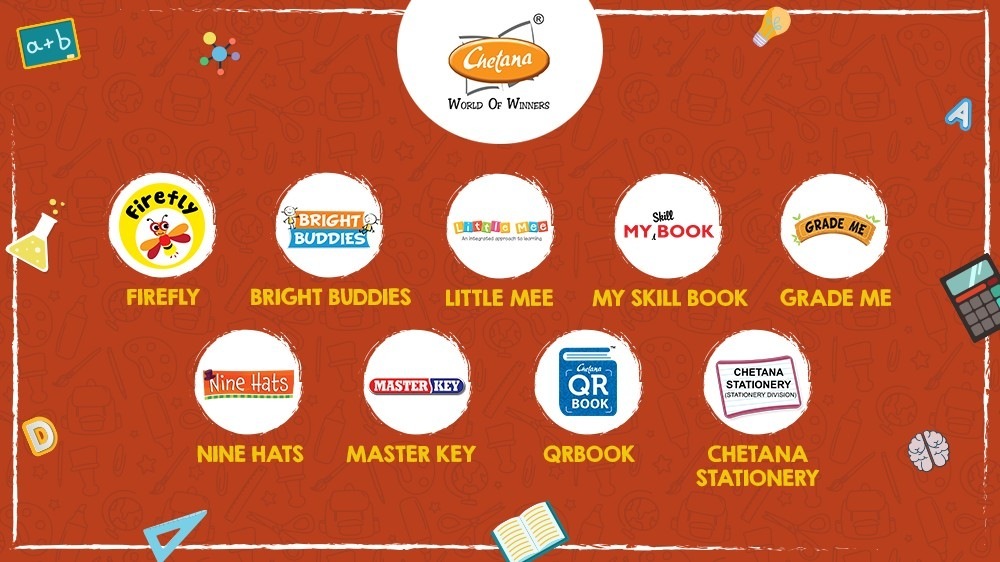
At its core, the company operates an asset-light publishing matrix where actual printing, paper procurement, binding, and logistics are outsourced to external vendors. The internal focus remains on content creation, maintaining partnerships with over 400 contractual authors to design curriculum-aligned manuscripts across 15 proprietary brands.
To drive physical textbook adoptions, the business has layered a “phygital” architecture over its catalog. This includes printing QR codes that connect students directly to a library of over 30,000 educational videos. Monetization has recently expanded into a subscription-based framework via its ed-tech subsidiary, Dijaa Education, which deploys school-branded OTT streaming platforms. However, the foundational revenue engine remains deeply tied to physical distribution through 500 dealers, making it highly exposed to state-level syllabus adjustment lifecycles.
Section 4 — Financials Overview
Figures are consolidated, in ₹ crore.
Annual Performance Summary
Metric
FY 2025
FY 2026
YoY Change (%)
Revenue from Operations
94.35
109.27
15.81%
EBITDA
21.73
21.39
-1.56%
Net Profit (PAT)
13.56
13.46
-0.74%
Reported EPS (₹)
6.65
6.60
-0.75%
(Note: EBITDA calculated as PBT + Interest + Depreciation)