Visaka Industries Ltd Mar 2026: The ₹66.8 Crore Windfall That Masked the Core Recovery
Section 1 — At a Glance
Visaka Industries Ltd posted a standalone net profit of ₹87.83 crore for the fiscal year ended March 31, 2026, a massive leap from the microscopic ₹0.14 crore reported in the previous fiscal year. Total sales from operations rose to ₹1,675.59 crore, up 8.75% from ₹1,540.81 crore in FY25. While this optical explosive growth is grabbing investor eyeballs, a deeper dive into the numbers reveals that a significant chunk of the earnings came from an item under ‘Other Income’ amounting to ₹66.81 crore.
Investors are cheered by the dramatic reduction in borrowings, which plunged from ₹479.36 crore down to ₹303.43 crore within twelve months, optimizing capital structure. Operating profit margins also rebounded cleanly to 8.44%, showing that basic cost discipline is returning. However, a persistent worry remains the regulatory cloud over its core asbestos mining supply chain and the inherent raw material volatility, given its heavy dependence on single-country imports. Earnings quality is the ultimate arbiter of valuation; a corporate structure relying on asset sales or non-operating windfalls to clear its balance sheet needs to quickly prove its underlying core business engine can sustain the same run-rate. This piece unpacks how much of this turnaround is structural and how much is simply a well-timed stroke of good luck.
Section 2 — Introduction
Visaka Industries Ltd is a veteran of the building materials space, having commenced its manufacturing journey back in 1981. Over four decades, the company has positioned itself firmly across the domestic construction ecosystem, balancing an old-school industrial legacy with modern green-tech alternative verticals.
The publication of the audited FY26 results brings a sudden focus on this stock, as the company experiences significant churn at the top levels. Along with the earnings announcement, the company made disclosures regarding the retirement of senior technical leaders and the appointment of a new Chief Financial Officer, effective June 20, 2026. When a small-cap legacy player clears out its high-cost long-term liabilities while simultaneously shuffling its management cards, an investigative corporate detective must ask: are we looking at a genuine operational pivot, or a calculated cosmetic clean-up?
Section 3 — Business Model: WTF Do They Even Do?
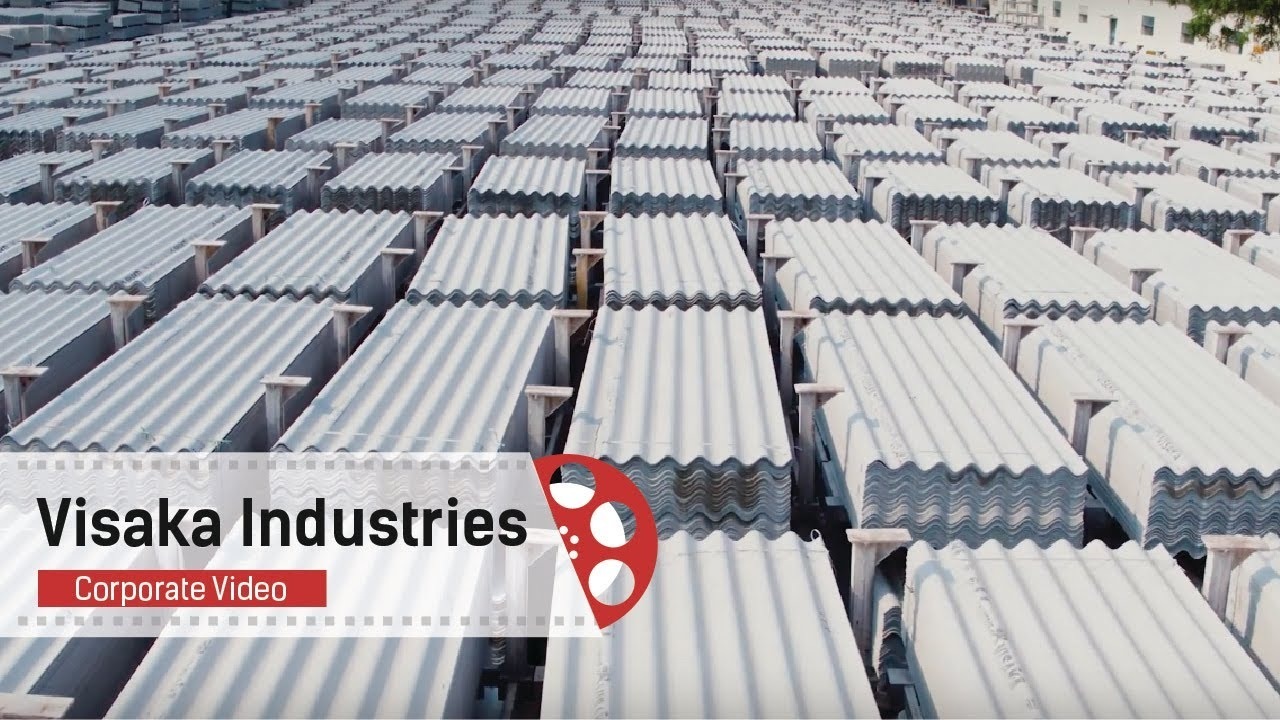
Visaka operates three distinct business segments that read like an identity crisis: asbestos roofing sheets, green building boards, and premium synthetic textile yarn. It is currently India’s second-largest player in the asbestos fibre cement roofing sheet industry, capturing an 18% market share under the Visaka and Shakti brands. This legacy segment still forms about 60% of total revenue, functioning as the cash cow that funds management’s eco-friendly adventures.
The second vertical consists of non-asbestos boards and panels under the ‘V-Next’ brand, holding a dominant 32% market share. They also fuse these boards with solar panels to sell an integrated solar roofing product called ‘ATUM’. Finally, their textile unit produces synthetic blended yarns under the ‘Wonder Yarns’ brand, cornering a staggering 80% market share in its niche, supplying big names like Raymond and Arvind. Essentially, they sell rural roofing shelter, urban interior panels, solar roofs, and the fabric for your next suit.
Section 4 — Financials Overview
Figures are standalone, in ₹ crore.
Quarterly Performance Analysis
Metric
Latest Quarter (Mar 2026)
YoY
QoQ
Revenue
₹479.43
12.52%
30.64%
Operating Profit
₹51.61
12.27%
96.61%
PAT
₹40.92
155.11%
1,398.90%
EPS
₹4.74
154.84%
1,381.25%
The sequential jump in the fourth quarter is visually stunning, but remember that building products face severe winter seasonality, making Q4 a historically strong period. The real operational proof is the YoY improvement, where operating margins stabilized at 10.76% for