KEC International Mar 2026: Balancing ₹6,722 Crore Debt with a ₹40,000 Crore Order Pipeline
The game of engineering, procurement, and construction (EPC) at a global scale is not for the faint-hearted. It requires balancing razor-thin operational margins against a massive working capital appetite, all while navigating cross-border logistical minefields. For KEC International Ltd, the financial year ended March 31, 2026, perfectly illustrated this high-wire act. On one hand, the flagship infrastructure giant of the RPG Group cracked an all-time high consolidated revenue of ₹23,506 crore. On the other hand, its balance sheet visualizes the structural toll of growth, with total borrowings climbing to ₹5,378 crore and total interest-bearing acceptances pushing net debt levels up to ₹6,722 crore.
Investor attention is currently torn down the middle. Optimists are focused on the massive visibility provided by an order book plus L1 pipeline exceeding ₹40,000 crore, catalyzed by deep tailwinds in domestic and international Transmission & Distribution (T&D). Skeptics, however, are parsing through the operational drag of the fourth quarter, where a localized logistics slowdown in the Middle East deferred an estimated ₹380 crore to ₹400 crore in high-margin revenue, causing working capital to bulge right at the finish line. In execution, a booming order backlog is only as valuable as the velocity of the cash it returns. The critical question moving forward is whether management can compress its bloated collection cycle fast enough to prevent absolute interest expenses from eroding its operational gains.
Introduction
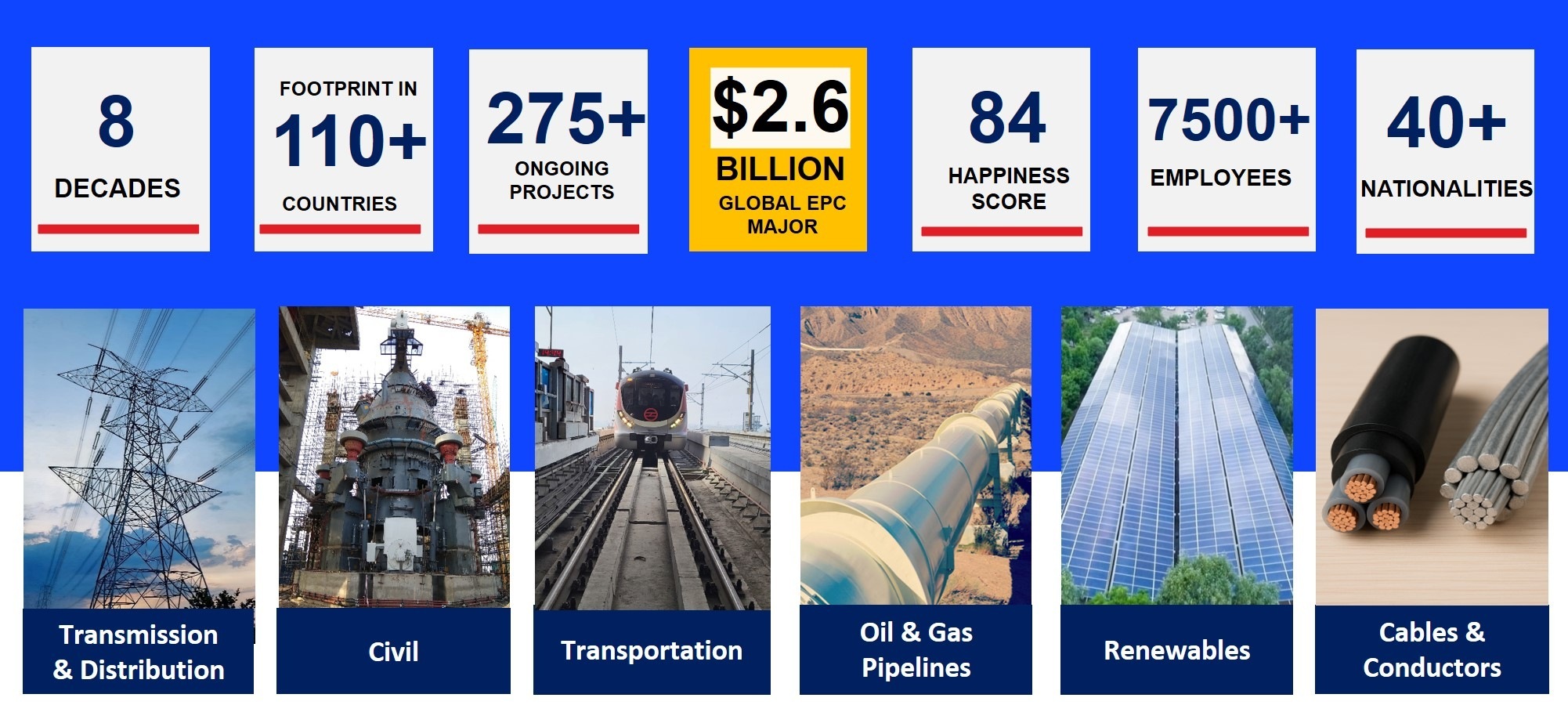
KEC International operates as a diversified infrastructure EPC player with footprints stretching across more than 110 countries. As the core industrial engine of the ₹5.2 billion USD RPG Group, the company’s structural capabilities span power transmission, civil construction, railways, solar energy, cables, and oil and gas pipelines. Historically known as a pure-play transmission tower installer, KEC has spent the last decade diversifying into non-T&D infrastructure to build a multi-layered revenue profile.
This analysis comes at a pivotal structural junction for the company. KEC has just completed a massive capital-raising exercise, allotting equity shares to institutional buyers to pocket ₹870 crore. Simultaneously, it has executed a strategic reorganization by spinning off its manufacturing cable division into a wholly-owned subsidiary, KEC Asian Cables, via a ₹125 crore slump sale to sharpen capital allocation. With a fresh capital base, a massive layout of unexecuted orders, and an industrial environment shifting rapidly toward mega-scale private contracts, understanding KEC’s operational efficiency is now central to tracking the broader Indian capital expenditure cycle.
Business Model: WTF Do They Even Do?
To the uninitiated, KEC International builds the heavy physical circulatory system of modern economies. They engineer and deploy ultra-high-voltage power transmission lines up to 1,200 kV, set up vast air and gas-insulated substations, lay complex cross-country oil and gas pipelines, and build heavy civil projects ranging from data centers and semiconductor facilities to 80-floor residential skyscrapers.
The company makes its money through six primary segments, though the structural mix has shifted heavily back to its roots over the last fiscal year:
Power Transmission & Distribution (T&D): The absolute cash cow, accounting for 68% of consolidated revenue in FY26. They design, manufacture, and erect transmission towers globally.
Civil Infrastructure: Contributing 17% of revenue, this segment focuses on factories, industrial warehouses, water treatment plants, and public infrastructure.
Transportation (Railways): Making up 7% of revenue, they lay tracks, install overhead electrification, and deploy advanced tech niche signaling systems like India’s homegrown ‘KAVACH’.
Cables & Conductors: Accounting for 6% of revenue, they manufacture specialized power, telecom, and elastomeric cables.
Renewables: Providing utility-scale solar and wind EPC services, currently holding 1% of the unexecuted backlog.
Oil & Gas Pipelines: Turnkey cross-country pipeline infrastructure, matching 1% of the current order profile.
The fourth-quarter print contains significant operational noise. While revenue climbed sequentially to ₹6,389.75 crore, it dipped 7.02% compared to the identical quarter last year due to severe port congestion and red-sea rerouting out of the Dubai manufacturing hub. This supply chain friction physically trapped structural material, resulting in delayed milestone billings and a corresponding contraction in margins. However, the sequence of earnings matters less than their ultimate quality; temporary logistical bottlenecks represent delayed income, whereas structural demand destruction represents a broken investment thesis.
Did Management Walk the Talk?
Reviewing guidance from previous quarters reveals mixed execution. Management successfully hit its aggregate top-line growth ambitions by cross-checking the ₹23,500 crore threshold for the full year. However, their operational margin targets faced a clear setback. The full-year consolidated EBITDA margin landed at 7.06%, failing to touch the lower bound of the 8.0% to 8.5%