ABS Marine Services Limited FY26: The Offshore Super-Cycle Meets the 51% Margin Machine
Section 1 — At a Glance
ABS Marine Services Limited has transitioned from a steady vessel management agency into a high-octane offshore logistics powerhouse. The finalized audited results for the fiscal year ended March 31, 2026, confirm a structural breakout. Consolidated annual revenue surged 77.4% to ₹319.13 crore, driven by the deployment of top-tier Dynamic Positioning (DP2) assets. The real story, however, is the operating leverage: full-year Net Profit exploded to ₹80.00 crore, up fundamentally from ₹27.14 crore in FY25.
The latest management commentary paints an aggressive forward picture. With the newly acquired Artemis locked into a 5-year contract and the flagship AM Passion slated for pre-programmed day-rate step-ups, the company is guiding for sustained EBITDA margins in the 45% to 50% band. To fuel this, ABS has expanded its owned fleet to 12 vessels, financing the growth through a rapidly expanding balance sheet. Gross borrowings have climbed to ₹377.23 crore. While management asserts that each new vessel’s cash flow self-funds its debt, this highly leveraged capital structure leaves zero room for extended dry-docking gaps or uncontracted idle time.
Operating leverage is the magic that happens when fixed asset costs freeze while charter day-rates catch fire.
Investors must now weigh the immense profitability of an offshore logistics upcycle against the unforgiving rigidity of a debt-heavy balance sheet.
Section 2 — Introduction
Founded in 1992 and headquartered in Chennai, ABS Marine occupies a highly specialized niche in the Indian maritime ecosystem. For decades, it operated as a conservative, asset-light ship management crew provider. Following its IPO on the NSE Emerge platform, the company discarded that conservative shell to aggressively buy physical tonnage.
This analysis comes at a pivotal inflection point. With global exploration spending rising and domestic vessel supply severely constrained, ABS Marine is riding a perfect storm of high demand and tight capacity. The company is actively hunting for 7 to 8 additional “bargain” vessels over the next few years. The strategy is clear: buy specialized ships, lock them into long-term contracts with energy majors, and ride the tonnage tax regime to the bank.
Section 3 — Business Model: WTF Do They Even Do?
To the uninitiated, shipping is just hauling cargo from point A to point B. ABS Marine operates behind the curtain, acting as a specialized heavy-machinery lessor, outsourced offshore HR, and port safety operator rolled into one.
The revenue engine fires on four cylinders:
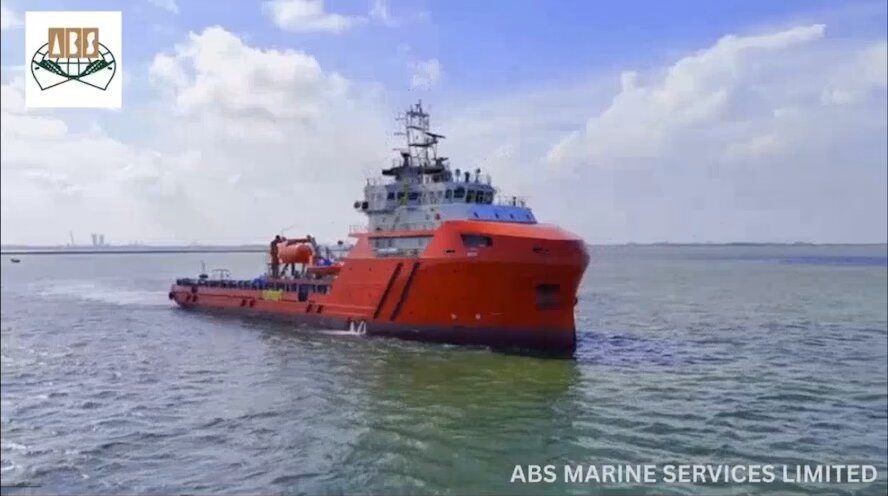
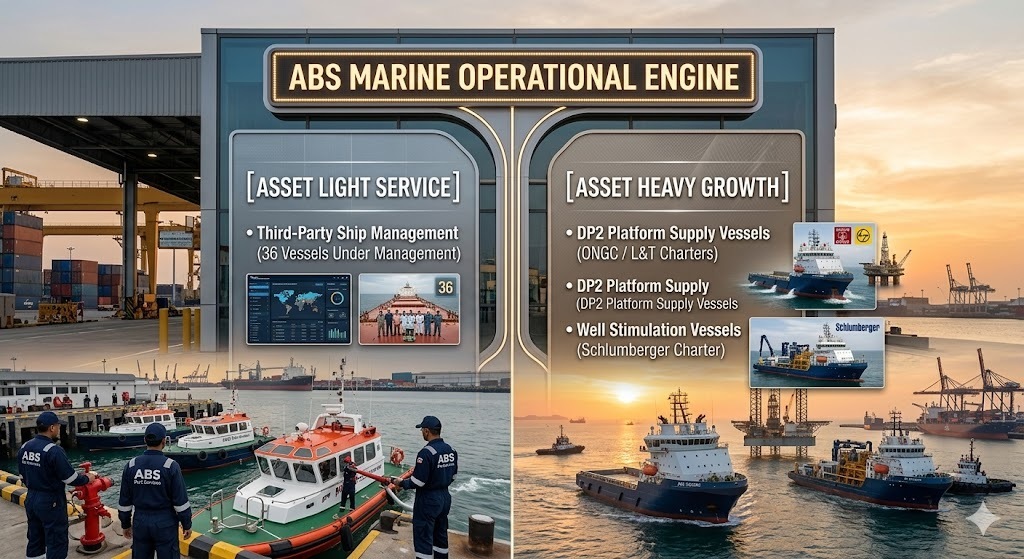
Vessel Ownership & Charters (Asset Heavy): The primary growth driver. The company owns 12 vessels, including DP2 Platform Supply Vessels (PSVs) and Well Stimulation Vessels, chartered to heavyweights like ONGC, L&T, and Schlumberger.
Ship Management (Asset Light): Technical supervision, crew recruitment, and compliance for 38 third-party vessels, maintaining a workforce of over 2,000 seafarers.
Port Services: Multi-year contracts to operate pilotage boats, oil spill response, and fire tenders across ports like Chennai, Ennore, and Kamarajar.
Marine Services: Auxiliary consulting, ship inspections, and dry-dock coordination.
The genius of this model lies in fuel efficiency and tax structuring. Fuel and water costs are pass-throughs borne by the charterer, insulating ABS from crude shocks. Furthermore, by operating under the government’s tonnage tax regime, management expects an effective corporate tax rate of just 1.5% to 2% for FY27.