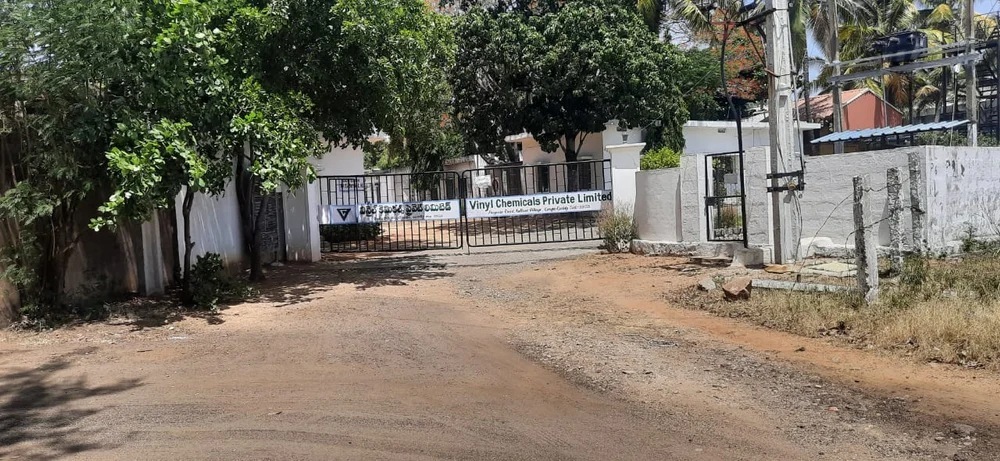
Vinyl Chemicals FY26: The 2% Margin Pipeline Hooked to Fevicol’s Fortune
Section 1 — At a Glance
Vinyl Chemicals (India) Ltd is a pure-play chemical trading business tethered directly to the growth of India’s adhesive giant, Pidilite Industries. Operating in an ultra-lean configuration, the company serves as the critical procurement pipeline for Vinyl Acetate Monomer (VAM), commanding around a 33% share of India’s entire VAM import volume. The investment narrative here is completely dominated by intense customer concentration, with Pidilite consistently accounting for 80% to 90% of overall corporate revenues. Investors are drawn to the business for its exceptionally clean balance sheet, zero long-term debt, and a highly generous dividend payout philosophy. However, the structural realities of a pure trading model leave the company with structurally thin operating margins that are highly vulnerable to volatile global commodity pricing cycles. In fiscal 2026, top-line performance experienced moderate growth, while profitability faced pressure due to a contraction in global VAM price spreads. Buying a trading business with extreme customer concentration means you are purchasing a pass-through cost center rather than an independent compounding machine. The key question for public shareholders is whether a business that acts as an outsourced purchasing department for its parent can ever retain significant economic surplus for itself.
Section 2 — Introduction
Vinyl Chemicals (India) Ltd (VCIL) was incorporated in 1986 and originally operated as a chemical manufacturer. Following a corporate demerger of its manufacturing assets, the company pivoted completely into the wholesale trading of Vinyl Acetate Monomer (VAM). Today, it functions as a critical logistical arm for the Parekh Group, aligning its entire operational rhythm with Pidilite Industries. This article explores VCIL’s financial positioning following the conclusion of fiscal year 2026, a period marked by shifting global chemical supply chains and severe leadership transitions at the executive level. We dig past the surface headline ratios to understand whether this structural proxy for Fevicol offers genuine independent value to public equity investors or simply exists to smooth out commodity price volatility for its promoter group.
Section 3 — Business Model: WTF Do They Even Do?
Vinyl Chemicals is essentially an upscale, large-scale customs clearing and sourcing desk disguised as a listed specialty chemical player. They buy VAM from huge global petro-chemical producers across three primary suppliers and import it into India. Once the chemical drops at the port, approximately 95% of it goes straight into Pidilite’s factories to get turned into Fevicol, pigments, and industrial binders. With sale of traded goods accounting for 97% of total operational revenues in FY26, there is no proprietary manufacturing technology, no R&D facility, and no complex capital infrastructure here. They run a cost-pass-through model where global price spikes or drops are passed on to Pidilite with a tiny, fixed operational spread.
Section 4 — Financials Overview
Figures are consolidated, in ₹ crore.
Quarterly Performance Analysis
Metric
Latest Quarter (Mar 2026)
YoY
QoQ
Revenue
179.84
4.03%
6.11%
EBITDA / Operating Profit
2.84
-71.46%
-23.45%
PAT
4.65
-36.04%
2.88%
EPS (₹)
2.54
-35.86%
3.25%
The numbers display a painful mismatch between top-line volume movement and true bottom-line profitability. While Q4 FY26 revenues rose a modest 4.03% year-on-year to ₹179.84 crore, operating profits collapsed by over 71% to a meager ₹2.84 crore. This sharp deterioration emphasizes how rapidly profits can evaporate in a trading business when global product spreads turn adverse. When gross operational margins sit at razor-thin levels, even a tiny shift in international chemical pricing can completely erase an entire quarter’s bottom-line performance.
What is Management Promising in the Coming Quarters?
Given that Vinyl Chemicals does not host traditional public investor conference calls, forward visibility must be extracted from the operational reality of its parent, Pidilite Industries. The parent’s strong underlying volume momentum provides a stable baseline demand architecture for VAM imports. However, international credit assessments confirm that near-term top-line values will remain heavily range-bound due to normalized global VAM price realizations relative to the historic supply-shock highs of