Atul Auto Ltd March 2026 : A 95% Surge in Annual PAT Amid Redundant EV Trademark Drama
Section 1 — At a Glance
A stunning financial rebound is repositioning this three-wheeler manufacturer under the investor spotlight. After braving deep multi-year operational troughs , the company’s financial turnaround culminated in fiscal 2026 with an operating revenue of ₹824.39 crore, up 14.07% from ₹722.68 crore in the prior fiscal year. Profit after tax (PAT) nearly doubled, surging 95.38% to reach ₹42.26 crore against ₹21.63 crore in fiscal 2025. This dramatic recovery has compressed the trailing Price-to-Earnings (P/E) ratio to 31.25, igniting active debate across trading desks.
While a 101% compounding of trailing twelve-month profit growth highlights a powerful short-term operational recovery, severe systemic vulnerabilities persist. The company continues to struggle with extreme geographical concentration—anchored primarily within Gujarat—alongside intense market rivalries from entry-level mini-truck options. Furthermore, a series of costly intellectual property disputes forced a complete rebranding of its electric vehicle (EV) lineup mid-year. A company’s true operational strength is revealed not during macro tailwinds, but by how efficiently its core infrastructure withstands legal and geographical concentration risks. For patient market observers, the core question is whether this sudden earnings acceleration signals a sustainable structural pivot or merely a transient, high-beta cyclical upswing.
Section 2 — Introduction
Atul Auto Ltd entered the commercial automotive landscape in 1986, establishing a niche within India’s highly competitive three-wheeler market. From its manufacturing strongholds in Rajkot and Ahmedabad, the company systematically engineered a diverse regional footprint that spans both goods transport and passenger configurations.
This comprehensive review explores a pivotal fiscal period marked by volatile raw material inputs, complex legal adjustments in the premium EV division, and an assertive capital optimization plan aimed at balancing debt with regional market-share retention.
Section 3 — Business Model: WTF Do They Even Do?
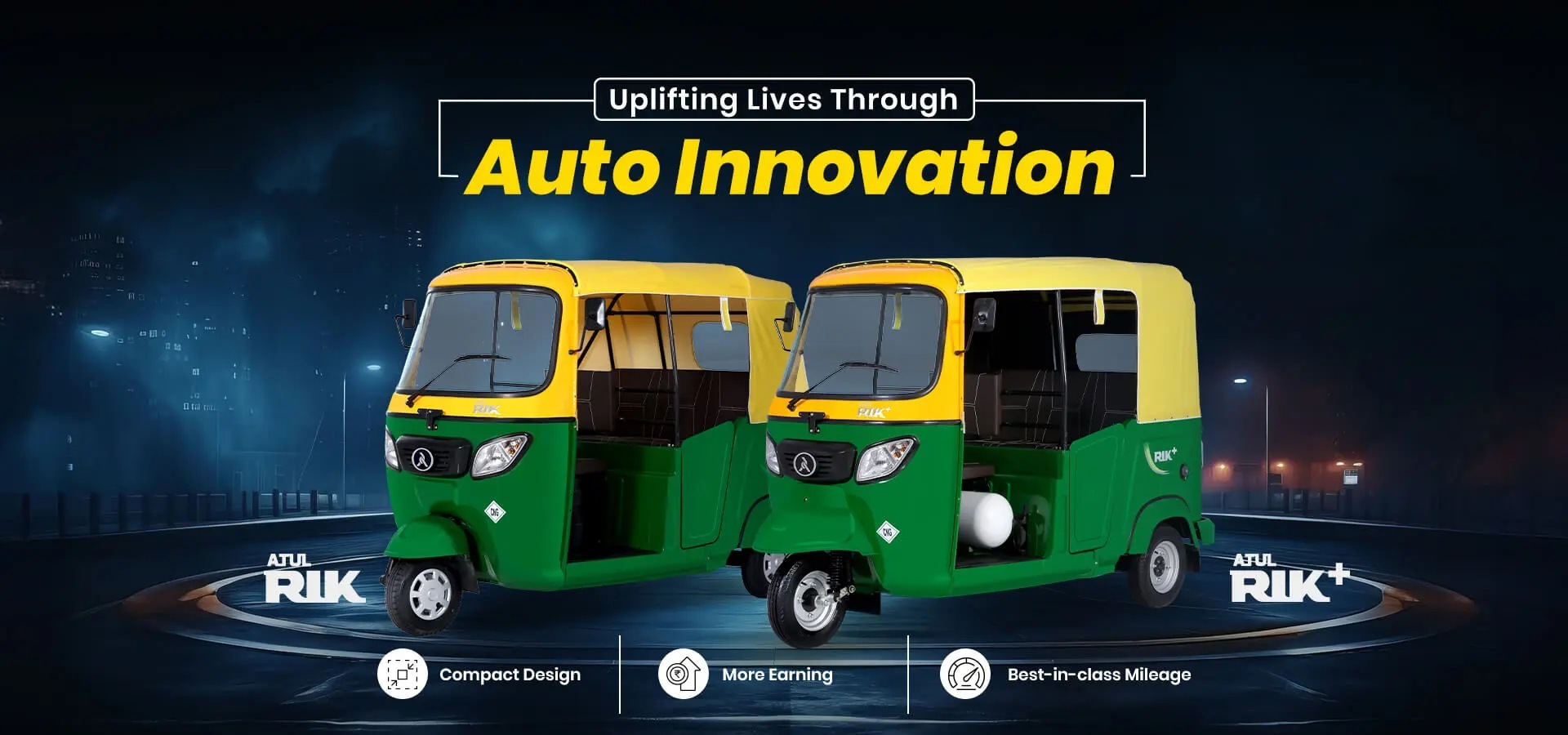
Atul Auto Ltd designs and manufactures three-wheeled commercial vehicles. The company runs a dual-engine internal combustion and clean energy production setup across its primary facilities in Rajkot and Ahmedabad, which boast an aggregate manufacturing capability of 120,000 units per annum.
The enterprise operates primarily through two main segments: the core Automobiles Business, which contributes approximately 92% of segment revenue, and a Non-Banking Financial Business via its subsidiary Khushbu Auto Finance Ltd, which drives the remaining 8%. Looking closely at its operational revenue streams, the company derives approximately 83% of its top-line revenue from core automotive assemblies, supplemented by an 8% contribution from replacement spare components. Captive automotive financing generates another 7% of operational inflows. While its global distribution pipelines reach dozens of emerging markets across Latin America, Africa, Europe, and Asia, domestic demand continues to drive over 92% of aggregate volumes.
Section 4 — Financials Overview
Figures are consolidated, in ₹ crore.
Comparison Table
Metric
Latest Quarter (Mar 2026)
YoY
QoQ
Revenue
240.58
13.94%
4.21%
EBITDA / Operating Profit
27.31
80.74%
-3.39%
PAT
14.79
106.85%
-3.65%
EPS
5.33
106.59%
-3.62%
The numbers display a sharp year-over-year operational expansion , though sequential momentum shows signs of flattening out. The quarterly revenue of ₹240.58 crore reflects robust volume growth compared to the prior year’s fourth quarter. However, a minor 3.39% sequential compression in operating profit implies that input costs are testing near-term margin thresholds. Sudden expansions in profit margins are often deceptive unless backed by sustainable structural reductions in input costs.