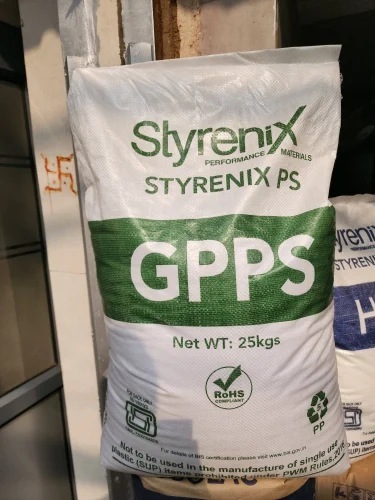
Styrenix Performance Materials Ltd. closed its fiscal year 2026 with a dual-narrative script that highlights the operational divergence between its domestic stronghold and an overseas venture. On a consolidated basis, annual revenue from operations climbed to ₹3,438.03 crore, up from ₹2,982.42 crore in the prior fiscal. However, consolidated net profit experienced a clear contraction, dropping from ₹235.16 crore in fiscal year 2025 to ₹182.85 crore in fiscal year 2026. This compression was driven primarily by an accumulation of inventory-led valuation adjustments and low operating leverage within the newly integrated Thailand subsidiary.
Investors are closely tracking Styrenix’s dominant domestic market position as India’s leading manufacturer of Acrylonitrile Butadiene Styrene (ABS) and Styrene Acrylonitrile (SAN). The ongoing volume expansion in India provides a secure buffer for earnings. Despite this domestic stability, significant concern stems from international operations, where a transition from legacy global brands to indigenous branding triggered extensive qualification cycles and depressed utilization rates. These disruptions exposed the group’s bottom line to immediate margin erosion.
A critical lesson here is that geographic expansion often demands immediate compliance and operational sacrifices before yielding structural scale. The market’s reaction reflects this reality, balancing robust home-market demand with underutilized assets abroad. The upcoming quarters will reveal whether this corporate perimeter expansion secures long-term market access or remains a persistent drag on returns.
Section 2 — Introduction
Styrenix Performance Materials Ltd. occupies a specialized niche within the Indian chemical ecosystem as a premier manufacturer of Engineering Thermoplastics. Established over five decades ago, the company has transformed from a domestic pioneer into a core partner for key consumer sectors, including automotive OEMs, household appliances, and electronics manufacturers. Its structural position changed significantly following the 2022 ownership transition, when the Shiva Group acquired a majority stake from the multinational INEOS Group. This shift aligned corporate governance closer to regional market movements.
The company recently entered a critical transformation phase by completing the cross-border acquisition of a manufacturing facility at Map Ta Phut, Thailand. This strategic play seeks to scale the group’s footprint across the Asia-Pacific region. However, integrating this multi-geography footprint during a period of global petrochemical overcapacity has introduced short-term earnings volatility. This piece analyzes the structural mechanics behind Styrenix’s latest financials, dissects the ongoing brand transition adjustments, and maps the realistic valuation territory for its equity capital.
Section 3 — Business Model: WTF Do They Even Do?
Styrenix operates as a critical intermediary in the industrial supply chain by converting crude oil derivatives into specialized plastic resins. Its primary product engine is Absolac (ABS)—a high-impact resin synthesized from acrylonitrile, butadiene, and styrene. If you own a refrigerator, ride a two-wheeler, or wear a protective helmet, you are interacting with their output. They complement this with Absolan (SAN), a polymerized plastic resin valued for its optical clarity and chemical resistance, commonly utilized in air conditioner fan blades, cosmetic packaging, and stationery items.
The third leg of their business is Polystyrene (GPPS and HIPS), which targets food packaging and consumer durable housings. While the raw materials remain deeply cyclical commodities tied to global crude benchmarks, Styrenix avoids direct spot volatility by running a formula-based pricing architecture across more than 70% of its volume book. The company essentially charges a conversion premium, meaning profitability relies on volume throughput and factory utilization.
Section 4 — Financials Overview
Figures are consolidated, in ₹ crore.
Quarterly Performance Breakdown
Metric
Latest Quarter (Mar 2026)
YoY (%)
QoQ (%)
Revenue
₹826.10
-12.09%
-4.99%
EBITDA / Operating Profit
₹115.99
+32.94%
+177.82%
PAT
₹73.48
+34.28%
+349.69%
EPS
₹41.78
+34.28%
+349.73%
Data Source: Captured from quarterly disclosure tables
The final quarter of fiscal year 2026 provided a strong sequencing rebound relative to the deeply depressed December quarter, where margins plummeted to 5%. Operating profit margins climbed back to 14%, stabilizing the immediate downside.
Did Management Walk the Talk?
Reviewing the older management guidance from the February 2026 interaction reveals a necessary course correction. Management explicitly walked back their previous full-year volume growth expectation of 12.5%, pointing directly to weak polystyrene demand during the first half of the year. The numbers validate this caution: consolidated volumes for the full year reached 248.3 KT, indicating that while core ABS held firm, general-purpose polystyrene could not maintain its expected run-rate.
Furthermore, management’s focus on minimizing risk by avoiding excess stock accumulation has been executed, preventing a repeat of the steep inventory write-downs seen in the previous sequential periods. Earnings quality remains closely tied to linear operational volume rather