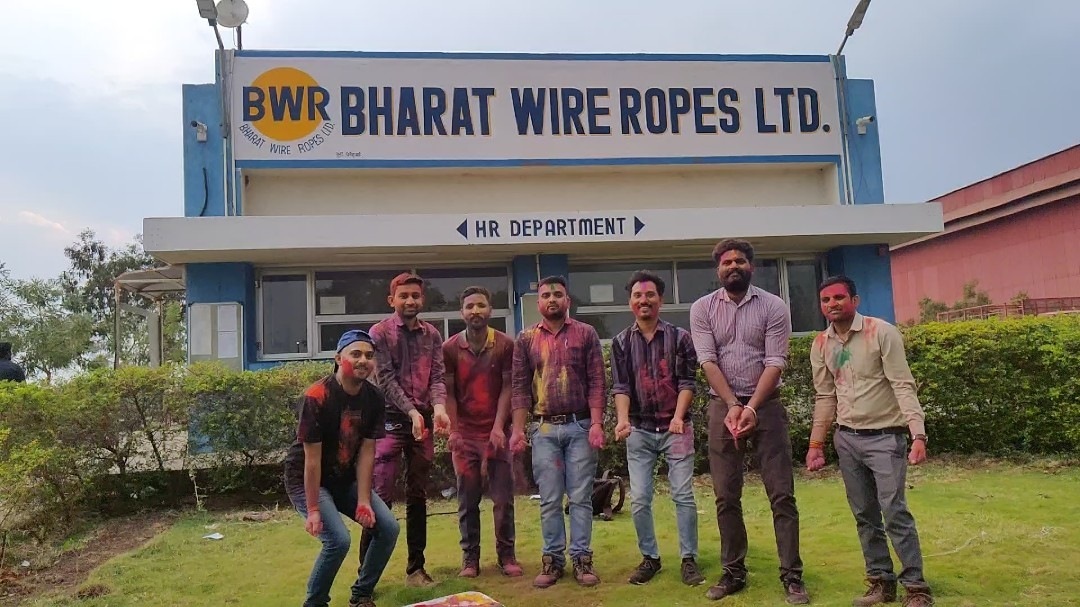
Bharat Wire Ropes Ltd Q4 FY26: A ₹74.89 Crore Debt Mirage with a 51% Promoter Twist
Section 1 — At a Glance
Bharat Wire Ropes Ltd (BWRL) closed its fiscal year 2026 with a net profit of ₹72.46 crore. This performance exactly matched the ₹72.44 crore generated in the prior fiscal year , despite a notable contraction in top-line revenue from operations, which dipped from ₹619.32 crore to ₹590.54 crore. While investors are closely monitoring the company’s aggressive balance sheet restructuring—which saw long-term borrowings plummet sharply from ₹513.69 crore to ₹74.89 crore —operational metrics reveal persistent execution challenges. The company’s operating profit margins felt the pressure of shifting geographical dynamics and elevated input costs, matching a broader consolidation trend visible in the final quarter where sales reached ₹141.48 crore.
The primary catalyst drawing investor attention is this massive, rapid deleveraging. However, a closer inspection reveals that a substantial portion of this debt reduction was facilitated by structural restructuring, legal resolution mechanisms, and specialized state subsidies rather than organic cash generation. Meanwhile, severe headwinds persist: export volumes are wrestling with rising global logistical costs and geopolitical friction in the Middle East , while a massive 51.0% of the remaining promoter equity is locked up in pledges under old resolution terms. Short-term execution risks remain elevated as capital conversion cycles lengthen and production volumes plateau.
True structural value is never created by corporate restructuring alone; it requires operational efficiency to transform balance sheet changes into long-term compounding.
Can the management successfully translate this lighter, restructured balance sheet into scalable volumes, or will severe promoter pledges and volatile global input costs continue to cap its market valuation?
Section 2 — Introduction
Bharat Wire Ropes Limited, established in 1986 and fundamentally repositioned following its acquisition by current promoter Murarilal Mittal in 2010 , operates within the competitive iron and steel products landscape. The company has established a specialized footprint by serving critical infrastructure segments spanning general engineering, deep-sea exploration, aviation, and defense. This deep dive explores the company’s position at a critical operational turning point.
The publication of the audited financial results for the period ending March 31, 2026 , alongside recent announcements regarding changes in statutory auditors over fee disputes and strategic management shifts, makes this an opportune time to evaluate its fundamentals. We dig beneath the surface of headline numbers to understand whether the business is positioned for genuine growth or simply surviving on structural extensions.
Section 3 — Business Model: WTF Do They Even Do?
To the uninitiated investor, wire ropes sound like simple industrial hardware. In reality, Bharat Wire Ropes manufactures thousands of varieties of specialized high-tensile steel strands, wire ropes, and slings ranging from 0.3mm fine wires up to massive 100mm industrial ropes. These are the critical veins and tendons holding up suspension bridges, pulling elevators up skyscrapers, lifting heavy loads via maritime cranes, and supporting onshore/offshore oil exploration.
The company operates two facilities in Maharashtra: an older 6,000 MTPA plant at Atgaon and a massive, modern 66,000 MTPA plant at Chalisgaon. Its revenue strategy involves an ongoing attempt to pivot from commoditized heavy steel wires toward niche, high-margin specialized ropes. While this shift supports profitability margins, it has led to a plateau in volume growth, with sales volumes hovering around 31,357 Metric Tons for recent nine-month blocks.
Section 4 — Financials Overview
Figures are standalone, in ₹ crore.
Performance Tracker
Metric
Latest Quarter (Mar 2026)
YoY
QoQ
Revenue
141.48
-3.86%
-0.94%
EBITDA / Operating Profit
29.64
-20.09%
-9.00%
PAT
16.46
-24.50%
-9.81%
EPS
2.40
-25.00%
-9.77%
The numbers illustrate a clear deceleration trend. Revenue dropped 3.86% compared