Vaidya Sane H2 FY26: The ₹54 Crore Cost Surge That Shrink-Wrapped Ayurvedic Profits
Section 1 — At a Glance
Vaidya Sane Ayurved Laboratories Limited delivered a top-line performance in the financial year ended March 31, 2026, with revenue from operations scaling up to ₹106.91 crore, marking an 18.89% expansion over the previous year. This top-line momentum trickled down to the bottom line, with Net Profit after tax logging a 25.66% growth to arrive at ₹8.99 crore. However, this annual grace masks an operational bottleneck that developed during the second half of the fiscal year. In H2 FY26, despite a healthy revenue print of ₹56.96 crore, operational profits were severely impacted, sending EBITDA margins plunging by 586 basis points year-on-year to 11.93%.
Investors are closely tracking the company’s aggressive asset-light domestic and international expansion model, including its medical tourism initiatives and the deployment of a high-value clinical pivot. On the flip side, serious anxieties are mounting around an intense surge in “Other Expenses,” which spiked to ₹54.39 crore for the full year, swallowing up a significant portion of operating leverage. Earnings growth remains entirely disconnected from operational cash flows, as high working capital requirements continue to tie down liquid assets. Capital efficiency stays in a modest band, signaling that scaling up a clinic network demands continuous funding before yield stabilizes.
True corporate health is defined by cash flowing into the bank, not accounting profits accumulating on paper.
The question remains whether management can transform its massive clinical network into a sustainable cash generator or if administrative expenditures will continue to outpace diagnostic billing.
Section 2 — Introduction
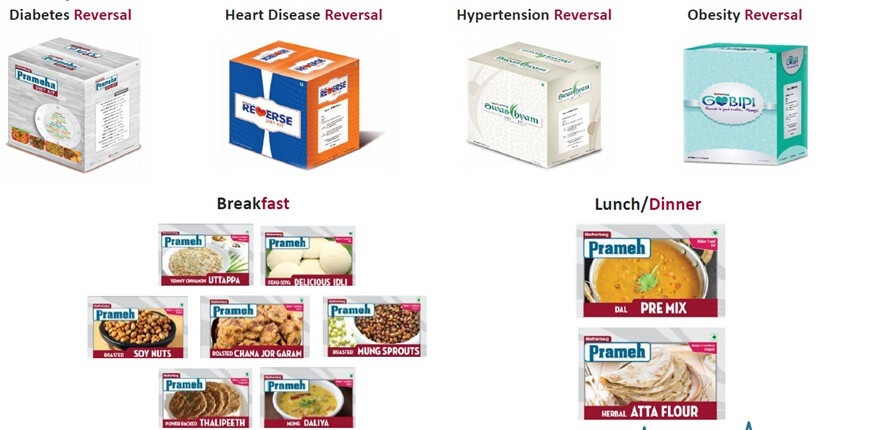
Vaidya Sane Ayurved Laboratories Limited, popularly known across India via its “Madhavbaug” brand, has carved out a niche as an institutional provider of non-invasive, Ayurveda-based treatments for chronic lifestyle pathologies. The micro-cap company has positioned itself as an alternative healthcare ecosystem targeting heart disease, diabetes, hypertension, and obesity reversal. Over the years, the entity has expanded its model from simple neighborhood wellness clinics into a highly integrated network of proprietary hospitals, franchise centers, and specialized product manufacturing arms.
The publication of the FY26 audited results comes at a vital juncture for the company. Having built its core footprint inside Maharashtra, the group is now attempting an aggressive multi-state and international expansion blueprint, alongside a planned migration from the NSE SME Emerge platform to the Main Board. However, rapid structural growth invariably leaves financial scabs. This analysis dissects the operational realities beneath the headline numbers to assess if the underlying business architecture can handle the strain of institutional scaling.
Section 3 — Business Model: WTF Do They Even Do?
To the uninitiated investor, Madhavbaug sounds like a collection of traditional panchakarma centers. In reality, the company runs a data-driven, medicalized pipeline designed to look exactly like an allopathic healthcare network, just with metal-free herbal formulations and standardized diet kits instead of chemical pharmaceuticals. They operate a three-pillar treatment protocol consisting of a 3-month aggressive medical intervention followed by a 9-month conservative maintenance phase.
The enterprise splits its operations between services (clinical/hospital consultations and therapies) and product sales (proprietary medicines and targeted nutritional kits). Geographically, the footprint spans 320 clinics and 4 operational hospitals. The unit economics lean heavily on a high-value pivot: rather than relying on low-ticket preventive care worth ₹10,000–13,000, management is aggressively steering the network toward formal “disease reversal programs” that command premium pricing of ₹50,000 to ₹60,000 annually per patient. Manufacturing is internalized via 100% subsidiaries—Dynamic Remedies and UV Ayurgen Pharma—which helps protect gross product margins before clinical delivery.
Section 4 — Financials Overview
Figures are consolidated, in ₹ crore.
Comparison Table
Metric
Latest Half (H2 FY26)
YoY (Same Half H2 FY25)
Previous Half (H1 FY26)
Revenue from Operations
56.96
48.12
49.94
EBITDA (Excl. Other Income)
6.80
8.56
8.62
PAT
4.15
3.38
4.84
Reported EPS (₹)
3.95
3.19
4.56
Note: All data in the table directly reflects the consolidated audited half-yearly results.
The sequential and year-on-year financial performance shows a clear divergence between top-line expansion and margin preservation. While revenue for H2 FY26 grew by 18.37% YoY to ₹56.96 crore, the operational profitability completely fell apart. EBITDA contracted by 20.61% YoY, sliding down to ₹6.80 crore. This margin deterioration was driven entirely by a sudden expansion in operating expenses, with “Other Expenses” expanding from ₹21.05 crore in H2 FY25 to a massive ₹30.95 crore in H2 FY26. PAT grew to ₹4.15 crore principally because the tax outturn dropped down to an anomalous 4% for the half-year period.
Squeezing out a higher net profit through a lower tax provision provides no permanent shelter when core operating costs are expanding out of control.
Did Management Walk the Talk?
During the November 2025 concall, management was exceptionally confident, explicitly reiterating full-year FY26 revenue guidance of ₹115–120 crore alongside sustained EBITDA margins of 17% to 18%. Looking at the final audited full-year metrics, the business fell short on both accounts. Full-year FY26 revenue arrived at ₹106.91 crore (missing the lower bound of guidance by over 7%), and full-year EBITDA margins wrapped up at 14.42%, far below the promised 17–18% band. The core issue stems from the back-half of the year, where the administrative costs of onboarding brand assets and financing geographic infrastructure completely overwhelmed the targeted operating leverage.
Can management pull back its administrative spending in the next two halves, or has the operational run-rate permanently shifted upward?
Section 5 — Valuation Discussion
To evaluate where Vaidya Sane sits against current market execution, we employ a multi-band valuation framework based on a snapshot closing market price of ₹193.4 and an adjusted equity share base of 1.05 crore shares, yielding a market capitalization of ₹203.33 crore.