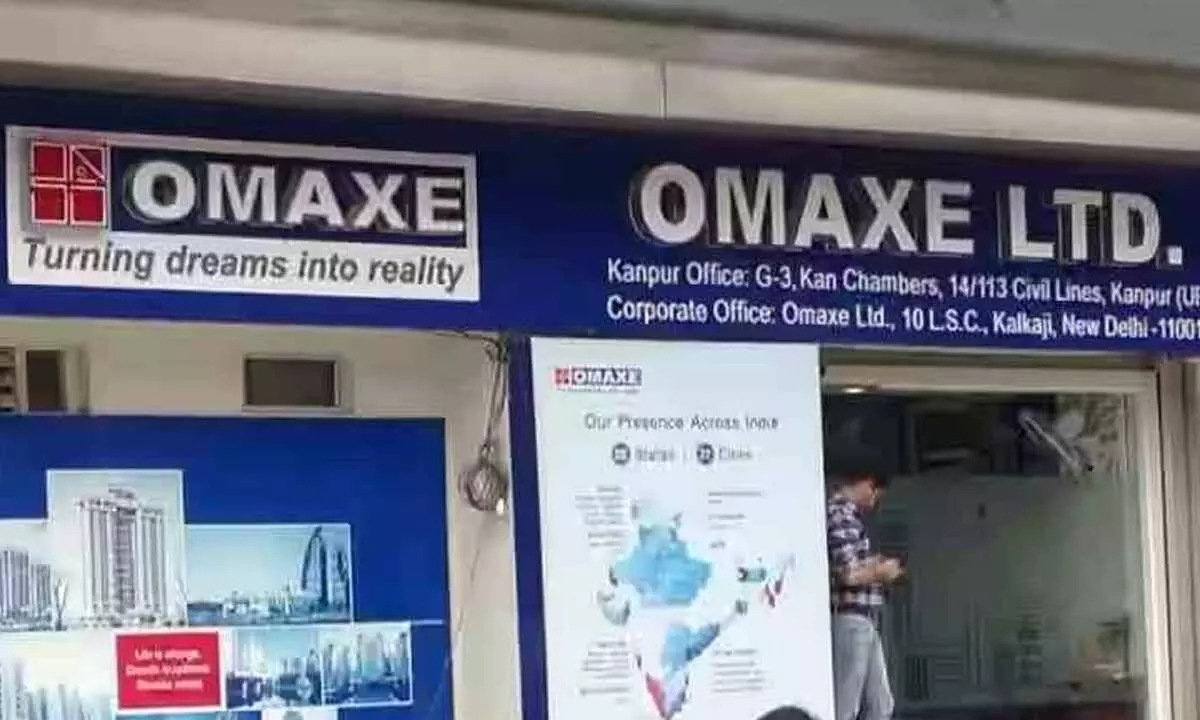
Omaxe Limited Mar 2026: The Architecture of a ₹697 Crore Accounting Mirage
Section 1 — At a Glance
A structural breakdown in real estate economics is rarely silent, but in the case of Omaxe Limited, the numbers scream. The headline data for the fiscal year ended March 31, 2026, presents a stark financial reality: a staggering Net Loss of ₹696.86 crore matching an operational layout where expenses of ₹1,949.12 crore have fundamentally outpaced total revenue from operations of ₹1,253.40 crore. Investor attention is trapped in a multi-layered paradox. On one side, structural liquidity injections like the ₹500 crore commitment from Oaktree Capital and a recent ₹75 crore plotted-development funding from WSB Partners hint at high-profile institutional life-support. On the other side, the operational machinery is bleeding cash, highlighted by a deeply negative Operating Profit Margin of -55.59% and an accumulated erosion of net worth that has pushed Reserves to a negative ₹1,084.42 crore.
The primary cause for anxiety remains the expanding gap between GAAP financial statements and ground-level cash collections. While the income statement shows accounting devastation due to statutory revenue recognition rules linked to the final transfer of control, the corporate balance sheet has quietly expanded its liabilities block to ₹16,522.32 crore, fueled by escalating “Other Liabilities” which now sit at ₹15,957.60 crore. In the capital markets, a company’s legal and accounting presentation can diverge drastically from its liquidation value. The core question is whether Omaxe’s massive land bank of over 2,100 acres can be unlocked before its surging interest obligations—which reached an all-time high of ₹255.11 crore this fiscal year—completely consume what remains of its structural equity. This report tears through the facade to evaluate if Omaxe is a distressed asset positioning for an epic turnaround or a capital-devouring structural trap.
Section 2 — Introduction
Omaxe Limited entered the Indian real estate arena in 1989, riding the early waves of regional urbanization with a clear focus on North and Central India’s Tier 2 and Tier 3 ecosystems. Over three decades, the company built its reputation on large-scale township layouts, commercial shopping centers, and high-density residential complexes across 30 cities and 8 states. It is an established brand name in regional markets like Lucknow, New Chandigarh, Faridabad, and Ludhiana. However, yesterday’s execution glories offer little shelter against today’s balance sheet storms.
This analysis is prompted by a series of major structural alerts over the past 12 months. Omaxe has completely exhausted its equity cushion, transitioning into a negative net worth territory. Simultaneously, the regulatory landscape has darkened with a SEBI financial misstatement penalty, complex tax disputes involving billions, and an adverse PPP arbitration award regarding its Patiala township project. With institutional lenders stepping in via structured debt and promoters creating Non-Disposal Undertakings (NDUs) to secure capital, Omaxe is operating at a critical financial crossroads. We examine whether the business can structurally survive its own leverage.
Section 3 — Business Model: WTF Do They Even Do?
Omaxe functions essentially as a master regional developer and contracting infrastructure manager. Its operations can be divided into three core pillars: residential group housing/townships, high-value commercial retail spaces, and government-backed Public-Private Partnership (PPP) projects. Instead of chasing ultra-expensive land parcels in Tier 1 metros, Omaxe’s strategy focuses on dominating regional growth nodes where land acquisition costs are structurally lower but demand velocity is highly cyclical.
Lately, management has pivoted toward asset-light monetization models and high-footfall PPP infrastructure configurations. Its prime operational showcase is the “Omaxe Chowk” project in Chandni Chowk, Delhi, which commands 3,83,000 square feet of high-density leasable retail space. This has been followed by an even more ambitious ₹2,500 crore PPP sports infrastructure and retail development project titled “The Omaxe State” in Dwarka, Delhi. To add a modern flavor to its real estate layout, the company signed an agreement with Jio-bp to establish electric vehicle (EV) charging and swapping infrastructure across 12 cities. Yet, despite selling 132 million square feet since inception, the business model currently functions as a giant cash-recycling loop: borrow capital, launch massive township phases, collect consumer advances, and use the incoming cash to service the massive interest load of previous legacy phases.
Section 4 — Financials Overview
Figures are consolidated, in ₹ crore.
Performance Tracking Table
Metric
Latest Quarter (Mar 2026)
YoY (%)
QoQ (%)
Revenue
348.52
-34.93%
15.47%
EBITDA / Operating Profit
-201.94
-38.01%
-30.12%
PAT
-191.30
-31.91%
-24.87%
EPS (₹)
-10.46
-31.90%
-24.82%
Financial Performance Review
The quarterly trajectory reads like an operational emergency checklist. Revenue for the March 2026 quarter dropped by 34.93% year-on-year to ₹348.52 crore. The structural deterioration is visible at the Operating Profit level, which slid further into the red at negative ₹201.94 crore for the quarter. This means that before accounting for depreciation, interest costs, or taxes, Omaxe loses money on every square foot of project activity it executes. Real estate accounting rules specify that revenue can only be recognized upon transferring final control to the buyer, which creates massive timing mismatches. However, persistent operational losses over 13 consecutive quarters indicate that cost escalations have outrun structural pricing advantages.