DCM Nouvelle Ltd Q4 FY26: Spinning Threads out of High P/E and Heavy Liabilities
1. At a Glance
The financial performance of DCM Nouvelle Ltd presents a complex scenario for observers. On one hand, the company reports a stable Consolidated Net Profit of ₹3.97 crore for the quarter ended March 31, 2026, marking an apparent recovery from the net losses encountered in the preceding quarters of the fiscal year. On the other hand, the corporate structure is dealing with a significant debt burden of ₹328 crore, resting on a market capitalization of just ₹271 crore. This structural leverage places the company’s valuation at an elevated trailing Price-to-Earnings (P/E) ratio of 72.2.
A closer inspection of the trailing twelve months reveals structural challenges. The company’s operations have faced substantial volatility, evidenced by a ₹3,747 lakh exceptional loss recorded in December 2025 due to a major asset impairment of ₹3,561 lakh. While the top-line quarterly sales hover around ₹263.04 crore, the full-year sales growth is contracting at -4.54%, accompanied by a sharp annual profit decline of -45.2%.
Concurrently, the return ratios have compressed significantly. The Return on Capital Employed (ROCE) stands at a muted 4.27%, while the Return on Equity (ROE) has dropped to 1.15%.
The entity is also absorbing the financial overheads of its new subsidiary, DCM Nouvelle Specialty Chemicals Ltd, which is in its initial capital-intensive phases and generating operational losses. With an interest coverage ratio hovering tightly at 1.49, the operational cash flows are heavily utilized to service debt obligations before contributing to net equity accumulation.
The central point of inquiry remains whether the core spinning operations can expand their margins sufficiently to support this capital expansion, or if the burden of fixed finance costs will outpace the operational earnings.
2. Introduction
DCM Nouvelle Ltd entered the public capital markets as an independent entity following its demerger from the legacy DCM Ltd group in 2019. Historically rooted in the traditional textiles capital of Hisar, Haryana, the corporate structure specializes in the production of cotton yarns. For decades, the foundational business model remained stable: source raw lint cotton, process it through thousands of rotating spindles, and export the output to global texturizing hubs.
However, the modern corporate footprint is navigating a far more volatile landscape. Operating in a highly cyclical commodity market, the company has had to deal with shifting trade dynamics, particularly a sharp contraction in export demand from traditional destinations like China. This has forced management to rapidly reorient its supply chains toward domestic buyers and alternative regional export corridors like Bangladesh.
In an effort to diversify away from the low-margin traps of the spinning sector, the enterprise initiated a pivot into the specialty chemicals domain in 2022 via a wholly owned subsidiary. This transformation has introduced a new layer of execution risk, requiring substantial capital allocation toward asset creation while the core textile segment battles compressed global margins.
3. Business Model – WTF Do They Even Do?
At its core, DCM Nouvelle Ltd functions as a mechanized middleman in the apparel supply chain. The company buys raw agricultural cotton and transforms it into specialized combed, carded, and slub yarns. They do not manufacture final garments; instead, they sell the industrial thread packages to downstream weavers and knitters who supply global brands.
The product suite leans heavily on international certifications to command small premium spreads over base cotton costs:
Better Cotton Initiative (BCI) Yarns: Where the company trades on sustainability credits.
Organic and Slub Yarns: Geared toward premium niche fashion segments.
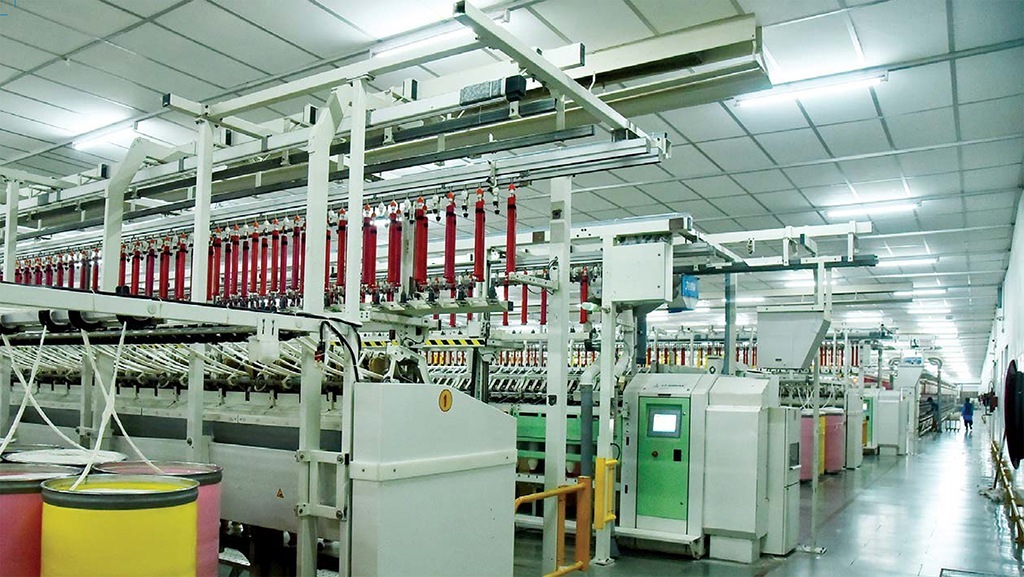
The manufacturing backbone is concentrated at their Hisar facility, which houses an installed capacity of 157,872 spindles. While the company operates a captive 16.855 MWp solar power plant to reduce structural electricity expenses, the core business remains deeply sensitive to global macro trends.
The company generates 89% of its revenue straight from yarn sales, while process waste sales chip in 9%, and export incentives provide the remaining 2%. Geographically, domestic markets absorb 68% of output, leaving 32% exposed to international trade dynamics across borders like Portugal, Mauritius, and Singapore.
In essence, it is a high-volume, low-margin processing game where management must constantly balance the volatile cost of raw cotton against the fluctuating global procurement prices set by international textile buyers.
4. Financials Overview
The financial performance of the group shows notable divergence when comparing the sequential and year-over-year operational trends.
Key Quarterly Financial Metrics
Metric
Latest Quarter (Mar 2026)
Previous Quarter (Dec 2025)
Same Quarter Last Year (Mar 2025)
YoY Change (%)
QoQ Change (%)
Revenue (₹ Cr)
263.04
272.53
281.33
-6.50%
-3.48%
EBITDA (₹ Cr)
17.61
12.12
18.58
-5.22%
+45.30%
PAT (₹ Cr)
3.97
-1.51
5.30
-25.09%
Loss to Profit
EPS (₹)
2.37
-0.59
2.96
-19.93%
Loss to Profit
Note: For the financial result type of the latest period, the calculations utilize official quarterly disclosures.