1. At a Glance
Let us skip the pleasantries and perform a cold, clinical incision on the latest financial numbers. Hemant Surgical Industries Ltd (HSIL) has been grabbing significant investor eyeballs with a headline-grabbing performance. Total consolidated revenue from operations for the full financial year ended March 31, 2026, surged to a massive ₹ 232 crore, up from ₹ 107 crore in the previous fiscal year. That is a top-line growth of 117%. On the surface, this looks like an absolute multi-bagger fairytale. Profit After Tax (PAT) for the consolidated entity scaled up from ₹ 8 crore to ₹ 18 crore, marking a hefty 130% profit growth.
But before you blindly join the euphoric crowd cheering on this micro-cap star, let us put on our forensic auditor lenses. Look closer at the structural mechanics of this sudden growth spurt. A significant part of this massive expansion is driven by lumpy government tender wins. Specifically, a massive ₹ 264.33 crore purchase order from the Central Medical Service Society (CMSS), under the Ministry of Health and Family Welfare, for flat panel detectors and portable X-ray units.
When a business with a historically modest scale hooks itself onto massive institutional tenders, the working capital engine gets pushed into overdrive. Take a hard look at the balance sheet and cash flow statements. For the year ended March 31, 2026, the consolidated trade receivables rocketed as part of the other assets segment which ballooned to ₹ 221 crore. The company’s debtor days have aggressively stretched out from 70 days to 106 days.
Even more alarming is the absolute destruction of liquidity from actual operations. The consolidated cash flow from operating activities for FY26 closed at a negative ₹ 32 crore. You read that right. The company is generating record-high paper profits, yet actual cash is evaporating straight into the working capital piles and unpaid bills. If those government departments delay clearings by even a single quarter, the entire liquidity setup could face intense stress.
To fund this working capital monster and build out its manufacturing facility, the company had to dilute equity and issue warrants to the tune of ₹ 92.54 crore in late 2025. It raised massive funds from institutional entities like Singularity funds. While management did use a chunk of these funds to manage liabilities, the underlying business is still not self-sustaining via organic cash flow. This article uncovers whether this high-flying SME is a structural growth gem or a working capital trap wrapped in a shiny tender box.
2. Introduction
Hemant Surgical Industries Ltd has come a long way since its incorporation back in 1989. For over three decades, the company operated primarily as a quiet importer and distributor of healthcare supplies. It built a reputation around importing jumbo rolls of medical tapes from Japan, slitting them, packaging them, and supplying them to Indian hospitals.
The turning point came when the company decided to step into the public limelight. It listed its shares on the BSE Emerge platform on June 5, 2023. Since its listing, the stock has been an absolute outperformer, delivering a massive 254% return over the last 12 months alone. This explosive price action has pushed its market capitalization to ₹ 541 crore, sitting comfortably at a Price to Earnings (P/E) multiple of 29.7.
When you look closely at the numbers, you realize this is no longer just a sleepily-managed trading outlet. The company has aggressively pivoted toward becoming an end-to-end medical infrastructure assembler and manufacturer. It sets up modular intensive care units (ICUs), modular operation theatres, dialysis centers, and imaging clinics.
However, moving from a low-risk, low-margin trading model into complex manufacturing and government tendering requires a complete transformation of financial discipline. It is a game where the big boys play, and if your execution falters, the cash-conversion cycle can crush you. Let us pull back the curtains on their operational core to see what they are truly cooking across their plants.
3. Business Model – WTF Do They Even Do?
If you think this company manufactures sophisticated surgical robots or breakthrough bionic hearts, allow us to shatter your illusions. At its core, HSIL is an expert aggregator, processor, and domestic supplier of medical consumables and equipment. They operate across several highly essential, unglamorous segments of medical care.
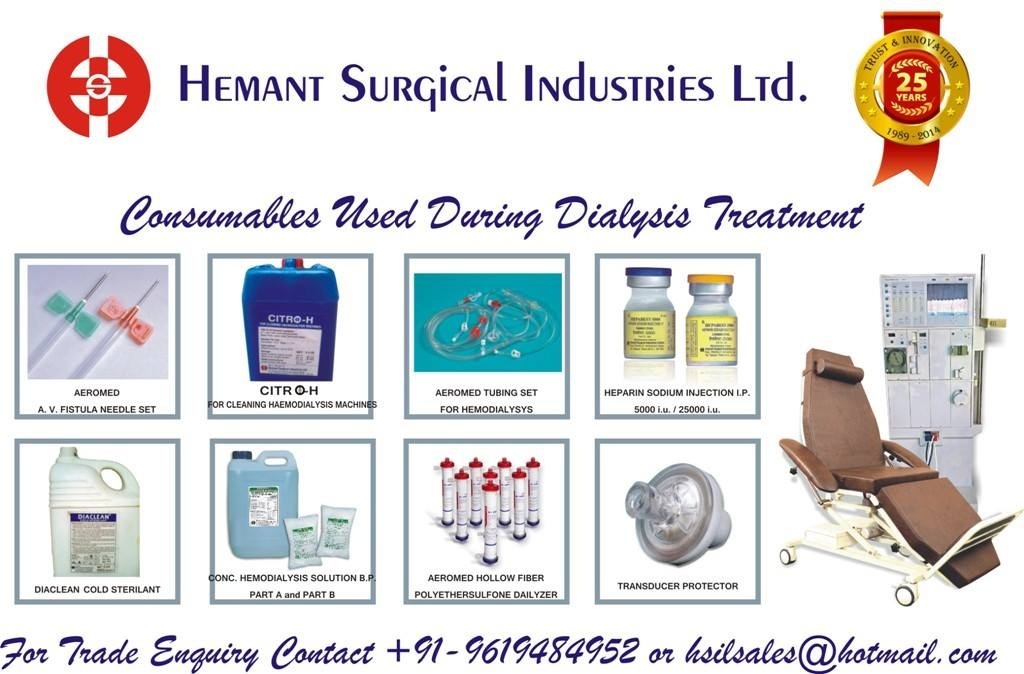
First, they are deeply entrenched in the renal care space. They import, refurbish, and distribute second-hand dialysis machines. They also manufacture the chemical solutions required to run them—producing over 21 lakh liters of Hemodialysis solution and 29 lakh units of powder historically.
Second, they design and sell piston compressor and mesh nebulizers under their domestic “AERO” brand. Third, they act as an exclusive domestic partner for global medical giants. Their crown jewel relationship is with JMS Co. Limited (Japan). HSIL imports jumbo medical tape rolls from JMS, processes them locally under a technical transfer agreement, and commands a dominant distribution footprint for these high-quality medical tapes across India.
They also partner with SWS Medical for dialysis gear, Zoncare for radiology and ultrasound systems, and Sonomed Escalon (USA) for localizing ophthalmic ultrasound diagnostic devices via Semi Knocked Down (SKD) assembly lines.
Essentially, they act as the essential bridge between high-end international medical manufacturing and cost-conscious Indian healthcare setups. They take complex imported products, add