1. At a Glance
The corporate arena frequently presents numbers that mask deeper operational realities. Godfrey Phillips India Limited recently reported a 77.4% year-on-year increase in quarterly consolidated net profit, reaching ₹521.46 crore for the quarter ended March 31, 2026. On the surface, this performance appears highly lucrative, drawing significant interest from market participants seeking resilient consumer goods franchises. Consolidated net revenue from operations for the final quarter edged up by 13.6% to ₹1,787.27 crore. For the full financial year 2025–26, the company generated an overall consolidated net profit of ₹1,526.02 crore on total consolidated net sales of ₹6,391 crore.
Beneath these prominent profit expansions, a detailed evaluation of the company’s operating dynamics reveals notable long-term friction points. The underlying drivers of this growth are structural adjustments and external factors rather than clean operational expansions. The domestic tobacco landscape is bracing for significant systemic pressures. Management has openly noted that a steep increase in tobacco taxation introduced during the fourth quarter of fiscal 2026 will present significant challenges going forward. Attempts to pass these costs onto consumers through phased price increases could test demand elasticity in a price-sensitive market.
Simultaneously, the structural quality of Godfrey Phillips’ revenue mix has shifted toward lower-margin segments. While the company achieved a robust 20% growth in domestic cigarette sales volumes for FY26, its aggressive expansion into unmanufactured tobacco exports has diluted core profitability. Unmanufactured tobacco exports surged to ₹1,945 crore, accounting for 21% of total net sales revenue. This volume-heavy, low-margin product category inherently reduces overall corporate margins, pulling the consolidated gross profit margin down to 15.5% for the full year.
Operational efficiency is also showing clear signs of structural strain. The company’s working capital cycle has expanded significantly, with total working capital days stretching from 97.2 days to 147 days. This degradation is further highlighted by an increase in debtor collection timelines, which elongated from 33.7 days to 51.8 days over the reporting period. This means substantial amounts of cash are becoming tied up in credit terms and inventory pipelines rather than circulating freely.
Furthermore, the company’s extraordinary quarterly net profit contains elements that are non-recurring. The financial statements show an ad-hoc insurance payment of ₹100 crore received following a major fire incident at a third-party tobacco processing plant. This sudden cash influx provides a temporary boost to the bottom line but does not reflect organic operational earnings. Investors are left to evaluate whether a tobacco franchise facing margin compression, slowing core premium domestic demand, escalating regulatory taxation, and a lengthening cash cycle can sustain its premium valuation without further non-recurring gains.
2. Introduction
Godfrey Phillips India Limited occupies a distinct, highly specialized position within the Indian fast-moving consumer goods and tobacco sectors. As the flagship entity of the KK Modi Group, the company commands a solid 14% market share in the domestic cigarette business. This footprint establishes it as the primary challenger to the dominant player in the Indian tobacco landscape. The company operates across a complex, multi-layered regulatory framework, generating its revenues through an intricate blend of proprietary brands and strategic international licensing pacts.
The most critical operational pillar of the company is its long-standing relationship with Philip Morris International. Under exclusive procurement and supply agreements, Godfrey Phillips manufactures and distributes the premium Marlboro brand throughout India. This partnership gives the firm deep structural access to urban premium consumer demographics, separating its financial profile from competitors that rely entirely on localized mass-market brands. Alongside Marlboro, the company maintains a proprietary portfolio featuring homegrown brands like Jaisalmer, Stellar, Originals, and Black Jack, which cater to varying price points across domestic and international markets.
The company’s corporate identity has undergone a profound transformation over the past twelve months. Historically, Godfrey Phillips attempted to hedge its tobacco exposure by building a diversified consumer presence, notably through its 24Seven chain of convenience stores. However, the retail division consistently generated operational drag, failing to achieve self-sustaining scale amidst aggressive competition from localized modern trade and quick-commerce platforms. Recognizing this structural headwind, management executed a decisive strategic shift by liquidating and exiting the retail segment entirely.
By divesting from its capital-intensive retail assets, Godfrey Phillips has repositioned itself as a pure-play tobacco and targeted confectionery distributor. The company now services its vast market footprint through a consolidated network comprising over 800 dedicated distributors and a field force exceeding 9,000 personnel. This distribution infrastructure feeds more than 15 lakh retail outlets across 25,000 localized markets, with direct outlet coverage growing by 21% over the past fiscal year.
3. Business Model – WTF Do They Even Do?
To understand Godfrey Phillips, one must look past the standard FMCG corporate terminology. The core business model relies on selling legally restricted, highly taxed, and deeply addictive nicotine delivery systems. The company functions essentially as a specialized manufacturing and logistics machine designed to navigate complex excise frameworks while maintaining high shelf availability.
The commercial architecture is divided into two primary segments: Tobacco and Non-Tobacco. The tobacco division is the central economic engine, contributing 99% of total gross sales value. Within this vertical, the domestic cigarette business acts as the primary cash generator. The mechanical core of this domestic operation is the licensed arrangement with Philip Morris International to produce and sell Marlboro. Through this setup, Godfrey Phillips avoids the massive capital expenditures typically required for global brand building, instead capturing stable manufacturing and distribution margins from an established global premium asset.
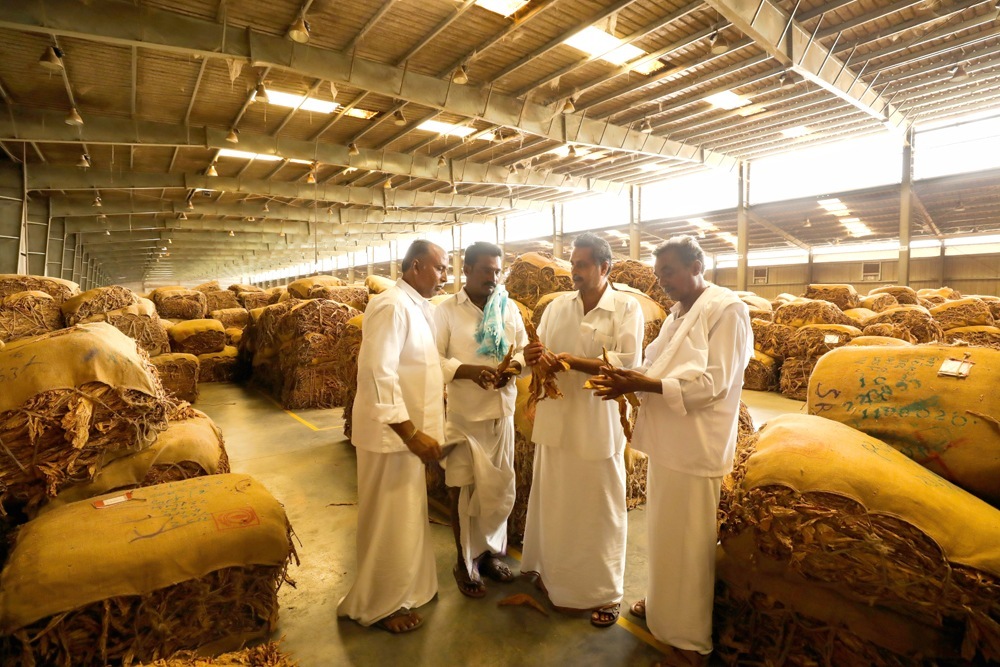
The second structural leg of the tobacco division is the International Business unit, which handles unmanufactured tobacco exports and the distribution of own-brand products to approximately 30 countries. While exporting unmanufactured raw leaf generates substantial topline volumes, it changes the company’s fundamental economics. Raw leaf exports are inherently low-margin commodity transactions subject to international agricultural pricing cycles. This explains why recent volume expansions have caused a structural drop in core operating margins.
The Non-Tobacco segment has shrunk to just 1% of total net sales, serving primarily as a distribution filler to maximize asset utilization across retail routes. Following the complete closure of the 24Seven retail chain, this segment consists of a niche confectionery line—featuring proprietary brands like Funda Goli, Imli Naturalz, and Funda C—alongside a strategic product supply agreement with Ferrero India. Under this pact, Godfrey Phillips handles the distribution and resale of sweet packaged foods like Tic Tac and Kinder Joy. While this partnership achieved 2X revenue growth to reach ₹51 crore in FY26, it remains a minor component compared to the company’s core tobacco operations.
Are you dynamic enough to identify whether a company’s non-tobacco pivots are viable corporate strategies or simply expensive public relations exercises?
4. Financials Overview
A precise assessment of financial trajectory requires isolating core ongoing operations from historical, discontinued divisions. The table below presents the official consolidated financial performance of Godfrey Phillips,