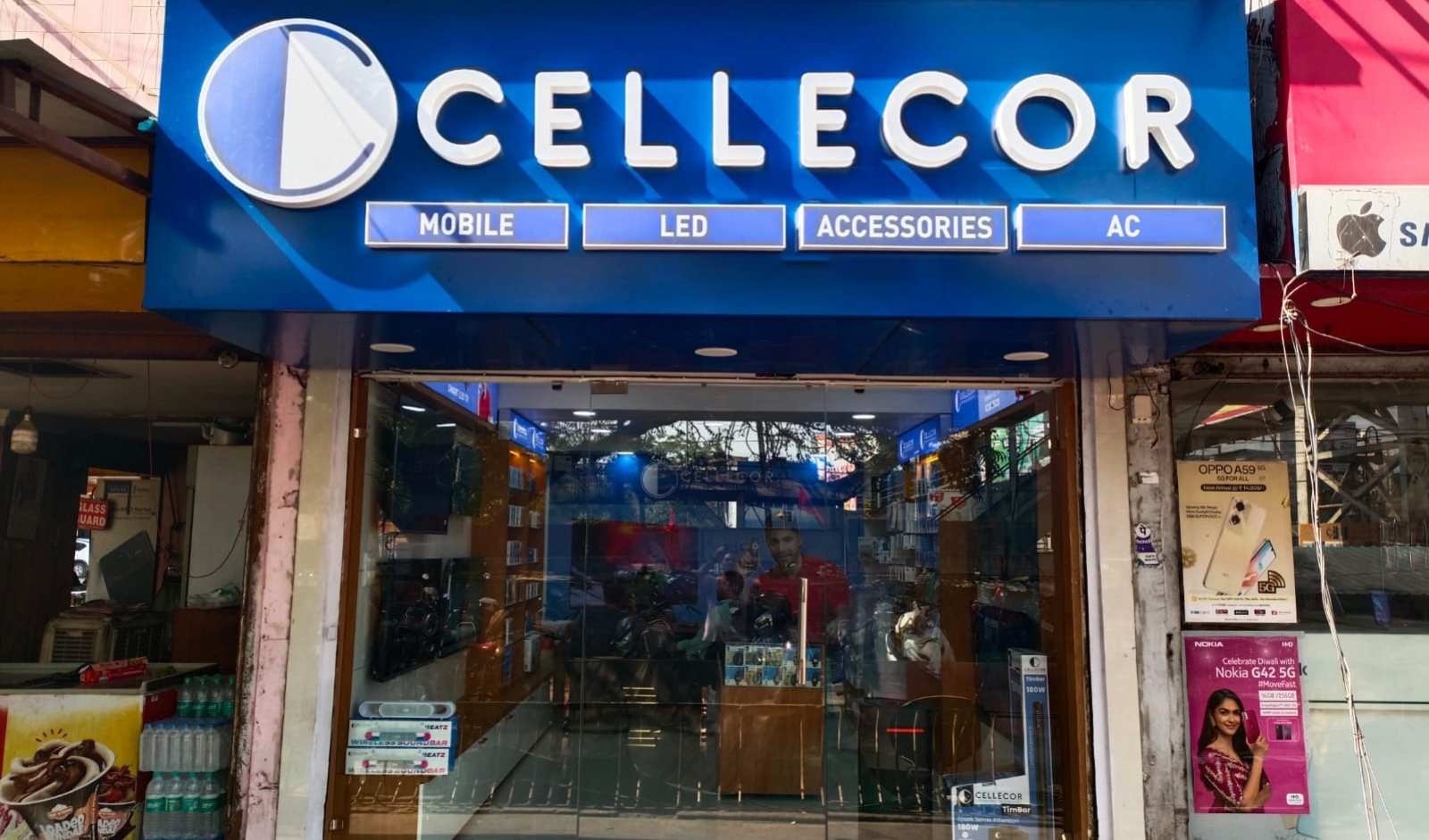
The financial results for the year ended March 31, 2026, present an intriguing scenario for retail market enthusiasts. Cellecor Gadgets Ltd has posted a substantial top-line figure of ₹1,292.19 crore in revenue from operations for FY26. This represents a significant increase compared to the ₹1,025.95 crore recorded in FY25. On the surface, the company appears to be growing rapidly, driven by strong sales in home appliances, smart gadgets, and mobile phones across its 28-state footprint.
However, a closer look at the consolidated financial statements reveals some operational challenges. While revenue grew by 25.9%, the company’s profitability has not kept pace. Profit after tax (PAT) for FY26 reached ₹39.61 crore, up from ₹30.90 crore in the previous year. This results in a thin net profit margin of approximately 3.06%.
The primary area of concern lies within the working capital structure. The company reported trade receivables of ₹107.18 crore as of March 31, 2026, a sharp increase from ₹40.91 crore in the previous fiscal year. This indicates that a significant portion of the recorded revenue growth is currently tied up in unpaid invoices from distributors and retail partners. Meanwhile, inventories remain high at ₹243.04 crore, locking up cash in unsold stock-in-trade.
Financially, the business relies on external funding to sustain its operational cycle. Short-term borrowings stand at ₹99.66 crore, while long-term borrowings surged from ₹0.19 crore to ₹42.10 crore during the year, driven in part by a recent USD 33 million Foreign Currency Convertible Bond (FCCB) issue. This analysis looks beyond the headline growth figures to evaluate whether Cellecor’s business model can successfully convert expanding sales volume into sustainable cash flows.
2. Introduction
Cellecor Gadgets Ltd, incorporated in 2020 (and previously operating as Unity Communications), has quickly scaled its presence within the competitive Indian consumer electronics space. Listing on the NSE SME Emerge platform, the company positions itself as an aggressive participant in categories such as feature phones, smartphones, smartwatches, neckbands, LED televisions, and recently, kitchen appliances.
The corporate strategy relies on heavy brand management and procurement flexibility. Rather than investing in intensive capital assets or setting up proprietary manufacturing plants, Cellecor focuses its capital on expanding its distribution reach. The distribution network covers over 1,800 distributors and more than 65,000 retail touchpoints, with significant market depth in states like Uttar Pradesh, West Bengal, and Gujarat.
To compete with more established consumer brands, Cellecor invests heavily in high-visibility marketing campaigns, utilizing celebrity endorsements from prominent figures including Varun Dhawan, Kareena Kapoor, and Shikhar Dhawan. While these associations help secure shelf space in retail markets, they also add fixed operational overheads that require continuous high sales volume to amortize effectively. This review evaluates the sustainability of this model.
3. Business Model – WTF Do They Even Do?
To understand Cellecor Gadgets Ltd, one must recognize that it operates primarily as a brand management, trading, and distribution entity rather than a technology manufacturer. The company outsources production entirely to third-party Original Equipment Manufacturers (OEMs) and Original Design Manufacturers (ODMs), both domestically under the “Make in India” banner and internationally via direct imports.
The core operational steps are straightforward:Business Model Value Chain Overview
Phase
Operational Stage
Strategic Function & Execution
Phase 1
Import & Procurement
Sourcing of finished consumer electronic products from high-efficiency domestic and international third-party manufacturers (OEMs/ODMs) under the “Make in India” ecosystem.
Phase 2
Branding & Asset-Light Packaging
Integrating product lines under proprietary labels, implementing marketing layers, and utilizing celebrity endorsements without investing capital into asset-heavy manufacturing facilities.
Phase 3
Multi-Channel Distribution
Deploying products systematically across an expansive b2b channel network consisting of over 1,800+ Tier-1 wholesalers and authorized distributors.
Phase 4
End Consumer Fulfillment
Driving ultimate product velocity and liquidating stock through 65,000+ regional retail points, modern retail chains, and digital marketplaces like Amazon and Flipkart.
The company manages procurement orders, applies its brand packaging, and transfers the inventory across its logistical pipeline to wholesalers, large-format modern retail chains (such as Reliance Retail, Poorvika, and Sangeetha Mobiles), and online marketplaces like Amazon and Flipkart.
The advantage of this asset-light business model is the ability to rapidly introduce new product stock-keeping units (SKUs) without incurring heavy capital expenditure for factory setups. The challenge, however, is that it lacks deep structural moats. Because the underlying hardware is commoditized and readily accessible to any competitor sourcing from similar OEM ecosystems, Cellecor must continuously spend on promotions to maintain brand visibility. This dynamic typically leads to thin operating profit margins and high working capital requirements.
4. Financials Overview
The table below provides a detailed breakdown of the financial metrics derived from the latest audited consolidated financial results for the half-year and full-year ended March 31, 2026.
(Note: Data is converted from lakhs to crores using the formula: ₹1 Lakh = ₹0.01 Crore).