Hindustan Construction Company Limited (HCC) is showcasing a structural metamorphosis that has left the general public divided between balance sheet purists and growth-starved analysts. A company built in 1926 that has contributed to 26% of India’s hydropower capacity and over 60% of its nuclear energy footprint is attempting to trade its historical baggage for operational purity. Yet, beneath the headline-grabbing charts of total debt reduction, the foundational architecture of its revenue generation appears to be thinning out.
The market continues to react to the dramatic financial re-engineering taking place within this microcap legacy player. While debt has tumbled to ₹1,995 crore, the engineering and construction business is wrestling with localized productivity bottlenecks and an aggressive competitor landscape that tests management’s historical premium pricing.
1. At a Glance
The latest consolidated financial disclosures from Hindustan Construction Company Ltd reveal a business actively executing a survival-to-revival playbook, though not without severe friction. Revenue from operations for the latest quarter (Q4 FY26) registered at ₹992.2 crore, plunging by 27.8% compared to ₹1,373.7 crore in the same period last year. This topline deceleration is a direct artifact of structural adjustments, primarily the absolute divestment of Steiner AG’s construction business to Demathieu Bard for ₹928 crore, alongside a massive liability transfer.
Financially, the headline numbers present a striking dichotomy. Profit After Tax (PAT) for the quarter arrived at ₹58.94 crore, marking a contraction of 34.6% against the ₹90.1 crore printed in Q4 FY25. For the full year FY26, however, standalone net profit witnessed an upward swing of 142%, closing at ₹205.8 crore versus ₹84.9 crore in FY25. This shows that while the current quarterly momentum is experiencing a visible dip, the annual bottom-line has been protected through aggressive cost management and the elimination of legacy international drag.
The operational core of HCC is anchored by a consolidated order backlog of ₹12,971 crore as of March 31, 2026. The composition of this book remains heavily weighted toward complex civil works:
- Transport: 67%
- Hydro: 18%
- Water: 11%
- Nuclear & Buildings: 3%
Geographically, the execution risk is concentrated in Uttarakhand at 28%, followed by Bihar at 17% and Maharashtra at 13%. Management has set an ambitious target of ₹15,000 crore in fresh order bookings for FY27, backed by a current L1 pipeline of ₹840 crore and massive impending bid submissions planned for Q1 FY27 totaling ₹43,800 crore.
The real point of intrigue for structural analysts is the unprecedented liquidity infusion and debt retirement executed over the last twelve months. HCC concluded a ₹1,000 crore rights issue in December 2025, which was subscribed 200%, expanding the paid-up equity base by 79.99 crore shares. These funds, paired with ₹720 crore recovered via arbitration bank guarantees, allowed the company to slash its absolute debt obligations significantly. Total debt, which sat at ₹3,279 crore at the close of March 2025, dropped to ₹1,995 crore by March 31, 2026.
Additionally, the company successfully minimized its toxic contingent liabilities by scaling down its corporate guarantee to its special purpose vehicle, Prolific Resolution Private Limited (PRPL), from 100% of the carved-out debt down to a restricted 20%, effectively capping exposure at ₹571 crore.
Will this aggressive de-risking strategy trigger a sustainable earnings multiplier, or will prolonged collection cycles of 389 days continue to lock up critical working capital?
2. Introduction
Hindustan Construction Company Ltd stands as one of India’s oldest legacy infrastructure conglomerates. Founded by Seth Walchand Hirachand in 1926, the company’s history is structurally tied to the realization of India’s heavy engineering canvas. From constructing intricate mountain tunnels to building the complex core containment structures of nuclear reactors, HCC has positioned itself as an elite tier-1 civil contractor capable of handling projects that regular infrastructure players avoid due to high engineering complexity.
Despite this technical dominance, the company’s financial history over the last decade has been a harsh reminder of the structural risks inherent in long-gestation infrastructure projects. Aggressive bidding, bureaucratic delays in project approvals, unapproved cost escalations, and capital tied up in elongated arbitration battles with state counterparties previously pushed HCC into acute financial stress. The business model became an engine that generated massive assets but failed to convert them into free cash flows, forcing a complex debt resolution plan that split the company’s focus.
In the current macro economic environment, characterized by India’s infrastructure push across pumped storage hydro assets, high-speed rail networks, and private capex in metals and minerals, HCC is attempting to write a redemption story. The company is spearheaded by Chairman Ajit Gulabchand and Vice Chairman & Managing Director Arjun Dhawan, who are driving a strategy that prioritizes margins and capital discipline over reckless topline expansion.
The ultimate test for HCC over the medium term lies in balancing execution speed with balance sheet liquidity. With working capital cycles structural dependent on mobilization advances and creditor financing, the company’s capability to aggressively scale back its Gross Current Asset (GCA) days remains the primary metric that will determine if this capital restructuring leads to operational excellence or structural stagnation.
3. Business Model – WTF Do They Even Do?
At its core, HCC does not build basic highways or generic real estate projects; it specializes in heavy engineering wizardry where the barriers to entry are determined by technical pre-qualification rather than just lowest-bid economics. Think of them as the elite execution squad for high-risk, high-reward civil structures. They divert rivers, bore through unstable Himalayan rock formations, and pour specialized concrete mixes for nuclear reactor buildings.
The business model operates through four highly specialized segments:
Transport
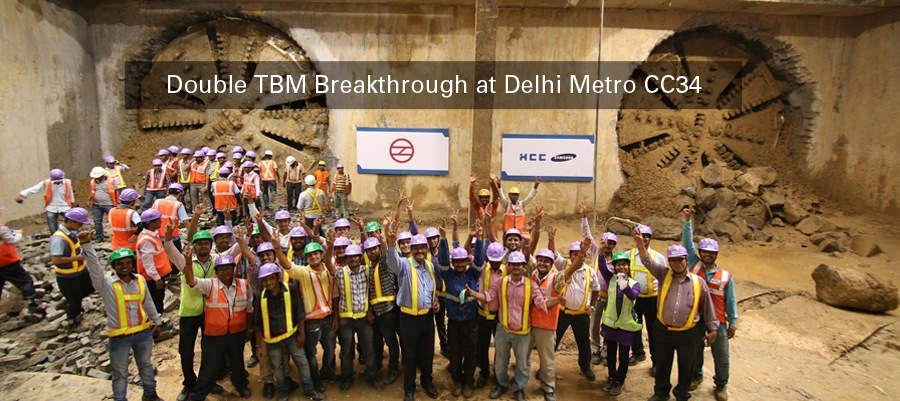
This is currently the heavy lifter of the backlog, accounting for 67% of the order book. It covers complex metro corridors, underwater tunneling, massive marine structures like the Agardanda Creek Cable-Stayed Bridge, and high-speed rail packages.
Hydro and Pumped Storage Plants (PSP)
HCC has executed 27% of India’s total hydropower projects. These involve building massive concrete dams, headrace tunnels via Tunnel Boring Machines (TBMs), and underground powerhouses. The focus is shifting toward closed-loop Pumped Storage Plants, which act as giant water batteries for renewable energy stabilization.
Water Works
This segment targets large-scale river interlinking, micro-tunneling for municipal water systems, and bulk water transmission lines. A prime example is their recent joint venture win for the CIDCO water project worth approximately ₹2,917 crore, where HCC retains a clean ₹1,100 crore operational stake.
Nuclear & Industrial Buildings
The ultimate technical moat. HCC has constructed over 60% of India’s nuclear power generation capacity. They build the core structural containment blocks for the Nuclear Power Corporation of India Limited (NPCIL). These projects carry superior margins but demand zero-defect engineering standards.
The primary revenue engine relies on government capital expenditure and large private-sector capex. The company secures contracts through competitive bidding processes where they must fulfill strict technical criteria.
Once an order is bagged, HCC utilizes customer mobilization advances and trade creditor channels to bankroll the initial phases of development. The core operational risk occurs when projects hit structural delays, causing these customer advances to remain outstanding on the balance sheet, accruing interest charges that erode the ultimate operating profitability.