1. At a Glance
The financial structural matrix of Sheela Foam Ltd is flashing a definitive structural shift. For several quarters, institutional memory has been anchored around depressed bottom lines, heavy post-acquisition capital outlays, and a balance sheet suddenly loaded with leverage following the ₹2,035 crore acquisition of Kurlon Enterprises Ltd (KEL).
However, the audited financial numbers for the final quarter of the financial year 2026 reveal an inflection point that demands forensic deconstruction.
The headline metrics demonstrate an aggressive acceleration in operational scale. Net revenue for the latest quarter reached ₹1,050 crore, marking a 23.6% growth trajectory compared to the ₹850 crore reported in the corresponding quarter of the previous financial year.
The real performance metrics are hidden in the profitability line items. Quarterly net profit experienced a massive 512% escalation, surging to ₹92 crore up from a minuscule ₹13 crore in the same period last year. This sharp bottom-line expansion is directly correlated with the completion of the Kurlon operational amalgamation and an aggressive debt reduction cycle that has materially curbed finance costs.
Cause (Operational Consolidation & Yield Improvements)
→ Effect (80% Synergy Realization & 400 bps Margin Expansion)
→ Outcome (₹92 Crore Q4 PAT & Free Cash Flow Accruation)
Beneath this operational surge lie persistent friction points that capital allocators must balance against the headline growth. Operating profit margins, while expanding to 11.5% at a consolidated level for Q4, remain highly sensitive to volatile international crude oil derivatives. Polyol and Toluene Diisocyanate (TDI) costs fluctuate constantly based on global petrochemical supply chains, and domestic production anomalies have historically sent domestic spot pricing escalating.
Simultaneously, the return on capital metrics remain historically low, with a reported Return on Capital Employed (ROCE) of 6.17% and Return on Equity (ROE) of 4.89%. The company’s massive asset base, inflated by goodwill and brand valuations from recent acquisitions, continues to create a significant divergence between accounting returns and actual cash-generating power.
2. Introduction
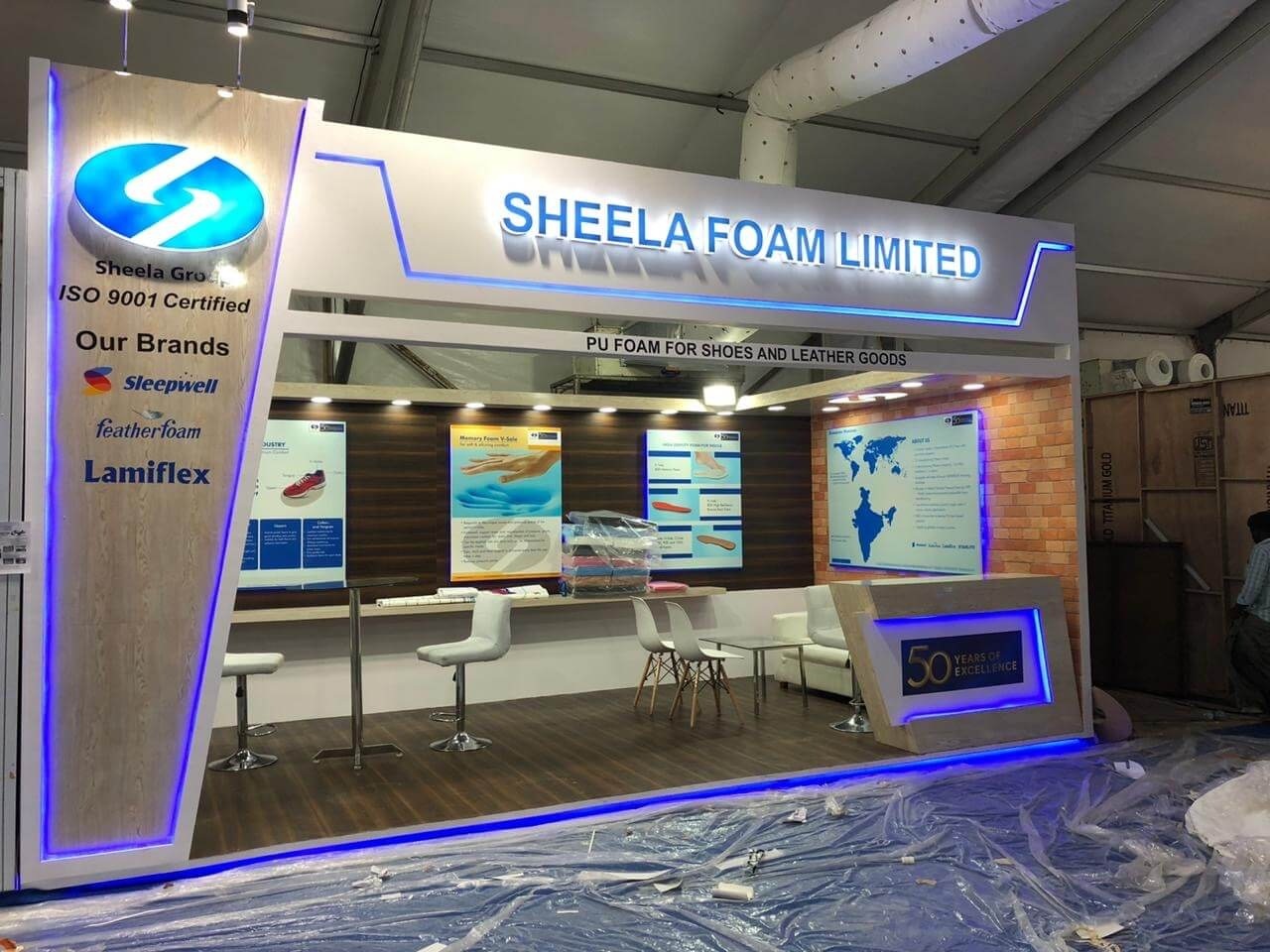
Sheela Foam Ltd occupies a unique, dominant position within the consumer durables and home furnishings ecosystem. The organization operates as the premier manufacturer of Polyurethane (PU) foam and comfort products across the Indian subcontinent, commands a structural 40% market share in Australia via Joyce Foam, and maintains a highly automated manufacturing presence in the European Union through its Spanish subsidiary, Interplasp.
The organization’s long-term operating history since 1971 has been characterized by consistent market share acquisition within the organized mattress sector. This position was fundamentally transformed in October 2023 when the company executed a major consolidation move, acquiring a 95% stake in Kurlon Enterprises Ltd for ₹2,035 crore. This transaction was followed by a strategic foray into tech-driven furniture spaces through a multi-tranche investment in the House of Kieraya (Furlenco), ultimately establishing a footprint spanning premium, mass-market, and modern digital asset classes.
For structural context, the mattress industry in India is characterized by a deep divide between the unorganized market, which accounts for 64% of total domestic volumes, and organized retail brands. Sheela Foam’s modern strategy relies on driving a structural migration from unorganized commodities to organized brands. It achieves this through a massive retail distribution architecture containing over 10,000 multi-brand outlets (MBOs) and a growing network of over 3,800 exclusive brand outlets (EBOs).
From a financial lens, the primary narrative surrounding the company over the past twenty-four months has been one of margin dilution and balance sheet pressure. Incorporating Kurlon’s historically mid-single-digit margin profile naturally compressed Sheela Foam’s consolidated margins down to 7.3% in financial year 2025.
The core thesis for the current period rests entirely on whether the management can execute its cost-synergy blueprint, streamline manufacturing plants, optimize logistics, and successfully restore consolidated profitability back to historic double-digit benchmarks.
3. Business Model – What Do They Actually Do?
At its core, Sheela Foam is a chemical processor disguised as a consumer retail powerhouse. The operation relies on the continuous automated processing of bulk liquid chemicals into flexible slab-stock Polyurethane foam, which is subsequently converted into modern sleep solutions, technical industrial components, and automotive cushioning materials.
The company breaks its operational architecture into two core revenue divisions:
Domestic Business (76% of H1 FY26 Revenue Mix)
The domestic engine is led by the mattress division, which contributes 49% of the structural mix under legacy banners like Sleepwell and newly acquired lines like Kurlon. Technical foam applications account for 20% of the volume, delivering specialized, high-margin functional foam grades to automotive seating manufacturers, footwear producers, and specialized industrial apparel lines. Furniture foam and comfort accessories make up the remainder of the domestic portfolio.
Export and International Operations (24% of H1 FY26 Revenue Mix)
The international perimeter functions as a geographically diversified hedge against domestic market slowdowns. In Australia, Joyce Foam operates as the leading local B2B player with a 40% market share, deploying high-end Variable Pressure Foaming (VPF) technology. In Spain, Interplasp delivers highly automated, low-overhead foam blocks to bedding converters across the European Union, Portugal, and North Africa.
The core economics of this model are highly sensitive to raw material procurement. Liquid chemicals represent between 60% and 65% of the total cost of production. This requires advanced pricing power to successfully pass through upstream input cost inflation to downstream retail consumers.
4. Financials Overview
The audited consolidated quarterly and full-year results for the period ending March 31, 2026, show a strong operational turnaround.
To properly assess true underlying earning power, we must examine the comparative performance matrix across identical tracking periods.
Consolidated Financial Performance