The numbers coming out of Brandman Retail Limited are nothing short of a statistical adrenaline shot. We are looking at a company that has managed to scale its top line by an eye-watering 138% in a single year, yet the underlying mechanics of its capital management are raising more than a few eyebrows. When a company lists on the exchanges and immediately starts shifting the goalposts on how it spends the public’s money, it creates a friction point between growth and governance.
1. At a Glance
The financial year ending March 2026 has been a period of extreme contrasts for Brandman Retail. On one hand, you have the Market Cap of ₹328 Crore supporting a business that is growing sales at a 20.1% clip annually, with a quarterly spike that dwarfs its peers. On the other hand, the Monitoring Agency Report from CARE Ratings, released just days ago on May 13, 2026, has flagged significant deviations in how the ₹82 Crore IPO proceeds were utilized.
This is a classic “growth at any cost” narrative. The company’s Sales hit ₹162 Crore for the full year, but the Working Capital Days have ballooned from 73.5 days to 179 days. Essentially, the company is selling more, but it is taking more than twice as long to turn its operations into cold, hard cash.
Investors are currently staring at a Stock P/E of 13.0, which looks dirt cheap compared to an Industry P/E of 34.3. But is it a bargain or a warning sign? The Operating Profit Margin (OPM) has slipped from 23% in FY25 to 17% in FY26, signaling that while the volume is high, the efficiency is bleeding.
The most sensational part? The company utilized ₹7.55 Crore for General Corporate Purposes (GCP) towards paying taxes and repaying loans—uses that were not even covered in the original IPO definition of GCP—and they did it without prior Board approval.
Is the market rewarding the triple-digit quarterly sales growth, or is it discounting the governance lapses?
2. Introduction
Brandman Retail Limited is a relatively young entrant in the Indian retail space, having been established in 2021. In just five years, it has transformed from a private entity into a listed distributor of high-profile international sports and lifestyle brands.
The company operates on an asset-light model, meaning it doesn’t want to own the factories; it wants to own the shelf space and the distribution rights. This strategy has allowed it to scale rapidly across northern India, targeting cities like Ahmedabad, Gurugram, and Lucknow.
However, the recent listing in February 2026 has brought the company under a microscope. The move from a private boardroom to a public exchange requires a level of discipline that the latest monitoring reports suggest is still a work in progress.
While the footwear segment remains the primary engine of the business, the management’s aggressive push into exports—now making up 49% of revenue—is a pivot that happened almost overnight. This shift from domestic retail to B2B exports to Dubai is a massive change in the business DNA.
3. Business Model – WTF Do They Even Do?
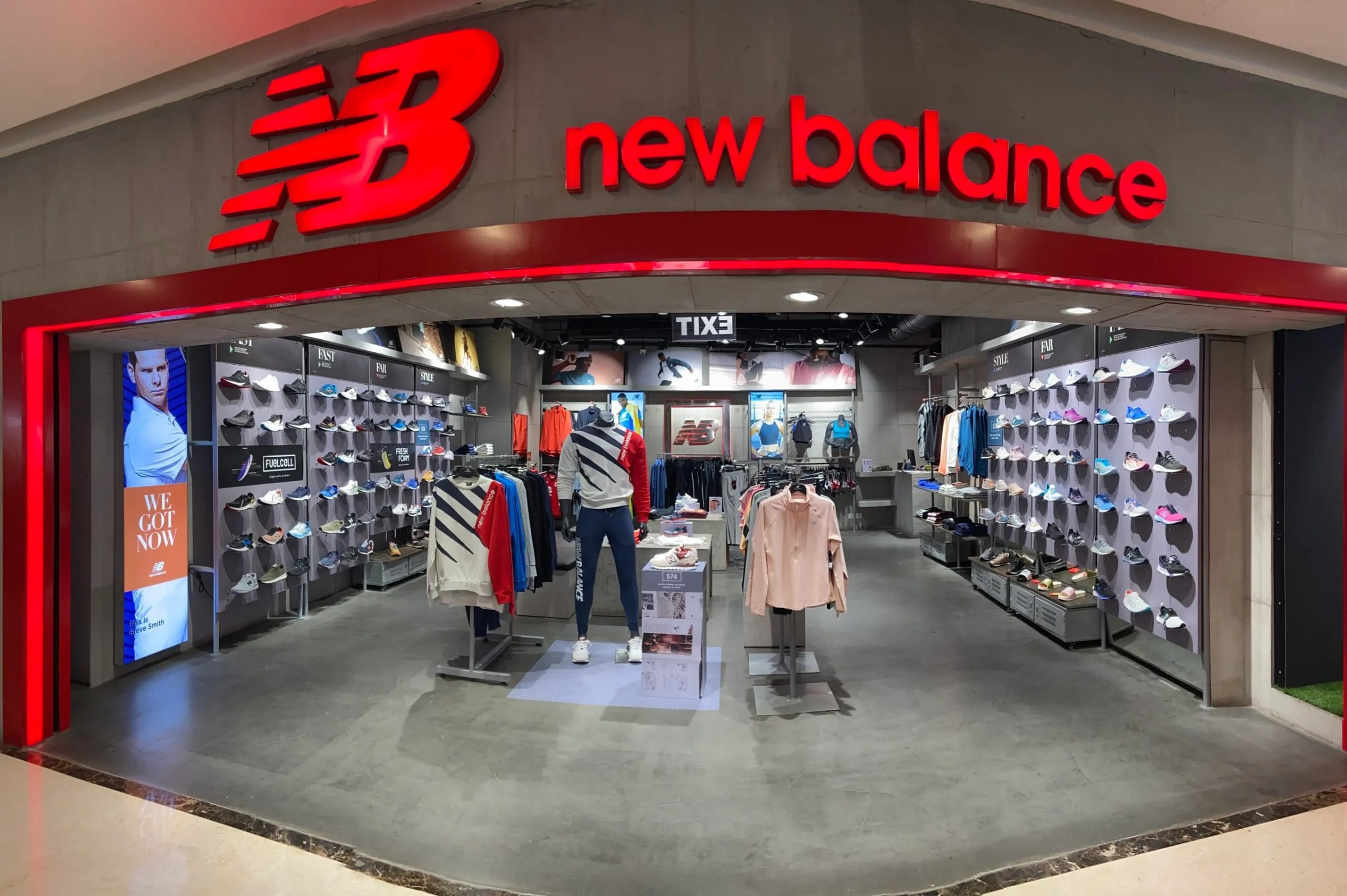
Think of Brandman Retail as the middleman who makes sure the sneakers on your feet and the hoodie on your back reach the store shelves. They don’t make the shoes; they distribute and retail them.
- Footwear is King: This category accounts for 72% of their revenue. If it has laces or a sole, they probably sell it—from basketball shoes to formal footwear.
- The Store Strategy: They operate 11 Exclusive Brand Outlets (EBOs) and a couple of Multi-Brand Outlets (MBOs) called “Sneakrz.”
- The Pivot to Dubai: Surprisingly, nearly half of their money now comes from B2B exports to Dubai. They’ve skipped the merchant exporters and are doing it directly.
- Online Game: They are on Flipkart, Ajio, and Tata Cliq, though their own website is still a “work in progress” for some