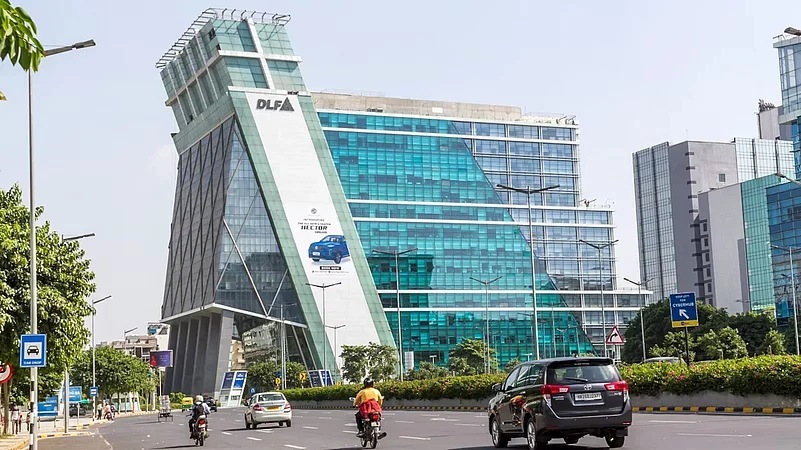
DLF Ltd Q4 FY26: Zero Debt in Dev-Biz, Record ₹13,517 Cr Collections Hook Investors
DLF is no longer the debt-laden giant of the past decade. The company has officially hit “Zero Gross Debt” in its development business, nearly a year ahead of schedule. While the market was busy tracking quarterly booking fluctuations, the real story was brewing in the cash flow statements. With a record annual collection of ₹13,517 crore and a war chest of ₹14,155 crore in gross cash, DLF is repositioning itself as a fortress of liquidity.
The strategy has shifted from volume-chasing to margin-protecting. Management’s bold refusal to “chase volume for the sake of volume” signals a high-credibility pivot toward free cash flow generation. However, beneath the surface of this cash-rich balance sheet lies a massive ₹11,215 crore “trapped” in RERA accounts, which won’t be fully unlockable until FY27 and FY28. Is this the peak of the cycle, or just the beginning of a massive cash-unlocking event?
1. At a Glance
DLF is currently witnessing an unprecedented phase of financial deleveraging that is fundamentally altering its risk profile. The company reported a consolidated Net Profit of ₹4,408 crore for FY26, supported by a massive surge in cash generation. The “Zero Gross Debt” milestone in the development arm is a psychological and financial win, especially for a company that was once synonymous with high leverage.
The Red Flags & Tactical Pauses:
Despite the celebratory headlines, the quarterly booking numbers showed a sharp dip to ₹419 crore in Q3 FY26. Why? Because management deliberately paused sales at their flagship project, The Dahlias, for a RERA-governed redesign. While this might scare short-term traders, the company used this time to hike prices by 25%, ensuring margins remain “intact to positive.”
The real concern for serious investors should be the geographic concentration. Nearly 84% of sales in H1 FY26 came from the NCR market. If the Gurgaon/Delhi micro-market catches a cold, DLF will sneeze. Furthermore, while the cash balance looks sexy at ₹14,155 crore, only a fraction is immediately deployable. The rest is gated by RERA regulations, creating a “liquidity lag” that limits aggressive land acquisitions or massive dividend spikes in the immediate term.
The Curiosity Factor:
With 40 million square feet currently under construction and a medium-term launch pipeline worth over ₹1,04,500 crore, DLF is sitting on a mountain of inventory. But here is the kicker: they aren’t in a hurry to sell it all at once. They are playing the “dynamic pricing” game. Can they maintain this pricing power if interest rates remain sticky or if the luxury segment starts showing fatigue?
2. Introduction
DLF stands as the undisputed heavyweight of the Indian real estate landscape. Its history is woven into the very fabric of urban India, having developed iconic colonies like South Extension and Greater Kailash, and essentially building the city of Gurgaon from scratch.
Today, the company operates a dual-engine model. The Development Business focuses on selling high-end residential units, while the Annuity Business (DCCDL) acts as a massive rent-collecting machine. This structure provides a rare combination of high-octane growth from sales and a steady, predictable floor of rental income.
The company’s scale is staggering. It has developed over 351 million square feet and currently manages a rental portfolio of nearly 50 million square feet. In the last five years, the transformation from a struggling behemoth to a cash-flow-positive entity has been one of the most significant turnaround stories in the Indian corporate sector.
Management has recently adopted a “margin-over-volume” philosophy. They are no longer interested in being the biggest by square footage; they want to be the most profitable by value. This shift is evident in their focus on “Super-Luxury” and “Luxury” segments, where the land was acquired decades ago at historical costs, leading to industry-leading margins.
3. Business Model – WTF Do They Even Do?
Think of DLF as a massive land-banking engine that converts raw earth into high-priced “lifestyle ecosystems” and “premium workspaces.” They don’t just build apartments; they create entire pin codes.
The Sales Engine (Residential)
They buy (or use old) land, get the approvals, and sell “hope” in the form of luxury condominiums like The Camellias or The Dahlias. Their sweet spot is the NCR region, specifically Gurgaon. They have mastered the art of “selling out” projects worth thousands of crores within days of launch.
The Rental Engine (DCCDL)
This is their “safety net.” Through a JV with GIC (Singapore’s sovereign wealth fund), they own and operate massive office parks (Cyber City) and retail malls. They house the world’s biggest GCCs (Global Capability Centres) and tech giants. If you work for a Fortune 500 company in Gurgaon or Chennai, there is a high chance you are paying rent to DLF.
The “Other” Side
They also run high-end clubs and hotels like The Lodhi in Delhi. While these are smaller contributors to the bottom line, they serve as the “brand glue” that maintains the luxury aura around their residential projects.
Financial Wisdom: In real estate, the most valuable asset isn’t the building; it’s the land cost. DLF’s older land bank is a “hidden reserve” that allows them to generate margins that newcomers simply cannot match.
4. Financials Overview
The financial performance for FY26 highlights a company that is optimizing its P&L for bottom-line growth rather than just top-line expansion.
Quarterly and Annual Performance Comparison (₹ Cr)