1. At a Glance
Crompton Greaves Consumer Electricals Limited (CGCEL) is currently a paradox of structural strength and accounting pain. The company just reported a massive consolidated net loss of ₹231 crore for FY26, but before you panic, look closer. This loss is entirely driven by a ₹716 crore impairment charge related to its subsidiary, Butterfly Gandhimathi. Without this non-cash one-time hit, the company would have been comfortably in the green.
Investors are witnessing a “clean-up” year. Management has decided to align the carrying value of its Butterfly acquisition with reality, essentially taking the medicine now to ensure a healthier balance sheet later. While the bottom line looks bloody, the top line is actually picking up steam. Revenue for Q4 FY26 grew by 10.8% YoY to ₹2,283 crore, showing that demand for fans, pumps, and lighting is finally thawing after a stagnant period.
The most significant “flex” in these results isn’t the profit—it’s the debt. Crompton has officially announced its debt-free status after repaying the final ₹300 crore tranche of NCDs. This is a massive milestone for a company that took on significant leverage for the Butterfly acquisition. They are now playing with their own money, and they have plenty of it, with cash equivalents exceeding ₹1,000 crore.
However, the road ahead isn’t all breezy. The company is battling persistent commodity inflation in steel, copper, and aluminum. They are forced to take multiple price hikes just to protect their margins, which have compressed at the gross level. The market is watching if the “Crompton 2.0” strategy—focused on premiumization and new categories like Wires—can actually deliver the growth that has been missing for the last five years.
2. Introduction
Crompton is a 75-year-old legacy brand that is currently undergoing a massive professional overhaul. Gone are the days of the Avantha Group; today, this is a professionally managed entity with zero promoter holding, owned largely by institutional heavyweights like HDFC Mutual Fund and SBI Mutual Fund.
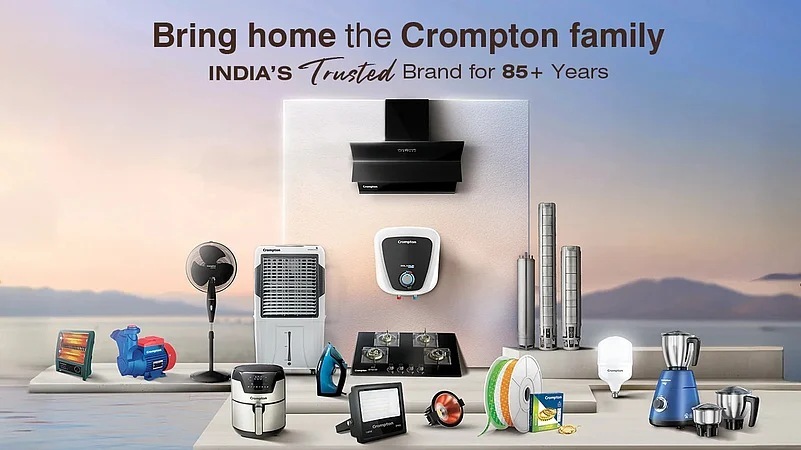
The company operates in three distinct buckets: Electrical Consumer Durables (Fans, Pumps, Appliances), Lighting, and the Butterfly kitchen segment. It holds the crown in the Indian fan market with a 26% share and dominates residential pumps with a 27% share. Despite this dominance, the stock has been a laggard, delivering a negative 3.67% return over 5 years.
Why? Because growth stalled. The “Crompton 2.0” transformation, launched in mid-2023, is the management’s attempt to fix this. They are pivoting from being just a “fan company” to a holistic home solutions provider. This year, they finally entered the ₹36,000 crore residential wires market with the “Crompton Armor” brand and are aggressively scaling their solar rooftop business.
The story here is about a legacy giant trying to find its second wind while cleaning up its past investment mistakes. It’s a high-stakes transition where the company is sacrificing short-term accounting profits for long-term balance sheet agility.
3. Business Model – WTF Do They Even Do?
Crompton basically moves air, water, and light around your house. If you look at your ceiling, your kitchen, or your garden pump, there’s a one-in-four chance it’s a Crompton.
- Fans (The Breadwinner): They are the undisputed kings here. They’ve successfully transitioned to BEE 2.0 energy norms and are pushing high-margin BLDC fans.
- Pumps (The Silent Giant): They own the residential pump space. If you have a bungalow or a small apartment needing water pressure, they are the go-to brand.
- Lighting: They are the #3 player in India. It’s a commoditized market, but Crompton manages to squeeze out “industry-leading” margins here by focusing on premium LED panels and street lighting.
- Kitchen (The Problem Child): Through Butterfly Gandhimathi, they sell mixers, stoves, and wet grinders. It was supposed to be a growth engine, but it’s currently undergoing a “strategic reset” after some governance and channel risks were identified post-acquisition.
- New Ventures: They are now selling wires and installing solar rooftops. They want to capture the entire electrical infrastructure of a modern Indian home.
In short: They manufacture some stuff, outsource the rest (like the new wires), and use their massive distribution network of 2,89,000+ retailers to push products.
4. Financials Overview
The latest results are a classic case of “look at the EBIT, ignore the Net Profit”