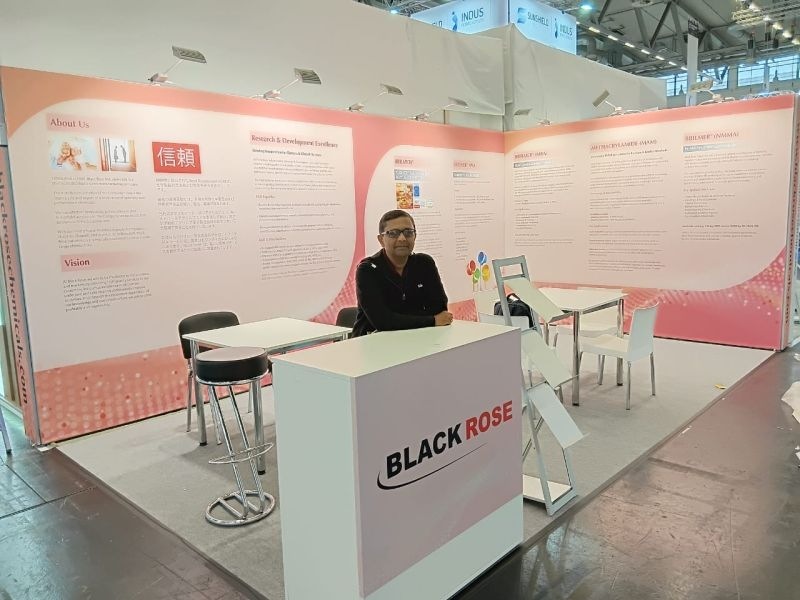
The chemical sector has been a brutal battlefield lately, but Black Rose Industries Ltd (BRIL) just dropped a financial bombshell that demands a closer look. While the broader industry gasps for air amidst fluctuating raw material costs, BRIL has clocked a massive 57.3% YoY growth in quarterly profit, reaching ₹9.41 crore in Q4 FY26.
Wait, it gets more interesting. The company didn’t just earn more; it earned better. The Operating Profit Margin (OPM) expanded significantly to 12.52% in the latest quarter, compared to a meager 2.73% in the same quarter last year. When a company manages to quadruple its margins in a year while facing global supply chain volatility, you know there is a deeper story hidden in the balance sheet.
Investors are waking up to a company that is almost debt-free (Debt to Equity of 0.01) and boasts a robust ROCE of 18.9%. With the board recommending a 125% dividend (₹1.25 per share), the management is clearly signaling confidence. However, beneath this polished surface lies a strategic shift: the exit from its Japanese subsidiary and a “plant closure” drama that was recently resolved.
1. At a Glance
Black Rose Industries is currently at a critical pivot point. For years, it operated as a hybrid animal—part high-volume chemical distributor and part specialized manufacturer. Today, the numbers tell us the manufacturing side is finally starting to flex its muscles. The company reported Sales of ₹104.04 crore for Q4 FY26, a healthy 25.5% jump from ₹82.89 crore in the previous quarter.
But let’s look at the red flags before we get too comfortable. The distribution business, which still accounts for a massive chunk of revenue, is inherently low-margin and exposed to the whims of foreign exchange. The company’s 5-year sales growth is a depressing -3.19%. This is not a “growth at all costs” story; it’s a turnaround story. The management is essentially trying to replace low-margin trading revenue with high-margin manufacturing output.
The “Drama Quotient” is also high here. In December 2025, the Gujarat Pollution Control Board (GPCB) ordered a closure of their Jhagadia plant. While the order was revoked within weeks after a payment of ₹3.80 lakh, it serves as a stark reminder of the regulatory risks inherent in the chemical business. Furthermore, the company is in the process of selling or closing its Japanese subsidiary, B.R. Chemicals Co., Ltd., which previously contributed significantly to the top line.
Is this a lean, mean, manufacturing machine in the making, or a distributor struggling to stay relevant? The jump in PAT from ₹4.40 crore in Dec 2025 to ₹9.41 crore in Mar 2026 suggests the former, but the volatile history of the chemical cycle warns us to keep our eyes wide open.
2. Introduction
Incorporated in 1990, Black Rose Industries has evolved from its textile roots (formerly Asia Fab Ltd) into a specialized chemical powerhouse. It holds the distinction of operating India’s first acrylamide manufacturing plant. This isn’t just a fancy title; acrylamide is a critical building block for water treatment, paper manufacturing, and enhanced oil recovery.
The company operates through three distinct verticals: Chemical Distribution, Manufacturing, and a small Renewable Energy arm. While distribution brings in the volume (around 61% of FY23 revenue), manufacturing is the crown jewel that provides the bottom-line “oomph.”
BRIL’s manufacturing facility in Jhagadia, Gujarat, is a massive setup with an installed capacity of 32,000 MTPA for acrylamide liquid. They are also scaling up in Polyacrylamide, targeting industries that are core to India’s infrastructure and environmental goals.
The recent Board meeting on May 13, 2026, was a marathon session. Not only did they approve the stellar Q4 results, but they also reappointed key leaders like Mrs. Shruti Jatia and Mr. Ambarish Daga. This stability at the top is crucial as the company navigates its exit from the Japanese market to focus intensely on domestic manufacturing.
3. Business Model – WTF Do They Even Do?
If you think chemicals are boring, you aren’t looking at the margins. BRIL is essentially a “Middleman turned Maker.”
The Distribution Hustle:
They act as the bridge between global giants like Mitsui Chemicals, Sumitomo Chemical, and Lanxess and the Indian market. They import high-end specialty chemicals and sell them to Indian industries. It’s high volume, low margin, and keeps the cash flowing.
The Manufacturing Muscle:
This is where the real “Alpha” lives. They make Acrylamide and Polyacrylamide. These aren’t just random powders; they are used to clean water, make textiles, and help in coal mining. BRIL is vertically integrated here—they make the monomer (Acrylamide) and then turn it into the polymer (Polyacrylamide).
The Wind Power Side-Quest:
They have wind plants in Rajasthan and Gujarat. It’s a tiny part of the business, but in today’s ESG-obsessed world, it gives them a “green” badge and some steady electricity revenue from State Electricity Boards.
The Dental Pivot?
Yes, they even have a finger in the dental pie, offering resin cements and bonding agents. It’s a weird mix, but as long as it adds to the PAT, most investors won’t complain.
Financial Wisdom: A distribution business provides a “moat” of relationships, but a manufacturing business provides a “moat” of margins. BRIL is currently trying to cross the bridge from one to the other.
4. Financials Overview
The Q4 FY26 numbers are a masterclass in operational efficiency. While sales grew by a respectable 25%, the Operating Profit nearly doubled on a sequential basis.
Quarterly Performance Comparison (Consolidated)
| Metrics | Q4 FY26 (Latest) | Q4 FY25 (YoY) | Q3 FY26 (QoQ) |
| Sales | ₹104.04 Cr | ₹115.36 Cr | ₹75.15 Cr |
| EBITDA | ₹13.03 Cr | ₹7.16 Cr | ₹6.53 Cr |
| PAT | ₹9.41 Cr | ₹5.70 Cr | ₹4.40 Cr |
| EPS (Standalone) | ₹1.85 | ₹1.12 | ₹0.86 |
| Annualised EPS | ₹7.40 | – | – |
Witty Commentary: The YoY sales are technically down (₹104 Cr vs ₹115 Cr), but the PAT is way up. How? Because management finally stopped chasing “empty calories” (low-margin distribution) and focused on “protein” (manufacturing margins). The OPM shot up from 6.21% to 12.52% YoY. That is what we call a “Quality Earnings” jump.
5. Valuation Discussion – Fair Value Range
Let’s get our hands dirty with the math.
Method 1: P/E Based Valuation
The current Stock P/E is 22.5, while the Industry P/E is 29.5.
Using our Annualised EPS of ₹7.40 (Q4 EPS ₹1.85 x 4):
- At Industry P/E (29.5): ₹218
- At current P/E (22.5): ₹166
Method 2: EV/EBITDA
Current Enterprise Value (EV) is ₹496 Cr. TTM EBITDA is approx. ₹33 Cr.
EV/EBITDA = 15x. For a specialty chemical company with increasing manufacturing share, a multiple of 18x-20x is often considered standard.
- Target EV = ₹33 Cr x 19 = ₹627 Cr.
- Estimated Price = ~₹123
Method 3: DCF (Back of the Envelope)
Assuming a conservative 12% growth in Free Cash Flow (₹38 Cr in Mar 26) and a 10% discount rate, the intrinsic value hovers around ₹135 – ₹150.
Fair Value Range: ₹125 – ₹165
Disclaimer: This fair value range is for educational purposes only and is not investment advice.
6. What’s Cooking – News, Triggers, Drama
The “Drama” department at Black Rose has been busy. First, the Japan Exit. The company is selling its 100% subsidiary, B.R. Chemicals Co., Ltd. Why? Because the Japanese market was becoming a drag on resources. This move will free up capital to double down on Gujarat operations.
Then there was the Fire Incident in January 2025. While fully insured, it led to a ₹25.36 lakh exceptional loss. But the real heart-stopper was the GPCB Closure Order in December 2025. The plant was shut for nearly three weeks. Management scrambled, paid the fines, and got it revoked. It’s a reminder that in the chemical world, the pollution board is the ultimate boss.
The big trigger now? The capacity expansion. They’ve bumped up Acrylamide capacity to 32,000 MTPA. If they can utilize even 80% of this at current margins, the current financials will look like a warm-up act.
Are you brave enough to hold a stock that can be shut down by a regulator overnight?
7. Balance Sheet
BRIL’s balance sheet is cleaner than a freshly scrubbed lab beaker. They are almost debt-free, which is a rarity in the capital-intensive chemical sector.
Consolidated Balance Sheet (Latest Data)
| Rows | Mar 2026 (₹ Cr) | Mar 2025 (₹ Cr) | Mar 2024 (₹ Cr) |
| Total Assets | 207.91 | 214.29 | 193.00 |
| Net Worth | 169.43 | 152.86 | 145.00 |
| Borrowings | 1.43 | 9.38 | 5.00 |
| Other Liabilities | 37.05 | 52.05 | 43.00 |
| Total Liabilities | 207.91 | 214.29 | 193.00 |
- Borrowings dropped from ₹9.38 Cr to ₹1.43 Cr. They basically paid off their debt while everyone else was struggling with interest rates.
- Net worth is climbing steady, showing that the “Inner Strength” of the company is growing.
- Inventory decreased significantly (from ₹71 Cr to ₹47 Cr), which means they are converting stock into cash faster than before.
8. Cash Flow – Sab Number Game Hai
Profit is an opinion, but Cash is a fact. BRIL’s cash flow statement shows a company that knows how to collect its dues.
| Cash Flow Type | Mar 2026 (₹ Cr) | Mar 2025 (₹ Cr) | Mar 2024 (₹ Cr) |
| Operating (CFO) | 45.12 | -12.51 | 4.00 |
| Investing (CFI) | -25.58 | 11.78 | -12.00 |
| Financing (CFF) | -18.28 | -7.89 | -5.00 |
They generated a massive ₹45.12 Cr from operations this year. Where did it go? They spent ₹25 Cr on investing (likely the capacity expansion) and ₹18 Cr on financing (paying back loans and giving out dividends). This is a classic “Healthy Company” cycle.
9. Ratios – Sexy or Stressy?
Ratios are the pulse of a company. Let’s see if BRIL’s heart is beating right.
| Ratio | Value | Verdict |
| ROE | 14.0% | Respectable, but could be higher. |
| ROCE | 18.9% | Sexy. Shows efficient use of capital. |
| Debt to Equity | 0.01 | Audaciously low. |
| PAT Margin | 9.04% | Improving (Up from 5.3% in FY25). |
| Current Ratio | 4.66 | Overkill. They have way more cash/liquidity than they need. |
Judgment: The ratios scream “Safety.” With a Debt-to-Equity of 0.01, the company can weather any economic storm without worrying about the bank knocking on their door.
10. P&L Breakdown – Show Me the Money
Let’s look at the long-term trend of the P&L.
| Year | Revenue (₹ Cr) | EBITDA (₹ Cr) | PAT (₹ Cr) |
| Mar 2026 | 323 | 33 | 22 |
| Mar 2025 | 391 | 29 | 21 |
| Mar 2024 | 380 | 28 | 12 |
Commentary: Notice something weird? Revenue dropped from ₹391 Cr to ₹323 Cr, but PAT actually increased! This is the magic of “Margin Expansion.” They stopped doing low-value work and focused on the high-value stuff. It’s like firing 100 annoying clients who pay ₹1 and hiring 10 great ones who pay ₹20.
11. Peer Comparison
How does the Black Rose stack up against the big boys?
| Company | Revenue (Qtr) | PAT (Qtr) | P/E Ratio |
| Pidilite Inds. | ₹3,583 Cr | ₹584 Cr | 60.6 |
| Aarti Industries | ₹2,205 Cr | ₹137 Cr | 41.0 |
| Black Rose Indus | ₹104 Cr | ₹9.4 Cr | 22.5 |
| Gujarat Fluoroch | ₹1,136 Cr | ₹102 Cr | 61.1 |
Sarcastic Note: Black Rose is currently the “Smallest Kid” in the premium neighborhood. While Pidilite and Aarti are trading at sky-high P/E multiples, BRIL is sitting at a relatively modest 22.5. Either the market hasn’t noticed the margin jump, or it’s still worried about the GPCB closure drama.
12. Miscellaneous – Shareholding and Promoters
The promoters are not going anywhere. They own a rock-solid 75% of the company.
- Promoters: 75.0% (Wedgewood Holdings & Triumph Worldwide)
- Public: 24.84%
- DIIs: 0.15% (Wait, why are the institutions so quiet?)
The promoters, led by Mr. Anup Jatia (a Caltech chemical engineer), have a deep technical grip on the business. However, the lack of Institutional (DII/FII) holding is a double-edged sword. It means the stock is “undiscovered,” but it also means liquidity can be a nightmare during a panic.
13. Corporate Governance – Angels or Devils?
On paper, the governance looks standard. They have regular board meetings, and the latest audit report was “Unmodified” (clean). The appointment of Ms. Darshana Sawant as the new Company Secretary and the re-appointment of the Jatia family members show a tight-knit, family-run structure.
However, the GPCB fine and the Japan subsidiary closure suggest that while the intentions are good, the execution can sometimes be messy. Selling a subsidiary that was once a core part of the story usually means either the strategy failed or the market changed too fast for them.
The auditor, M M Nissim & Co LLP, is a reputed firm, which adds a layer of credibility to these “miraculous” margin numbers.
14. Industry Roast and Macro Context
The specialty chemical industry is currently a mess of “Wait and Watch.” China is dumping chemicals like there’s no tomorrow, squeezing margins for everyone. Raw material costs (Acrylonitrile) are tied to crude oil, which is as stable as a caffeinated squirrel.
The sector is full of companies promising “Value Added Products” while actually just trading commodities. BRIL’s advantage is its niche—Acrylamide. Not many people in India make it, and the demand for water treatment chemicals is only going up as the government tries to clean up our rivers (finally).
15. EduInvesting Verdict
Black Rose Industries is a classic “Transformation Play.” It is shedding its skin as a distributor and emerging as a high-margin manufacturer. The Q4 FY26 results are the strongest evidence yet that this strategy is working. With zero debt and high ROCE, the financial foundation is bulletproof.
SWOT Analysis:
- Strengths: India’s first Acrylamide plant, 75% promoter holding, Zero Debt.
- Weaknesses: Tiny market cap, lack of institutional interest, high dependency on a few products.
- Opportunities: Expansion into Polyacrylamide solids, domestic demand for water treatment.
- Threats: Regulatory shutdowns (GPCB), raw material price volatility, China dumping.
Are you willing to bet on a specialized player that’s just starting to find its rhythm? Or will the regulatory risks keep you on the sidelines?
How much weight do you give to a company’s “Debt-Free” status when the industry itself is so volatile? Let us know in the comments.
Disclaimer: This fair value range is for educational purposes only and is not investment advice. EduInvesting does not provide buy/sell recommendations.