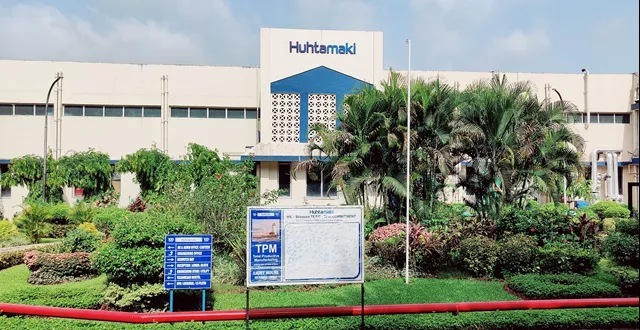
The latest numbers from Huhtamaki India are a masterclass in the “quality over quantity” transition. While the top-line growth appears to be walking on a treadmill—moving but staying in the same place with a marginal 0.1% YoY increase—the internal plumbing of the company is being re-engineered for efficiency. We are looking at a business that has effectively told the market it is done chasing low-margin vanity metrics. Instead, the focus has shifted toward high-margin selective participation and a brutal crackdown on operational waste.
The stock is currently being looked at with a fine-tooth comb by investors who are trying to reconcile a shrinking sales footprint over a 3-year horizon (-6% CAGR) with a massive explosion in trailing twelve-month (TTM) profit growth of 83%. However, the ghost of “extraordinary items” haunts the previous year’s high base, specifically the ₹ 459 crore realized from the sale of land parcels in Thane and Ambernath. Stripping away the real estate luck, the core packaging business is finally beginning to stand on its own two feet, albeit amidst a landscape of high executive turnover and a sector that is being roasted by raw material volatility and regulatory pressure.
1. At a Glance
The flexible packaging industry is not for the faint of heart. It is a sector where you are sandwiched between the pricing power of global FMCG giants and the erratic price swings of crude oil derivatives. Huhtamaki India, the local arm of the Finnish packaging behemoth, is currently navigating a pivot that looks great on an EBITDA margin sheet but raises questions about long-term market share.
The Red Flags & Reality Checks:
- The Growth Ghost: Compounded sales growth over 5 years is a rounding error at 0.05%. In a growing economy like India, if your sales are stagnant for half a decade, you aren’t just standing still; you are losing relevance to regional players who are nimbler and hungrier.
- The “Royalty” Rabbit Hole: Minority shareholders are increasingly vocal about the high central service charges paid to the parent company—estimated at nearly ₹ 80 crore. While management insists this isn’t a “royalty” but payment for IT and R&D, it effectively caps the standalone profitability that stays in India.
- Revolving Door Management: In the last year, we’ve seen the exit of the MD, CFO, and the Head of Sales. When the cockpit changes pilots three times mid-flight, you have to wonder if the flight plan is being rewritten or if the engines are overheating.
Why Investors are Peering In:
The company is trading at a Price to Book of 0.99, essentially telling you that the market is valuing this entire manufacturing setup, its 10 plants, and its elite client list at just about its accounting value. With a Debt-to-Equity of 0.11, the balance sheet is as clean as a whistle, and the ₹ 480 crore sitting in cash and mutual funds provides a massive safety net—or a war chest for future expansion.
Financial Wisdom: In business, revenue is vanity, profit is sanity, but cash is reality. Huhtamaki has the cash, is finding the sanity, but the vanity (growth) is nowhere to be found.
2. Introduction
Huhtamaki India is the heavyweight champion of flexible packaging that decided to go on a strict diet. Established in 1935 as Paper Products Limited, it has evolved into a key node in the global Huhtamaki ecosystem, which owns 67.73% of the Indian entity.
The company doesn’t just make plastic bags; it engineers complex, multi-layered barriers that keep your chips crunchy and your medicines potent. Their client list is a “Who’s Who” of the consumer world—Nestle, Unilever, Coca-Cola, and P&G. If you’ve touched a branded pouch in a supermarket today, there’s a high probability it came from one of their 10 facilities.
However, the “Big Packaging” industry is under fire. Plastic is the new villain in the ESG narrative. Huhtamaki’s response is Blueloop—a brand of 100% recyclable mono-material packaging. The problem? Adoption is slow. Customers talk about sustainability in annual reports but often hesitate when the bill arrives, leading to a modest 25-30% utilization of these high-tech assets.
The current narrative is one of discipline. Management is no longer interested in bidding for every low-margin contract. They are walking away from the table if the “where to play” strategy doesn’t yield the right “how to win” margins. This transition is painful for the top line but essential for the bottom line’s health.
3. Business Model – WTF Do They Even Do?
Think of Huhtamaki as the high-tech tailor for the FMCG world. They don’t sell the suit; they sell the protective, branded skin that ensures the product survives the journey from a factory in Maharashtra to a kirana store in rural Bihar without spoiling.
The Product Mix:
- Flexible Packaging: The bread and butter. Pouches for detergents, snacks, and liquids.
- Labeling Technologies: The fancy stickers on your shampoo bottles.
- Specialized Films: High-barrier protection for the healthcare and industrial sectors.
The Revenue Split:
Domestic markets contribute 70%, while 30% comes from exports spanning 67 countries. This export leg is critical as it provides a natural hedge against rupee depreciation and exposure to higher-margin international standards.
The Roast:
The business model is essentially a bet on how much an FMCG company is willing to pay to stop its product from leaking. It’s a commodity business masquerading as a technology business. Despite the “innovation” labels, if a regional player in Gujarat offers the same pouch for 5% less, the “loyalty” of big brands often evaporates faster than an open bottle of solvent.
Are the customers actually willing to pay a premium for “Blueloop” sustainability, or is it just corporate window dressing?
4. Financials Overview
The Q1 FY2026 results (March 31, 2026) show a company that is successfully squeezing more blood from the same stone. Despite net sales remaining flat at ₹ 593.6 crore, the EBITDA surged by nearly 25% YoY.
| Metric (in ₹ Cr) | Q1 FY2026 (Mar ’26) | Q1 FY2025 (Mar ’25) | YoY Change | Previous Qtr (Dec ’25) |
| Revenue | 613.1 | 610.1 | +0.5% | 623.0 |
| EBITDA | 62.1 | 49.8 | +24.8% | 54.0 |
| PAT | 25.6 | 26.2 | -2.1% | 26.0 |
| EPS (Annualised) | 13.56 | 13.84 | -2.0% | 16.04 |
Note: Q1 FY2026 PAT was hit by a one-time ₹ 8.8 Cr depreciation adjustment for prior periods.
Management “Walk the Talk” Audit:
In previous concalls, management promised a focus on “profitable growth” and “selective participation.” Looking at the Q1 FY2026 numbers, they have delivered on the “profitable” part by expanding EBITDA margins from 8.4% to 10.5%. However, the “growth” part remains missing in action. They have walked the talk on efficiency, but the market is still waiting for the sales engine to ignite.
5. Valuation Discussion – Fair Value Range
Valuing a company like Huhtamaki requires balancing its stagnant growth against its massive cash reserves and parentage.
Method 1: P/E Approach
- Annualised EPS: ₹ 13.56
- Median Industry P/E: 19.6x
- Conservative P/E (due to low growth): 12x – 14x
- Value: ₹ 162 – ₹ 190
Method 2: EV/EBITDA Approach
- TTM EBITDA: ~₹ 192 Cr
- Current EV: ₹ 1,119 Cr
- EV/EBITDA: 5.8x
- Target EV/EBITDA (Peer average is ~8-10x): 7x
- Value: ₹ 195
Method 3: DCF (Discounted Cash Flow)
Assuming a terminal growth rate of 2% and a discount rate of 12%, factoring in the heavy cash balance of ~₹ 480 Cr.
- Value: ₹ 175 – ₹ 205
Fair Value Range:
Based on these metrics, the fair value range for Huhtamaki India is ₹ 170 to ₹ 200.
Disclaimer: This fair value range is for educational purposes only and is not investment advice.
6. What’s Cooking – News, Triggers, Drama
The drama at Huhtamaki isn’t in the factories; it’s in the boardroom.
- The CFO Musical Chairs: Amit Gupta took over as CFO on April 28, 2026. He follows a string of departures. When the person in charge of the money changes every few months, the “capital discipline” story needs careful watching.
- Property Tax Pain: The company was slapped with a ₹ 1.06 crore penalty notice for property tax at their Jigani plant dating back to 2014. It’s a small amount for a company this size, but it signals the kind of administrative legacy issues that can pop up.
- Solar Spark: A new solar captive project at Khopoli is expected to go live in H2 2026. This isn’t just about being “green”—it’s a desperate attempt to lower the energy intensity of their production, which is a major cost driver.
Do you think a global parent’s “shared service charges” are a fair price for technology, or just a way to repatriate profits?
7. Balance Sheet
The balance sheet is the strongest part of the Huhtamaki story. It is a fortress built on land sales and disciplined debt management.
| Row (₹ in Cr) | Mar 2026 (Consol) | Mar 2025 (Consol) | Mar 2024 (Consol) |
| Total Assets | 2,004 | 1,937 | 2,001 |
| Net Worth | 1,293 | 1,193 | 1,150 |
| Borrowings | 144 | 149 | 255 |
| Other Liabilities | 567 | 595 | 596 |
| Total Liabilities | 2,004 | 1,937 | 2,001 |
Sarcastic Bullet Points on the State of the Union:
- The Cash King: They have more money sitting in bank deposits and mutual funds than they have total debt. It’s like owning a Ferrari but only driving it to the grocery store.
- Land-Rich, Growth-Poor: The reserves jumped significantly after the land sales, effectively padding the equity while the actual business remains in a “restructuring” phase.
- The ECB Leash: The only real debt is an External Commercial Borrowing from the parent. It’s basically borrowing money from your dad to pay for your house—safe, but there’s always a string attached.
8. Cash Flow – Sab Number Game Hai
The cash flow statement reveals a company that is very good at collecting money but cautious about spending it.
| (₹ in Cr) | Dec 2025 | Dec 2024 | Dec 2023 |
| Operating CF | 238 | 142 | 274 |
| Investing CF | -156 | -77 | 40 |
| Financing CF | -36 | -161 | -211 |
Where is the money? It’s coming from operations at a healthy clip (CFO/EBITDA > 100%).
Where did it go? A big chunk went into “Investments” (Mutual Funds) because they haven’t found a better place to put it.
Where did it come from? In 2023, it came from selling the ground beneath their feet (Land). Now, it’s coming from high-interest bank deposits.
9. Ratios – Sexy or Stressy?
| Ratio | Value | Verdict |
| ROE | 8.96% | Stressy – Barely beats a fixed deposit. |
| ROCE | 12.0% | Average – Asset utilization needs to improve. |
| Debt to Equity | 0.11 | Sexy – Virtually debt-free. |
| P/E Ratio | 10.8 | Sexy – Cheap compared to historical levels. |
| Current Ratio | 2.03 | Sexy – Liquidity is overflowing. |
Witty Judgement:
The company is like a world-class athlete who has decided to spend all day at the spa. The vitals are great (low debt, high liquidity), but the performance (ROE) is lazy.
10. P&L Breakdown – Show Me the Money
| (₹ in Cr) | Dec 2025 | Dec 2024 | Dec 2023 |
| Revenue | 2,469 | 2,521 | 2,549 |
| EBITDA | 195 | 118 | 195 |
| PAT | 118 | 81 | 410* |
*2023 PAT includes Land Sale gains.
Commentary:
The revenue line is flatter than a pancake. However, the EBITDA expansion in 2025 shows they’ve learned how to cook the pancake with less expensive butter. If they can ever get the revenue to grow at 10-15%, this stock could actually do something besides paying a 1% dividend.
11. Peer Comparison
| Company | Revenue (Qtr Cr) | PAT (Qtr Cr) | P/E |
| EPL Ltd | 1,300 | 103 | 17.8 |
| Polyplex Corp | 1,682 | 29 | 92.8 |
| Mold-Tek Pack | 237 | 20 | 32.2 |
| Huhtamaki | 613 | 25 | 10.8 |
Sarcastic Notes:
EPL is the popular kid winning all the trophies. Polyplex is the dramatic one with a P/E that makes no sense. Huhtamaki is the quiet one sitting in the corner, holding a bag of cash and wondering why nobody wants to play.
12. Miscellaneous – Shareholding and Promoters
- Promoters (67.73%): Huhtavefa B.V. (The Dutch connection). They provide the tech and the brand but also take the “service charges.”
- FIIs (1.34%): Institutional interest is low, which explains the lack of volatility and the low P/E.
- Public (29.79%): Includes some “Smart Money” like Plutus Wealth Management and Seetha Kumari.
Promoter Roast:
The parent company treats the Indian unit like a reliable ATM that occasionally sells its own furniture (land) to stay profitable. They talk about “Global Expertise,” but the Indian market is currently being won by local players who don’t have to pay for “Finnish IT systems.”
13. Corporate Governance – Angels or Devils?
Huhtamaki scores high on transparency—43% of the board is independent. However, the friction point remains the “Related Party Transactions.” When a subsidiary pays a massive amount to the parent for unspecified “services,” auditors might be okay with it, but minority shareholders usually smell a rat.
The rapid exit of senior management is another governance cloud. While management says “no person is bigger than the company,” three pilots leaving the cockpit usually means there’s a disagreement about the destination.
14. Industry Roast and Macro Context
The flexible packaging industry is currently in a “race to the bottom.” Everyone is selling essentially the same plastic, and the only way to win is to be the cheapest or the most sustainable. The government’s ban on single-use plastics and the push for Extended Producer Responsibility (EPR) are looming like a guillotine.
Big FMCG players are squeezing margins, and regional packaging startups are stealing market share with lower overheads. It’s a sector that requires constant Capex just to stay relevant. Unless you have a proprietary “magic film” that others can’t copy, you are just a price-taker.
15. EduInvesting Verdict
Huhtamaki India is a paradox. It is a debt-free, cash-rich company trading at its book value, with a world-class parent and a blue-chip client list. On paper, it looks like a value investor’s dream. In reality, it has been a “value trap” for the last five years, delivering a -9% return while the rest of the market went to the moon.
The company is in the middle of a painful transition. It is cleaning up its act, exiting bad businesses, and betting the farm on sustainability (Blueloop). If regulatory pressure forces FMCG giants to adopt recyclable packaging, Huhtamaki is the best-positioned player to win. If the status quo continues, it will remain a cash-rich company with no growth.
SWOT Analysis:
- Strengths: Zero net debt, ₹ 480 Cr cash, Blue-chip clientele.
- Weaknesses: Stagnant top-line growth, high management turnover, low ROE.
- Opportunities: Mandatory shift to recyclable packaging, recovery in FMCG volumes.
- Threats: Crude oil price spikes, regulatory crackdowns, aggressive regional competitors.
Is the 10.8x P/E a bargain for a market leader, or a fair price for a company that can’t grow its sales?