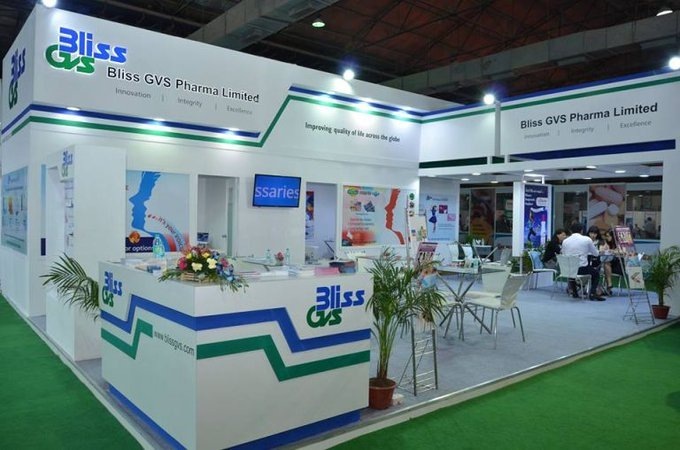
The financial corridors are buzzing. Bliss GVS Pharma has just dropped its Q4 FY26 results, and the numbers are anything but quiet. We are looking at a company that has strategically positioned itself as the “go-to” manufacturer for niche delivery formats like suppositories and pessaries, while simultaneously navigating the high-risk, high-reward terrains of Sub-Saharan Africa. With a Net Profit variance of 129% in the latest quarter and a bold 100% dividend recommendation, the management is sending a loud signal to the street.
1. At a Glance
The numbers coming out of Bliss GVS Pharma aren’t just growing; they are morphing into a story of operational efficiency and geographic dominance. In an industry where giants battle for razor-thin margins in the US generic market, Bliss has carved out a fortress in the African anti-malarial market. Its flagship brand, Lonart, isn’t just a product; it’s a household name endorsed by the WHO.
But don’t let the 129% profit jump blind you. The “detective” in any seasoned investor would immediately point toward the geographic concentration. About 75% of revenue is anchored in African nations. While this provides a massive moat, it also exposes the company to the volatile macroeconomic “weather” of the region.
The company’s market cap sits at a comfortable ₹ 3,057 Cr, but the real intrigue lies in the debt-to-equity ratio of 0.02. This is effectively a debt-free entity playing a high-stakes game. They are currently expanding their Palghar Vevoor Unit with a ₹ 30 Cr investment and doubling down on green energy to cover 80% of their power needs.
However, there is a shadow: Debtor days stand at a massive 204 days. In plain English, the company is selling goods but waiting nearly seven months to see the cash. Is this the cost of doing business in Africa, or a looming liquidity trap? The company is gaining massive attention for its 143% return over the last year, yet the auditor-style scrutiny reveals “Other Income” of ₹ 71 Cr and a somewhat stagnant 5-year sales growth of 9.94%.
Financial Wisdom: High growth is a drug, but cash flow is the cure. Always check if the profits on the paper are actually reaching the bank account before the debtors turn into bad debts.
2. Introduction
Bliss GVS Pharma is not your typical neighborhood pharmacy player. Established in 1984, it has spent four decades mastering the art of “Suppositories and Pessaries”—specialized medical formulations that many larger players outsource to them.
They operate with 7 manufacturing facilities, including a strategic footprint in Nigeria. While most Indian pharma companies spent the last decade obsessing over the USFDA, Bliss built a distribution network across 60+ countries, focusing on regions where healthcare infrastructure is evolving, and competition is less “crowded” but more “complex.”
The recent leadership shuffle, with Narsimha Shibroor Kamath taking the helm as Managing Director, marks a transition back to promoter-led clinical focus. The company has also secured USFDA approval for Mesalamine Suppositories, hinting that the “Africa-only” tag might soon be a thing of the past as they eye regulated markets.
3. Business Model – WTF Do They Even Do?
If you think they just make pills, you’re missing the point. Bliss GVS is essentially the “specialist tailor” of the pharma world. They focus on Suppositories and Pessaries. For the uninitiated, these are medicines inserted into body cavities rather than swallowed.
It sounds niche because it is. This niche status makes them a preferred Contract Development and Manufacturing Organization (CDMO) for giants like Sun Pharma, Mankind, Sanofi, and Alkem. These big boys use Bliss’s expertise to manufacture their specialized products, though Bliss keeps the export rights for itself—a boss move.
They own over 150 brands and dominate the anti-malarial space. They don’t just sell molecules; they sell trust in regions where malaria is a life-or-death daily reality. By controlling the supply chain from their EU-GMP certified plants in India to their local units in Nigeria, they capture margins that “middlemen” usually eat.
4. Financials Overview
The Q4 FY26 performance is a masterclass in “Bottom Line” recovery. While revenue growth is steady, the profit explosion suggests that the “streamlining” mentioned in the annual reports is finally yielding results.
Quarterly Performance Comparison (Consolidated)
(Figures in ₹ Crores)
| Metric | Q4 FY26 (Latest) | Q4 FY25 (YoY) | Q3 FY26 (QoQ) | YoY Change (%) |
| Revenue | 257.00 | 198.00 | 218.00 | +29.8% |
| EBITDA | 44.00 | 21.00 | 35.00 | +109.5% |
| PAT (Net Profit) | 37.00 | -5.00 | 25.00 | +840%* |
| EPS (₹) | 3.36 | -0.87 | 2.20 | Turned Positive |
*Note: Percentage based on recovery from a loss-making quarter.
The management seems to have “walked the talk” on margin improvement. They previously mentioned optimizing supply chains and reducing warehouse costs. Seeing the OPM (Operating Profit Margin) hit 17% in a quarter where they traditionally faced headwinds is a strong indicator of operational hardening.
Is the high debtor cycle a calculated risk or a structural failure? What do you think about a company that waits 200+ days for its money?
5. Valuation Discussion – Fair Value Range
To determine where Bliss GVS stands, we must look at the math, not the hype. We will use the Locked Result Type: QUARTERLY RESULTS for our EPS calculations.
EPS Calculation:
- Latest Q4 EPS: ₹ 3.36
- Since it is Q4, we use the Full Year Reported EPS = ₹ 12.21
Method 1: P/E (Price to Earnings)
The current Stock P/E is 23.4, while the Industry P/E is 30.6.
- Lower End (Current P/E 23.4): $12.21 \times 23.4 = ₹ 285.71$
- Upper End (Industry P/E 30.6): $12.21 \times 30.6 = ₹ 373.62$
Method 2: EV/EBITDA
With an EV of ₹ 2,912 Cr and TTM EBITDA of approximately ₹ 164 Cr:
- The multiple is roughly 17.7x.
- Given the sector average for specialized CDMOs is around 15x-20x, the company is trading at a fair historical mid-point.
Method 3: Discounted Cash Flow (DCF)
Assuming a conservative 10% growth rate for the next 5 years and a discount rate of 12%:
- The estimated value settles between ₹ 260 and ₹ 310.
Consolidated Fair Value Range: ₹ 275 – ₹ 340
This fair value range is for educational purposes only and is not investment advice.
6. What’s Cooking – News, Triggers, Drama
There is plenty of spice in the Bliss kitchen. First, the Rumour Verification: The market was abuzz with a potential tie-up or acquisition with Anupam Rasayan. The company flatly denied it. Usually, where there’s smoke, there’s a corporate lawyer with a fire extinguisher.
The real “Trigger” is the USFDA approval for Mesalamine Suppositories. This is their ticket out of the African “concentration risk.” If they can replicate their low-cost manufacturing prowess in the US market, the valuation multiples could re-rate.
Also, don’t ignore the Internal Restructuring. They liquidated their DRC subsidiary and converted loans into equity in Singapore. They are cleaning the house, likely preparing for a more “global” corporate structure.
7. Balance Sheet
The balance sheet is the most “Auditor-friendly” part of this company. It’s lean and mean.
Latest Consolidated Financial Position
(Figures in ₹ Crores)
| Component | Mar 2026 (Latest) | Mar 2025 | Mar 2024 |
| Total Assets | 1,492 | 1,301 | 1,212 |
| Net Worth | 1,193 | 1,051 | 967 |
| Borrowings | 22 | 88 | 100 |
| Other Liabilities | 278 | 162 | 145 |
| Total Liabilities | 1,492 | 1,301 | 1,212 |
- Borrowings crashed from ₹ 100 Cr to ₹ 22 Cr. They are basically allergic to debt now.
- Net worth is climbing faster than a hiker on caffeine.
- Cash and Bank balances of ₹ 172 Cr (per ratings) means they have enough “Dry Powder” to buy a small island or, you know, just fund their expansion.
8. Cash Flow – Sab Number Game Hai
Cash flow is where the “Detective” puts on the spectacles.
| Year | Operating CF (₹ Cr) | Investing CF (₹ Cr) | Financing CF (₹ Cr) |
| Mar 2026 | 139 | -38 | -89 |
| Mar 2025 | 106 | -75 | -30 |
| Mar 2024 | 139 | -83 | -21 |
The Story:
They generate solid cash from operations (₹ 139 Cr). Where does it go?
- Investing: They are putting money into Fixed Assets (₹ 56 Cr) and new solar plants.
- Financing: They used ₹ 64 Cr to pay back loans.Verdict: The company is using its own sweat to clear its debt. That is “Alpha” behavior.
9. Ratios – Sexy or Stressy?
| Ratio | Value | Judgement |
| ROE | 11.6% | A bit lazy, needs to work harder. |
| ROCE | 16.8% | Sexy. Better than the cost of capital. |
| Debt to Equity | 0.02 | Ghost-like debt levels. |
| PAT Margin | 14.5% | Respectable for a manufacturer. |
| Debtor Days | 204 | The “Stress” factor. It’s like lending money to a cousin who “promises” to pay back by Christmas. |
10. P&L Breakdown – Show Me the Money
| Year | Revenue (₹ Cr) | EBITDA (₹ Cr) | PAT (₹ Cr) |
| Mar 2026 | 927 | 164 | 135 |
| Mar 2025 | 810 | 127 | 90 |
| Mar 2024 | 770 | 151 | 82 |
Revenue is up 15% TTM. Profit is up 55% TTM. This isn’t just selling more; this is selling smarter. They are likely moving toward higher-margin branded formulations and away from low-margin trading.
11. Peer Comparison
| Company | Revenue (₹ Cr) | PAT (₹ Cr) | P/E Ratio |
| Sun Pharma | 52,054 | 11,086 | 36.8 |
| Lupin | 7,474 | 1,468 | 17.9 |
| Mankind | 3,567 | 413 | 54.7 |
| Bliss GVS | 927 | 131 | 23.4 |
The Roast: Sun Pharma is the undisputed King, while Mankind is the expensive Prince. Bliss GVS is like that talented kid in the back of the class who doesn’t talk much but has the best grades in a very specific, weird subject (Suppositories).
12. Miscellaneous – Shareholding and Promoters
- Promoters: 35.4% (Stable, but on the lower side for a small cap).
- FIIs: 10.45% (They seem to be trimming their stakes recently).
- Public: 49.15% (A lot of “Aam Aadmi” skin in the game).
Promoter Roast: Narsimha Kamath is back as the boss. The recent resignation of two whole-time directors (family members) suggests either a professionalization of the board or a very awkward family dinner.
13. Corporate Governance – Angels or Devils?
The governance record is a bit of a mixed bag. On one hand, they have cleared almost all debt and are paying dividends—classic “Angel” traits. On the other hand, they recently received a Show Cause Notice (SCN) seeking a refund of IGST worth ₹ 16.6 Cr.
Also, the resignation of the previous MD, Gagan Sharma, and the subsequent takeover by the promoter indicates a “reset” phase. Investors should keep a close eye on the Auditor’s observations regarding “Other Income” and potential GST penalties.
14. Industry Roast and Macro Context
The Pharma industry is currently obsessed with “Specialty” and “Complex Generics.” Everyone wants to be the next big thing in Biotech or Oncology. Meanwhile, Bliss GVS is happy dominating the “Not-so-glamorous” world of suppositories in Africa.
The macro context for Africa is improving, but foreign exchange volatility remains the “Big Bad Wolf.” If the Nigerian Naira or other African currencies tank, Bliss feels the pinch. Their saving grace? Malaria doesn’t care about the exchange rate; the demand is inelastic.
15. EduInvesting Verdict
Bliss GVS Pharma is a fascinating study in niche dominance. They have the “First Mover” advantage in formats that are technically difficult to manufacture at scale.
SWOT Analysis:
- Strengths: Debt-free status, WHO-endorsed brands, EU-GMP certification.
- Weaknesses: 204-day debtor cycle, heavy reliance on the African region.
- Opportunities: USFDA approvals, expansion into Semi-Solids, Solar-powered cost savings.
- Threats: Regulatory changes in African countries, Forex volatility.
The company has successfully “walked the talk” on debt reduction and margin expansion. However, the high debtor days remain a persistent red flag that requires monitoring. As they pivot toward more regulated markets like the US and Europe, the business model will face its ultimate test: Can they compete where the regulations are tighter and the competition is fiercer?
Do you think the move into the US market will finally help them reduce their 200-day payment wait time?
This fair value range and analysis are for educational purposes only and are not investment advice.